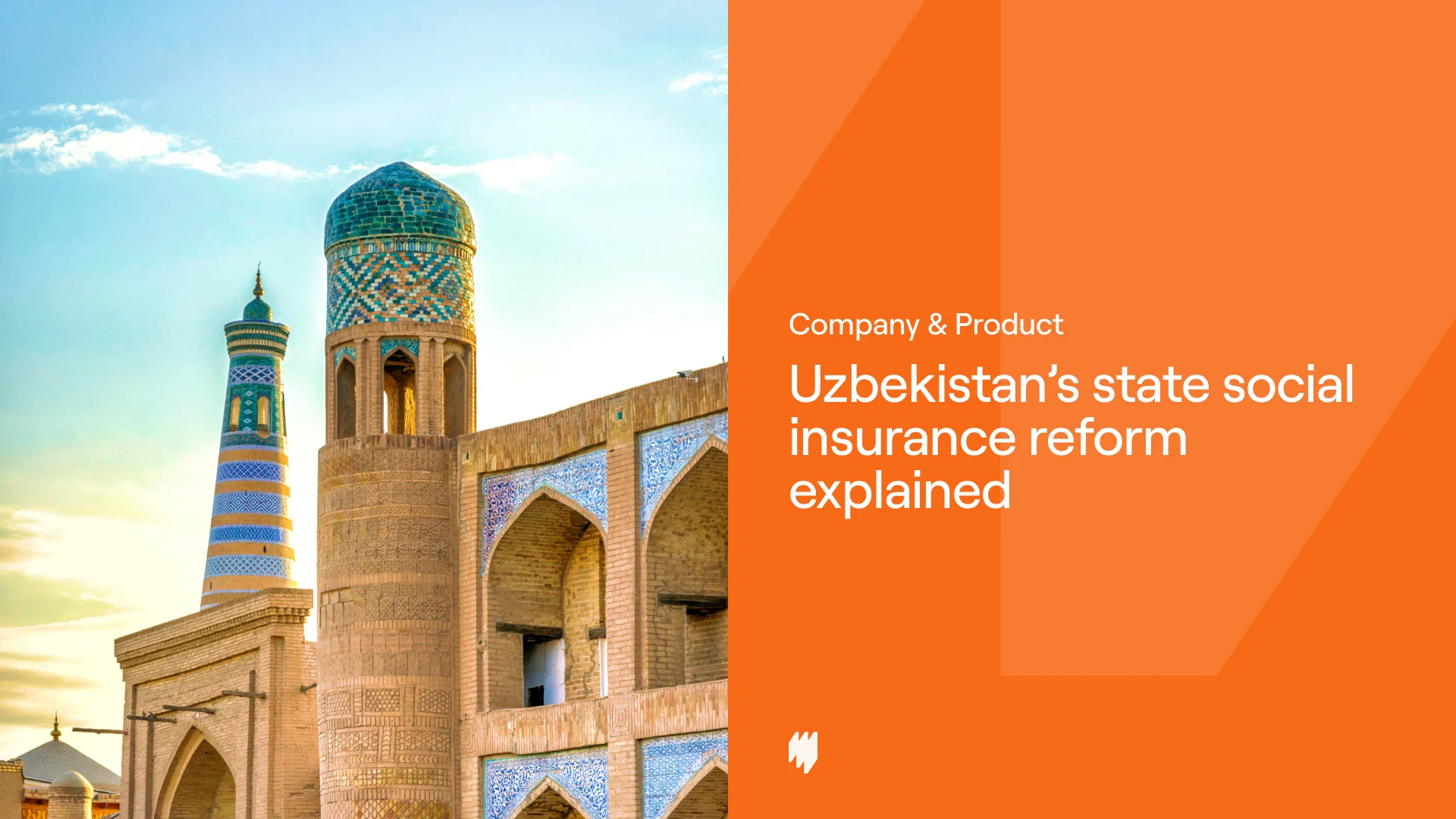
The Cabinet of Ministers of Uzbekistan has implemented new regulations under Presidential Decree UP-206, fundamentally transforming the administration of social benefits and restructuring how maternity and sick leave payments are administered.. As of 1 January 2026, the State Social Insurance Fund (SSIF) has officially taken over the responsibility of paying maternity benefits, a role previously managed by employers. This reform is the centerpiece of a modernization effort to create a more inclusive and transparent social protection system.
By July 2026, the fund’s responsibilities will expand to include temporary disability (sick leave) benefits. This shift aligns Uzbekistan’s labor market with International Labour Organization (ILO) standards on maternity protection and social security.
Details of the state social insurance reform
The new system establishes a unified operational framework for the SSIF, funded through a portion of social tax and insurance contributions. For mandatory participants, contributions are deducted from personal income tax, while voluntary options exist for other workers.
Benefit calculation and eligibility
Benefit amounts and durations are determined by the individual’s insurance tenure:
| Benefit type | Qualifying period | Benefit amount calculation |
| Maternity benefit | 10 months of insurance service | 75%–100% of average monthly salary based on tenure |
| Sick leave benefit | 6 months of insurance service | Paid for duration of illness, transitioning to SSIF in July 2026 |
| Unemployment benefit | Varies | Managed by the fund starting in 2030 |
For maternity benefits, the payout is tiered based on the length of social insurance participation:
- 10–24 months of service: 75% of average monthly salary.
- 25–60 months of service: 85% of average monthly salary.
- 61+ months of service: 100% of average monthly salary.
Digital and proactive administration
One of the most significant changes is the digitization of the process. Benefits are now assigned “proactively,” meaning the system automatically determines eligibility using electronic information from medical institutions and tax records. Citizens receive notifications via SMS, and funds are transferred directly to their bank cards, eliminating bureaucratic hurdles.
As a result, payroll in Uzbekistan must be processed with precision, since salary reporting and social tax contributions now directly determine eligibility and benefit amounts under the SSIF.
What this means for skilled workers
For skilled professionals in Uzbekistan, this reform provides enhanced financial security and transparency. Receiving maternity or sick leave pay no longer depends on an employer’s immediate liquidity or willingness to pay. By centralizing these payments through a state fund, workers gain a guaranteed route for support.
The shift also specifically benefits women in the workforce. Under the previous “employer liability” model, businesses often viewed potential maternity leave as a direct financial risk, leading to hiring discrimination. With the SSIF now covering these costs, this barrier is removed, promoting more equitable employment opportunities.
What it means for employers
Employers in Uzbekistan have gained significant operational and financial relief through this reform. The transition to the SSIF reduces the direct financial burden of social payments, allowing companies to reallocate those funds toward business growth. It also simplifies HR administration, as the state handles the calculation and disbursement of benefits through digital channels.
By removing maternity and sick leave costs from the employer balance sheet, the reform makes it easier for companies to confidently expand your workforce in Uzbekistan without assuming disproportionate employment risk.
However, maintaining compliance is more important than ever. Employers must ensure all employees are officially registered and that income statements are accurately submitted, as the proactive payment system relies on this data.
These requirements directly influence how to hire in Uzbekistan, as employers must ensure every worker is formally registered and enrolled in the social insurance system from day one.
For international companies hiring in Uzbekistan, partnering with an Employer of Record (EOR) like Multiplier is essential. An EOR handles the registration, payroll, and social tax contributions necessary for your team to qualify for these state-funded benefits, ensuring your business remains 100% compliant with the Uzbekistan Labor Code.
A new era for social protection in Uzbekistan
The activation of the State Social Insurance Fund marks a turning point in Uzbekistan’s labor relations. By centralizing maternity and sick leave benefits, the government supports worker welfare while reducing the administrative load on businesses. Whether you are a local business or a global company, Multiplier’s Employer of Record Services and Global Payroll platforms streamline your transition into this regulatory landscape, enabling you to hire and manage talent efficiently and with full legal compliance.
FAQs
When did the new state social insurance system go into effect in Uzbekistan?
The transition began on 1 January 2026, when the State Social Insurance Fund (SSIF) took over the payment of maternity benefits. Payments for temporary disability (sick leave) are scheduled to be handled by the fund starting from 1 July 2026.
How much insurance service is required to qualify for maternity benefits in Uzbekistan?
To be eligible for maternity benefits through the State Social Insurance Fund, a citizen must have at least 10 months of insurance service. The total benefit amount is calculated based on the length of service, ranging from 75% to 100% of the average monthly salary.
Do citizens need to apply manually for maternity or sick leave benefits in Uzbekistan?
No, the system is designed to be proactive and automatic. Once a medical institution issues a certificate of disability, the data is entered into a digital system. The "Unified Register of Social Protection" then verifies work experience and income to assign the benefit, notifying the recipient via SMS.
How is the Uzbekistan State Social Insurance Fund (SSIF) financed?
The fund is financed through a portion of the social tax and mandatory insurance contributions. For citizens in formal employment, these contributions are taken from a portion of their personal income tax. Voluntary insurance contributions are also available for those who wish to participate independently.
Does state-funded maternity leave apply to private sector workers in Uzbekistan?
Yes, the reform extends these benefits to all formally employed individuals, including those in the private sector. Previously, many private sector workers were deprived of these benefits because they were an additional burden on employers; the new system centralizes payments to ensure all workers receive their legal entitlements.