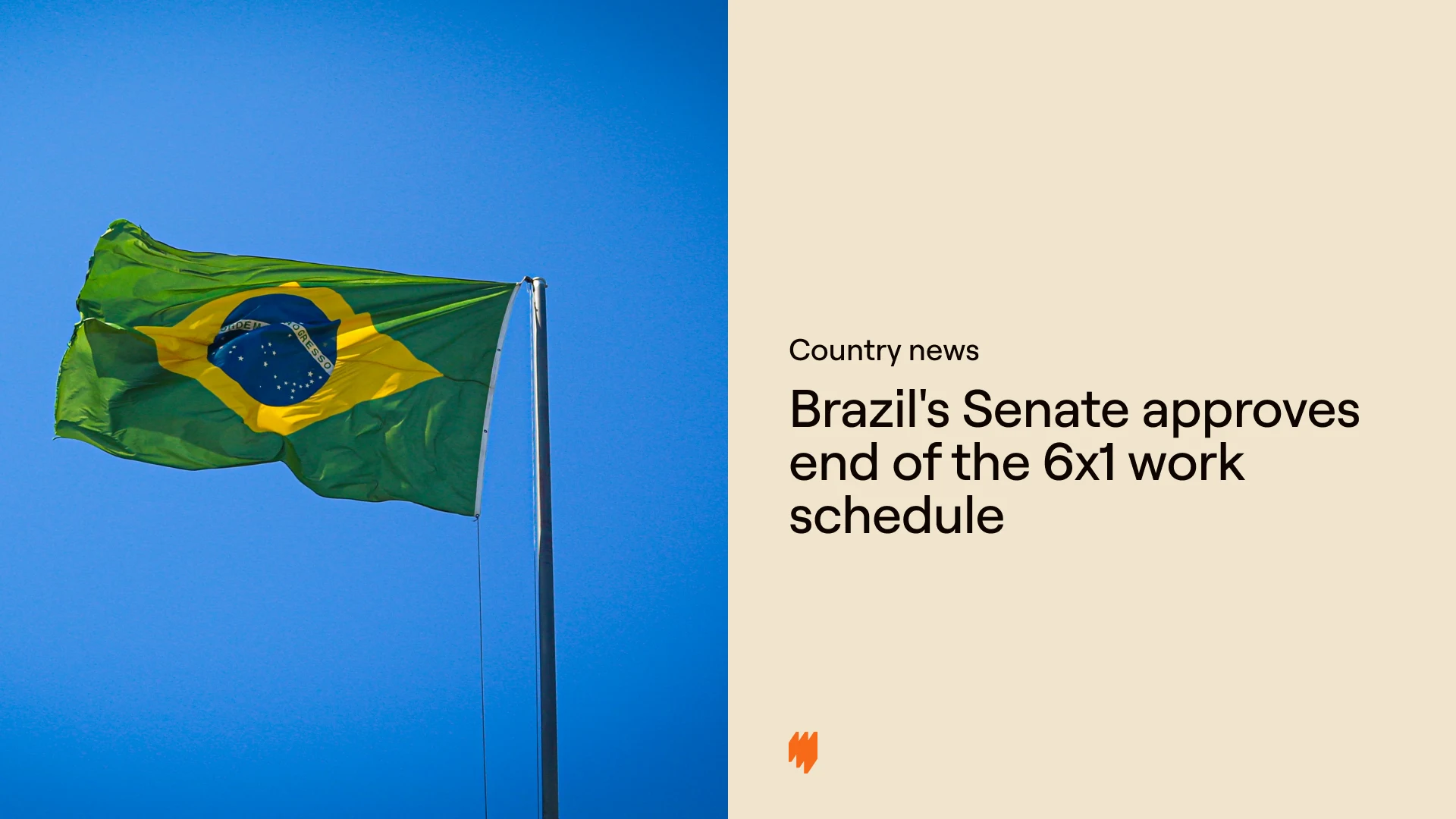
Brazil’s National Congress has approved PEC 221/2019, a constitutional amendment that cuts the maximum work week from 44 to 40 hours without a pay cut. It also ends the 6×1 schedule by guaranteeing two paid rest days a week. The Federal Senate passed it 75 votes to one in both rounds on October 14, 2026, following Chamber of Deputies approval on May 27.
Approved doesn’t mean in force. The amendment still awaits promulgation, and as of October 15, 2026, official sources hadn’t confirmed a date. Once it’s published, you’ll have two months to reach a 42-hour week, so start reworking rosters, cost models, and contracts now.
What Brazil’s constitutional amendment changes
PEC 221/2019 amends article 7 of Brazil’s Federal Constitution. Under the final text approved by the Chamber of Deputies, each step counts from publication of the amendment, which follows promulgation:
- First step: The weekly cap falls from 44 to 42 hours two months after the amendment is published.
- Final step: The cap falls to 40 hours one year after the first step, or 14 months after publication.
- Daily limit: The eight-hour daily maximum stays in place.
- Rest days: Employees get two paid rest days a week, one preferably on Sunday.
- Pay: Employers can’t reduce salaries to offset the shorter week.
- Flexibility: Collective agreements can still allow hour compensation and shorter schedules.
As a constitutional amendment, it doesn’t need the president’s signature. Here’s who it covers.
What this means for employees in Brazil
For most private-sector employees, that means a shorter week at the same pay and the end of 6×1 rosters. Outsourced workers who serve public bodies are covered too. Under the final text, the rules apply to them once their contracts are amended, within up to one year.
Private-sector employees with a university degree who earn at least 2.5 times the Social Security ceiling are excluded from the working-time rules. Their employer can still opt in, or a collective agreement can provide for it. Workers under special regimes set by law or regulation can average two rest days over the month through collective agreements, per the final text.
What it means for employers
The clock starts at publication, and two months isn’t long to rebuild shift patterns. If you employ people in Brazil, start here:
- Rosters: Map every 6×1 role and redesign shifts around two rest days a week.
- Costs: Model the extra hours or headcount needed to keep coverage at 42 hours, then 40.
- Contracts: Flag contracts that set a 44-hour week and plan the updates.
- Collective agreements: Review how current agreements handle hour compensation, rest, and monthly averaging.
- Public-sector work: If you supply outsourced staff to public bodies, track when those contracts are amended.
How big is the cost impact? An Institute for Applied Economic Research (IPEA) technical note, using 2023 data, estimated a 7.84% rise in average labor costs under a 40-hour cap. That estimate covers formal workers under Brazil’s Consolidation of Labor Laws (CLT), and IPEA notes its method may overstate the increase.
Need a baseline? Use our employee cost calculator to see what a Brazil hire costs today.
What about overtime? The official sources we reviewed don’t address overtime or hour banks, so check the final text and regulations with local counsel before changing pay rules.
For companies without a local entity in Brazil, an Employer of Record (EOR) becomes critical. An EOR employs your team locally and keeps contracts compliant through each step of the phase-in.
Multiplier acts as the legal employer for your team in Brazil. We manage contracts, hours, rest days, payroll, taxes, and social security under local law.
Staying compliant in the evolving Brazilian market with Multiplier
Once the amendment is published, Brazil’s working-time rules will change twice in 14 months. Our in-house legal and tax experts track each step to the 40-hour cap and update contracts and schedules with you. For hiring rules, benefits, and taxes, read our Brazil country guide.
Hiring employees, contractors, or both? Our Employer of Record Services (EOR), Contractor of Record (COR), and Global Payroll (GP) help you hire, pay, and stay compliant in Brazil. You can then scale with the same team across 160+ countries.
FAQs
Is Brazil's 40-hour work week in force yet?
No. Congress finished voting on PEC 221/2019 on October 14, 2026, but as of October 15, 2026, official sources hadn't confirmed a promulgation date. Until the first step takes effect, the 44-hour cap stays, so keep existing schedules while you prepare.
When do Brazil's new working hours apply?
The 42-hour cap and two weekly rest days apply two months after the amendment is published, which follows promulgation. The 40-hour cap follows one year later, 14 months after publication. Calendar dates depend on publication, so check official sources before you finalize rosters.
Can employers cut salaries to match the shorter week?
No. Employees keep their pay as their hours fall from 44 to 42 and then to 40. Review how the final text treats hourly and part-time pay with local counsel before you update payroll.
Who is excluded from Brazil's new working-hour rules?
Degree-holding private-sector employees earning at least 2.5 times the Social Security ceiling are excluded unless their employer opts in or a collective agreement provides otherwise. Outsourced workers serving public bodies are covered once their contracts are amended, or at the latest one year after publication. Special regimes set by law or regulation can average two rest days over the month through collective agreements.
Does the amendment end the 6x1 schedule?
Yes. Two paid rest days a week end the six-days-on, one-day-off pattern. Employers on 6x1 rosters must switch once the first step applies, two months after the amendment is published. Some high earners and special regimes are exceptions.
How can a global Employer of Record help companies navigate changing Brazilian employment laws?
A global Employer of Record employs your team in Brazil and keeps contracts and schedules compliant as the law changes. Multiplier's in-house legal and tax experts update working hours, rest days, and payroll at each step. You can hire in Brazil without setting up a local entity.