An Employer of Record (EOR) lets you hire in the Philippines today: no local entity, no red tape. The Philippines has what you need: a young, skilled workforce, a booming tech and BPO sector, and direct access to Asia-Pacific markets.
But hiring there means dealing with complex labor laws, mandatory contributions (SSS, PhilHealth, Pag-IBIG), and tax filings you’ve probably never encountered before. An EOR handles the compliance, payroll, and HR admin, so you can hire in the Philippines without setting up a local entity.
With an EOR, you enter the market fast, stay compliant, and focus on building your team and not navigating tax codes
Why an EOR simplifies hiring in the Philippines
The Philippines has strict labor laws, mandatory government contributions, and tax filings that can eat up weeks of your time, so you can focus on growing your business.
An EOR takes all of that off your plate. It becomes the legal employer on your behalf that handles compliance, payroll, and benefits.
Here’s what an EOR does for you:
- Hire top talent quickly: Recruit and onboard the best professionals in the Philippines without establishing a local entity.
- Stay compliant: The EOR handles tax filings, SSS, PhilHealth, Pag-IBIG, and all the regulatory paperwork.
- Simplify HR: Payroll, benefits, onboarding, the EOR runs it all.
- Stay focused on growth: Hand off contracts, onboarding, and admin to the EOR. You build the team; they handle the paperwork.
An EOR gets you into the Philippines fast, keeps you compliant, and lets you focus on what you do best. Not sure if you need an EOR or a PEO? Here’s the breakdown.
EOR vs PEO in the Philippines: which fits your business
When entering the Philippine market, businesses typically assess two workforce management options: an Employer of Record (EOR) or a Professional Employer Organization (PEO). An EOR becomes the full legal employer through its own local entity. A PEO co-employs workers alongside a company that already has its own entity in-country.
Aspect | Employer of Record (EOR) | Professional Employer Organization (PEO) |
Role | Acts as the legal employer — takes on all compliance and administrative responsibilities | Establishes a co-employment relationship, sharing employer responsibilities with your company |
Employment relationship | You control day-to-day management; EOR handles the legal and admin side | HR functions are shared — the PEO operates alongside your team |
Legal liabilities | EOR assumes full legal and financial employment liabilities | Liabilities are shared between the PEO and your company |
Flexibility | Scales without requiring changes to your internal policies | Provides administrative support and scalability for HR operations |
Compliance | Takes primary responsibility for all local law compliance across jurisdictions | Collaborates with you to meet compliance requirements |
Cost | Transparent pricing — typically higher upfront, but no hidden fees | Pooled resources can reduce costs, but watch for service fees and add-ons |
An EOR is the right fit if you don’t have a local entity and want to hire compliantly without setting one up. The EOR handles contracts, payroll, tax filings, and mandatory contributions — SSS, Pag-IBIG, PhilHealth — from day one. You enter the market fast, stay compliant, and focus on building your team.
Choosing the right EOR matters. It’s the difference between a clean expansion and a compliance problem you didn’t see coming.
Create compliant contracts in the Philippines
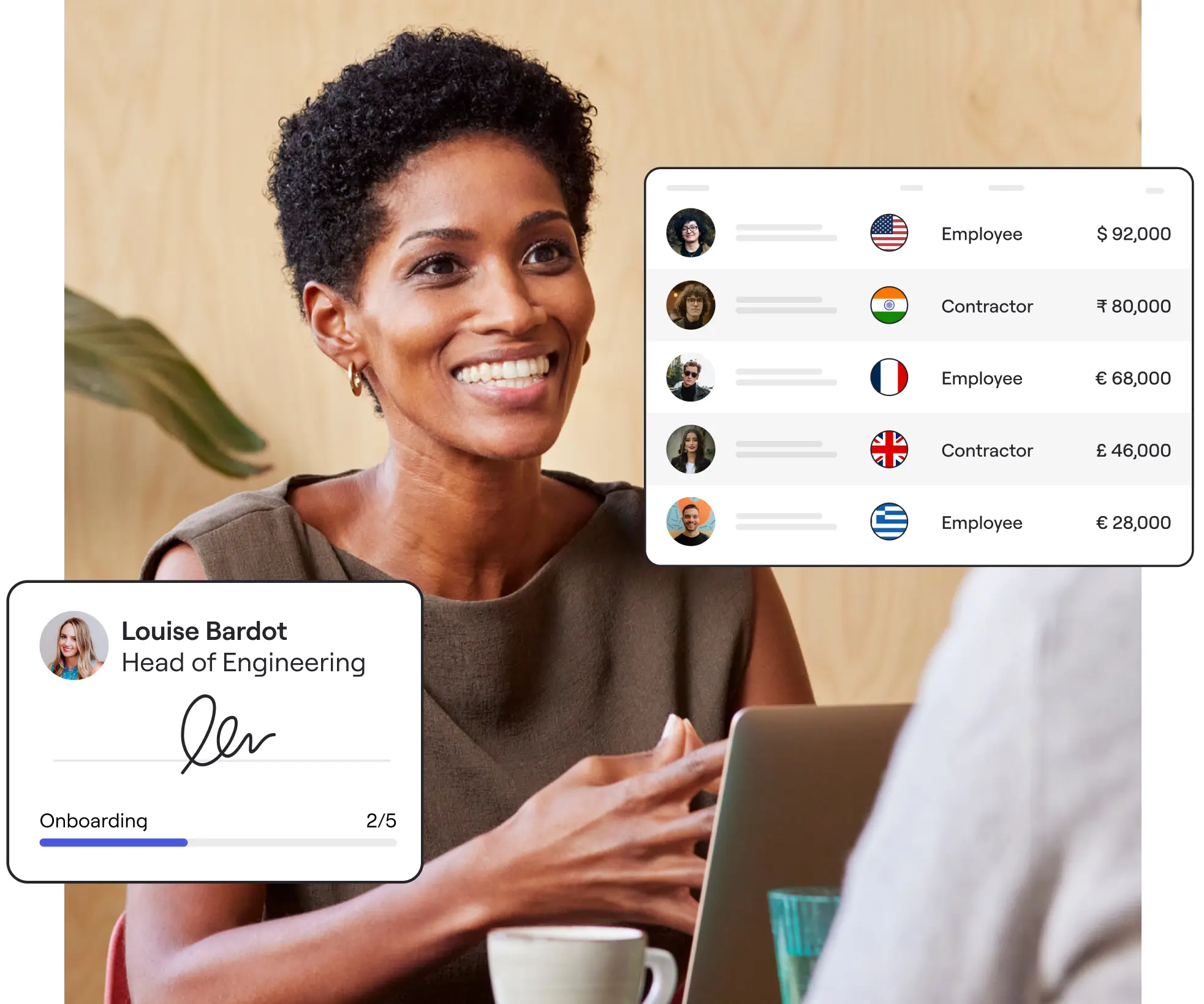
Every hire in the Philippines needs an employment contract that meets the requirements of the Labor Code, covering job responsibilities, working hours, salary, and termination clauses. With Multiplier, compliant contracts are generated in minutes. Your new hire reviews and signs securely through the platform with no back-and-forth, no legal guesswork.
Create compliant employment contracts in the Philippines
How to choose the right EOR provider in the Philippines
Entering the Philippines offers real opportunities, but the wrong EOR partner can create the exact problems you’re trying to avoid. Non-compliance means fines. Hidden fees blow up your budget. Bad support leaves your team stranded. A careful assessment of potential EOR providers is essential.
Here’s what to evaluate when choosing an EOR:
Selection factor | What to look for |
Legal expertise | Deep knowledge of SSS, PhilHealth, Pag-IBIG, and Philippine tax codes — with a track record of keeping clients compliant |
Support quality | Dedicated account managers and 24×5 responsiveness. Real people, not bots |
Pricing transparency | Clear, upfront costs with no hidden fees — so you can budget with confidence |
Security and integrations | SOC 2-certified infrastructure, GDPR-aligned data handling, and native integrations with your HR and finance stack |
Affordability vs quality | The cheapest option isn’t always the best. Low prices can mean compliance gaps that cost you more later |
How EOR services work in the Philippines
An EOR handles compliance, payroll, and HR admin — so you can enter the Philippines fast and stay compliant. You focus on building your team. The EOR handles the paperwork.
How the process works:
Step 1: Drafting contracts aligned with Philippine labor laws
Once you’ve found the right person, the EOR drafts a compliant employment contract. It covers job responsibilities, working hours, salary, and termination clauses — everything required under Philippine law. The employee reviews and signs securely through the platform.
Step 2: Offering competitive benefits packages
To attract and retain top talent, the EOR designs benefits packages that meet local standards — keeping you compliant and making your offer competitive in the Philippine market.
Step 3: Simplifying documentation and payroll setup
The EOR collects tax IDs, bank details, and valid IDs — everything needed to set up payroll. Your new hire gets onboarded fast through the platform, with no delays and no confusion.
Step 4: Managing payroll and ensuring compliance with Philippine regulations
Payroll in the Philippines requires precise calculations for taxes, social contributions, and mandatory deductions. Most employees are paid twice a month — so timing errors compound quickly. The EOR uses advanced payroll systems to guarantee accurate, on-time salary disbursements, fully aligned with local requirements.
Step 5: Overseeing compliance and managing offboarding processes
Following onboarding, the EOR ensures ongoing compliance with Philippine labor laws — accurate salary processing, benefits distribution, and regulatory updates. When an employee leaves, the EOR handles severance, final pay, and all required documentation, so the exit is clean and compliant.
Move confidently into the Philippines with Multiplier
Multiplier’s Employer of Record (EOR) service is built to get you into the Philippines fast and keep you compliant. Here’s what you get:
- Local expertise, global reach: With operations in 150+ countries, Multiplier brings deep knowledge of Philippine labor law, tax regulations, and mandatory contributions — SSS, PhilHealth, and Pag-IBIG — to every engagement.
- Faster onboarding: The hiring process in the Philippines can be lengthy. With Multiplier, onboarding top talent takes days, not months — whether you’re hiring tech professionals in Manila or operational specialists in Cebu.
- Transparent pricing: Multiplier’s pricing is clear and upfront. No hidden fees, no surprises — so you can budget with confidence and stay focused on growth.
- Payroll in pesos, managed end to end: From processing payroll and managing statutory benefits to delivering localized employee support, Multiplier’s platform is built for the Philippine market.
- Trusted by global teams: Rated 4.7/5 on G2, Multiplier is a trusted partner for companies scaling across borders — combining enterprise-grade technology with dedicated human support.
Multiplier is your partner for building a compliant, high-performing workforce in the Philippines.
FAQs
What is an Employer of Record (EOR) in the Philippines?
An Employer of Record (EOR) in the Philippines acts as the legal employer for your workers. This lets you hire compliantly and quickly without setting up a local entity.
How does an employer of record speed up hiring in the Philippines?
Setting up your own entity can take months. An EOR can onboard your hire in days because its local entity is already in place. You skip the setup and go straight to building your team.
What's the difference between an EOR and a PEO in the Philippines?
An Employer of Record (EOR) employs your team through its own local entity, so you don't need one. A Professional Employer Organization (PEO) co-employs workers alongside a company that already has its own entity in-country.
Which mandatory benefits and taxes will an EOR manage?
An EOR manages all key statutory items in the Philippines, including:
- SSS, PhilHealth, and Pag-IBIG contributions
- Withholding tax
- 13th-month pay
Do I lose control of my team when I use an EOR?
No. You still manage day-to-day work, performance, and deliverables. The EOR handles the legal employment side — contracts, payroll, statutory benefits, and compliance.
Is hiring via an EOR legal and compliant in the Philippines?
Yes, EOR hiring is fully legal in the Philippines when done through a registered and compliant provider that understands DOLE regulations and labor standards.
What is the cost of EOR in the Philippines?
EOR pricing in the Philippines typically includes a monthly fee per employee, ranging from $300 to $ 1,000, plus the employee's salary, benefits, and any applicable statutory costs.
What is the best EOR in the Philippines?
Multiplier is a top EOR vendor in the Philippines, offering quick onboarding, localized compliance, competitive benefits, and an all-in-one platform trusted by global teams.
How do I choose the right employer of record in the Philippines?
Look for: compliance expertise in Philippine labor law and statutory contributions, transparent pricing, responsive human support, strong security practices, and integrations that work with your HR and finance stack.