India is the world’s largest source of independent contractor talent, supporting global workforces across technology, finance, design, and customer service. Millions of Indians operate as freelancers, enabling companies to access specialized skills without establishing local entities. Yet contractor management is tightly regulated.
The Contract Labor Act 1970 and India’s control and integration tests create high misclassification risks, potentially triggering back wages, PF, gratuity, ESI, and licensing issues. Additional requirements under the Indian Contract Act, PAN, GST, TDS, and invoicing rules make proper compliance essential for hiring contractors legally and efficiently.
What is contractor management in India?
Contractor management in India covers hiring, onboarding, compensating, and overseeing independent contractors under the Indian Contract Act 1872, labor regulations, and tax laws. Contractors operate as self-employed individuals or registered entities delivering project-based services. Classification hinges on India’s control and integration tests: employees work under supervision and receive statutory benefits, while contractors retain autonomy and assume financial risk.
Courts evaluate control, integration, equipment, and risk. Effective management requires correct classification, documentation, GST/TDS compliance, payment governance, and safeguards against misclassification penalties.
Key compliance requirements for managing contractors in India
Contractor compliance in India involves contractual, tax, social security, and regulatory considerations governed by the Indian Contract Act 1872, Labor Code, Contract Labor Act 1970, and tax laws. The following framework turns these requirements into actionable steps:
Independent contractors vs employees in India
Apply the control test by assessing whether you direct how, when, and in what manner work is performed. Contractors must retain discretion over methods and timing. The integration test examines whether the contractor remains independent rather than embedded in your team; avoid integrating them into reporting lines, workflows, or daily operations.
Should you hire a contractor or an employee in India?
This contractors vs employees in India guide explains legal obligations, costs, benefits, and compliance risks to help you choose the right classification.
Written contractor agreements
Use written agreements, mandatory in Karnataka and Delhi, clearly defining scope, deliverables, payments, IP ownership, confidentiality, and termination, while stating no employment relationship exists. Ensure compliance with the Indian Contract Act 1872 and emphasize outcome-based deliverables, not hours or supervision, to reinforce genuine contractor status.
PAN registration and tax identification
Contractors must hold a valid Permanent Account Number (PAN) issued by the Income Tax Department; verify PAN details before onboarding and retain proof for compliance. PAN validation through the tax database helps confirm the contractor’s legitimacy and ensures proper documentation during audits.
Control and direction avoidance
Maintain contractor independence by avoiding control over working methods, schedules, or location. Do not assign fixed hours, mandate office presence, or supervise daily tasks; instead, structure the engagement strictly around deliverables and outcomes.
Income tax obligations and contractor filing
Contractors file and pay their own income taxes, while you must deduct TDS at applicable rates—typically 10% for professional services or 2% for commissions—and remit it within statutory deadlines. Proper TDS deduction safeguards compliance and reduces audit exposure.
GST registration and invoice requirements
Contractors must register for GST once annual turnover exceeds $24,030 and then charge GST, commonly 18%, on invoices. Invoices must include identification details, service descriptions, and tax information, and should be retained for at least six years to meet audit requirements.
Contract Labor Act 1970 compliance
Businesses engaging 20 or more contract laborers must register and obtain a license under the Contract Labor Act 1970. Maintain documentation proving contractors function as independent service providers rather than contract laborers falling under statutory licensing obligations.
Subsidiary benefits and statutory exclusions
Contractors are not entitled to statutory employee benefits such as paid leave, PF, gratuity, overtime, or maternity benefits; contracts should clearly reaffirm this. Avoid offering employee-like benefits to prevent misclassification and associated statutory liabilities.
As a global HR manager, the checklist below turns India’s contractor compliance rules into a practical, documentation-first framework to reduce misclassification risk.
Contractor compliance in India: HR manager’s checklist
Use this checklist to ensure proper documentation for tax, contractual, and regulatory compliance when working with Indian contractors:
Permanent Account Number (PAN) verification
Contractor must have a valid PAN registered with the Income Tax Department; verify PAN and maintain proof of registration before engagement.
Written contractor agreement (Services Contract)
Outcome-based agreement clearly defining scope, deliverables, payment terms, intellectual property ownership, and confirming that no employment relationship exists and no statutory benefits are provided.
Proof of control avoidance and contractor independence
Documentation showing the contractor retains discretion over work methods, timing, and location; evidence that you do not exercise direction or supervision over work performance.
Bank account details for Indian rupee payment
Contractor’s Indian bank account for payment processing; confirm the account is in the contractor’s professional or business name.
Contractor invoices and GST status
Mandatory invoices including PAN, GST registration number (if applicable), service description, date, payment amount, and GST details (if applicable); maintain for at least six years.
TDS withholding documentation and remittance proof
Records of TDS deducted from payments, withholding rate used, service type, payment date, and proof of TDS remittance to tax authorities within prescribed deadlines.
Professional licenses and regulatory compliance (if applicable)
For regulated professions, proof of required professional licenses, certifications, and regulatory compliance; verify industry-specific requirements before engagement.
Note: You can download this contractor compliance checklist as an Excel sheet to track documentation, assign ownership, and maintain audit-ready records across teams.
Manage global contractors effortlessly
Watch how Multiplier simplifies contractor compliance, payments, and oversight across countries, including India, in this short walkthrough.
8 Best practices for contractor management in India
Managing Indian contractors compliantly requires intentional practices that reduce misclassification risk and ensure control and integration test compliance. Here are eight best practices you can implement immediately:
1. Create systems to simplify contractor operations
Reduces administrative overhead and minimizes errors by centralizing contracts, documentation, and TDS records. A contractor management system prevents lost paperwork, missed PAN verifications, and incorrect TDS calculations that could trigger audits.
2. Standardize workflows to accelerate contractor onboarding
Ensures consistent documentation, faster onboarding, and early compliance alignment with Indian tax and labor requirements. Standardized checklists ensure you verify PAN, assess control and integration tests, and document contractor independence from day one.
3. Draft clear service agreements to prevent misclassification risks
Helps avoid employee-like control and reduces misclassification risk by focusing on deliverables rather than direction or supervision. Clear agreements establish contractor independence in writing and demonstrate good faith compliance with Indian contract law.
4. Pay contractors on time to protect delivery and business continuity
Builds contractor trust, avoids disputes, and supports long-term working relationships across borders. Timely payments strengthen relationships and encourage commitment while demonstrating contractor status through commercial engagement practices.
5. Maintain clear invoicing to align with Indian tax and GST requirements
Improves financial transparency and simplifies audits, reconciliations, and TDS compliance. Well-organized invoicing records make tax authority compliance easier and reduce audit exposure from the Income Tax Department.
6. Separate contractor and employee processes to prevent legal risks
Prevents accidental application of employee benefits or controls to contractors, reducing misclassification risk. Keeping processes separate reinforces the contractor-employer relationship and protects you legally.
7. Conduct periodic reviews to ensure compliance
Helps identify classification, tax, registration, or documentation gaps before they become legal issues or trigger tax authority investigations. Regular reviews ensure your contractor management practices remain compliant as business circumstances change.
8. Use unified platforms to improve visibility and reporting
Enables better oversight of contractors, costs, and compliance status as your team scales. Visibility ensures consistency across all contractor engagements and simplifies annual audits by income tax authorities.
These best practices are easier to implement using a contractor management system. Next, let’s explore how to choose the right tools to support compliant contractor operations in India.
How to choose the right contractor management system for India
Selecting a contractor management system is a compliance-first decision, not just a payment tool. Use the following guidance to evaluate systems based on your needs:
- Frame contractor management as compliance-first: Prioritize alignment with the Indian Contract Act 1872, control and integration tests, the Contract Labor Act 1970, and GST/income-tax rules to ensure regulator-proof operations.
- Emphasize control and integration test automation: Use platforms that assess classification, document independence, track control-avoidance practices, and capture real-world performance evidence to reduce manual work and legal exposure.
- Highlight PAN verification and TDS automation: Seek tools that verify PAN, auto-calculate TDS by service type, track deadlines, and generate statutory TDS documentation to prevent errors and ensure compliance.
- Stress secure documentation and audit readiness: Centralize contracts, invoices, PAN checks, classification evidence, and TDS records; maintain six-year retention and enable rapid audit-ready reporting.
- Cover INR payments with TDS and GST automation: Ensure your system supports INR payouts, automates TDS and GST calculations, and generates compliant payment records demonstrating proper tax handling and control avoidance.
“The biggest challenge today is to comply with the local laws and legislative regulations in each country. Within countries, provinces or states have their own rules, making it even more complex for global employers to stay compliant.” — Menaka Karthikeyarayan, VP Payroll Operations at Multiplier
How Multiplier enables compliant, scalable contractor management in India
Multiplier simplifies how you hire, manage, and pay contractors in India while ensuring full compliance with the control and integration tests and avoiding misclassification risk. Here’s how:
Hire Indian contractors without setting up a local entity
You can engage Indian talent and contractors without establishing a company in India. Multiplier handles contractor agreements, PAN verification, control and integration test assessment, TDS calculations, and documentation, so you focus on finding and managing the right people for your projects.
Use contractor agreements aligned with Indian law
Multiplier provides contractor agreement templates specifically tailored to the Indian Contract Act 1872, control and integration test principles, Contract Labor Act 1970, misclassification prevention, and tax requirements. Templates are pre-reviewed to ensure compliance and reduce legal risk.
Access centralized payroll and payment visibility
Manage contractors and employees in one system. Multiplier’s centralized payroll platform gives you real-time visibility into all payments, PAN status, TDS deduction and remittance, GST compliance, and documentation—whether you’re paying one contractor or scaling across teams.
Reduce misclassification, control and integration test risk
Multiplier’s contractor management system guides you through control and integration test assessment, documents contractor independence, tracks control avoidance practices, and automates TDS deduction. Built-in safeguards help you avoid costly misclassification penalties and tax authority investigations.
Access a unified dashboard for all contractor activity
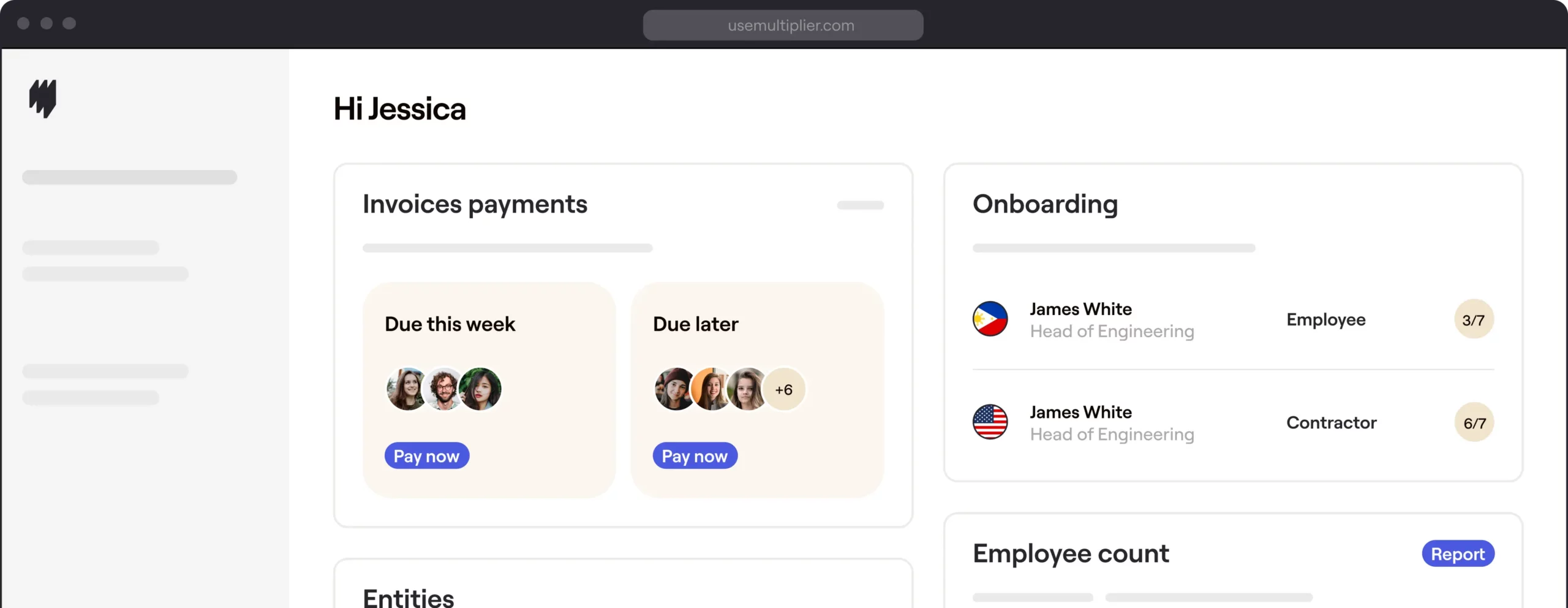
Track all contractor engagements, contracts, payments, compliance status, and documentation from one dashboard. Centralized oversight ensures consistency and compliance as you scale your Indian contractor workforce.
What Capterra users say about Multiplier
“Best expert team that solves queries for you in a jiffy. Best solution for companies engaging with 10s and 100s of freelancers.”
Book a demo to see how Multiplier simplifies compliant contractor management in India and helps your team scale across borders with confidence.
FAQs
What are the control and integration tests, and how do Indian courts use them to classify workers?
Indian courts use control and integration tests to assess supervision, independence, equipment ownership, financial risk, and work direction. High control and integration indicate employment, while autonomy supports contractor status.
What is Tax Deducted at Source (TDS), and what are the withholding rates for contractor payments?
TDS is tax withheld at the payment source. Rates vary, 10% for professional services, 2% for commission, and others. You must deduct, remit on time, and contractors claim credits.
What happens if you misclassify an employee as an independent contractor in India?
Misclassification triggers back wages, PF dues with interest, gratuity, ESI, and penalties. Companies may lose licenses and face liability for injury claims, making compliance essential.
How does Multiplier automate TDS deduction and remittance to ensure compliance with tax deadlines?
Multiplier auto-calculates TDS, deducts correct amounts, tracks remittance timelines, generates payment proof, and stores compliant records. Automated alerts ensure deadlines aren’t missed.
Are Indian contractors entitled to employee benefits like a provident fund and paid leave?
No. Contractors don’t receive PF, gratuity, paid leave, overtime, or similar benefits. Providing them signals employment and increases misclassification exposure, triggering full statutory obligations.
How do you determine whether a contractor arrangement falls under the Contract Labor Act of 1970?
Arrangements involving 20+ contract laborers require registration and licensing. Contractors delivering specific results are exempt, but labor-only supply without business independence may trigger Contract Labor Act coverage.
What PAN and GST documentation does Multiplier maintain for income tax authority audits?
Multiplier stores contracts, invoices, PAN checks, GST proof, TDS records, payments, and independence documentation. It generates audit-ready reports, tracks deadlines, and retains required compliance documents for six years.