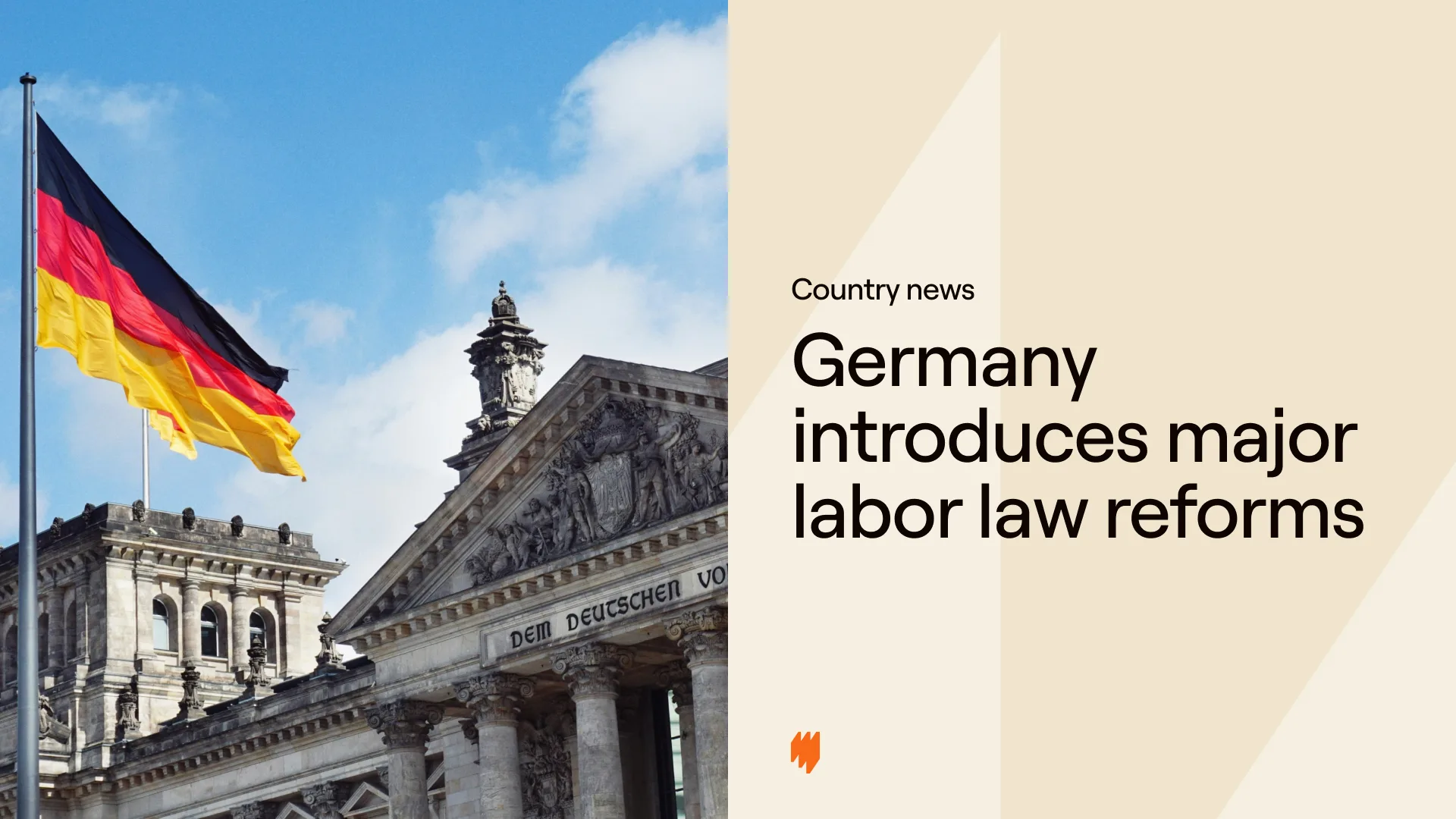
Germany’s coalition government has announced a sweeping overhaul of its statutory employment regulations under the “Programme for Economic Recovery and Employment“. Designed to stimulate hiring, enhance international competitiveness, and cut administrative red tape, the 34-point reform package marks a decisive shift in how companies manage hiring and workforce restructuring across Europe’s largest economy.
Known historically for strict employment protections and rigid paperwork requirements, Germany is moving toward operational flexibility. The new regulations relax fixed-term hiring rules, ease severance-based terminations for top executives, digitize contract administration, and update sick leave compliance standards.
Breakdown of Germany’s 2026 employment law reforms
The government’s reform package introduces several key legislative adjustments that directly impact HR administration, corporate hiring strategy, and talent retention:
- Extended fixed-term employment contracts: For employees hired through December 31, 2030, fixed-term contracts without objective grounds can now last up to 48 months (doubling the previous 24-month cap). Employers can extend these agreements up to six times (increased from three), and statutory restrictions on rehiring former employees under fixed-term contracts have been eased.
- Simplified termination for high earners: Effective January 1, 2027, employers will be able to dissolve employment relationships with workers earning more than 1.75 times the statutory pension insurance contribution ceiling (approximately €177,450 to €180,000+ gross annually) without needing standard operational or behavioral dismissal grounds, provided court-determined severance is awarded.
- Elimination of the written-form contract requirement: Starting January 1, 2027, Germany will officially end the mandatory “wet-ink” signature requirement for fixed-term employment contracts, permitting end-to-end digital contract execution in electronic or text form.
- Stricter sick leave protocols: Pandemic-era rules allowing phone-issued sick notes are being abolished. Workers will be required to submit an official medical certificate of incapacity for work (AU) from the first day of illness, removing the standard three-day buffer.
- Tax relief for rapid re-employment: To shorten periods between jobs, severance payouts will receive preferential tax treatment if departing workers secure new employment quickly.
What Germany’s 2026 labor law reforms mean for skilled workers
For professionals working in Germany or seeking remote roles with international organizations, these statutory updates shift career management dynamics:
- Revised job security structures for executive talent: High-earning specialists and executives making above €177,450 annually will move from traditional job reinstatement protections to a guaranteed financial severance model during dismissal proceedings.
- Tax perks during career transitions: Workers who experience employment changes can retain a larger portion of their severance pay due to progressive tax relief if they take up a new role promptly.
- Longer project engagements: The expanded 48-month fixed-term limit gives skilled workers access to longer-term project contracts without requiring companies to commit to immediate permanent headcount.
- First-day compliance for sick days: Employees must obtain an official doctor’s certificate on day one of any illness, requiring immediate compliance for statutory sick leave benefits.
What Germany’s 2026 labor law reforms mean for employers
For foreign enterprises expanding into Germany as well as domestic businesses, this regulatory update delivers crucial hiring agility. Organizations can now scale specialized teams for four-year project lifecycles, eliminate physical paperwork delays during onboarding, and manage executive workforce planning with greater legal and financial predictability.
However, staying compliant with Germany’s evolving labor framework alongside existing requirements—such as works council co-determination, social security contributions, and statutory payroll tax withholdings—presents a complex hurdle for international employers.
This is where an Employer of Record Service (EOR) is essential. By partnering with Multiplier, global businesses can compliantly hire, onboard, and pay full-time German talent without establishing a local legal entity. Multiplier’s EOR infrastructure handles localized employment contracts, manages local tax compliance, and guarantees statutory benefit alignment automatically. For distributed teams and freelance networks, Multiplier also provides Contractor of Record (COR) and Global Payroll (GP) services across 150+ countries to ensure your international operations stay streamlined and compliant.
Navigating Germany’s 2026 labor law reforms
Germany’s 2026 labor law reforms represent a significant step toward a modern, competitive workforce model. By balancing flexible hiring options with structured severance pathways for top earners, the government has created new avenues for international expansion.
As these reforms take effect through 2027, foreign organizations looking to scale in Germany can streamline their global HR operations with Multiplier. With support for compliant hiring, payroll management, and workforce administration across Germany and more than 150 countries worldwide, businesses can confidently navigate evolving employment regulations while expanding internationally.
FAQs
What is the primary objective of Germany's 2026 labor law reform package?
The primary objective of Germany's 2026 labor law reform package, titled "Programme for Economic Recovery and Employment," is to stimulate national economic growth, increase hiring flexibility for businesses, reduce administrative paperwork, and accelerate employment transitions across the German job market.
How do Germany's 2026 labor law reforms change fixed-term employment contracts?
Under the 2026 reform package, fixed-term employment contracts without objective grounds can last up to 48 months (doubled from the previous 24-month limit) and can be extended up to six times (increased from three) for hires completed through December 31, 2030. The strict prohibition against rehiring former employees on fixed-term contracts without justification has also been relaxed.
What is the salary threshold for simplified terminations under Germany's 2026 labor law reforms?
The simplified severance-based termination mechanism applies to high-earning employees whose annual gross compensation exceeds 1.75 times the contribution assessment ceiling for statutory pension insurance. This threshold covers executives and specialists earning approximately €177,450 to €180,000+ gross per year.
When will the written-form contract requirement be eliminated in Germany?
The statutory "wet-ink" written-form requirement for fixed-term employment contracts is scheduled to be officially abolished on January 1, 2027. From this date onward, employers can legally issue and execute fixed-term employment agreements digitally in text or electronic format.
How do Germany's 2026 labor law reforms alter employee sick leave rules?
The 2026 reforms eliminate telephone-issued sick notes and require employees to submit a formal medical certificate of incapacity for work (AU) starting from the very first day of illness, removing the standard statutory three-day grace window.