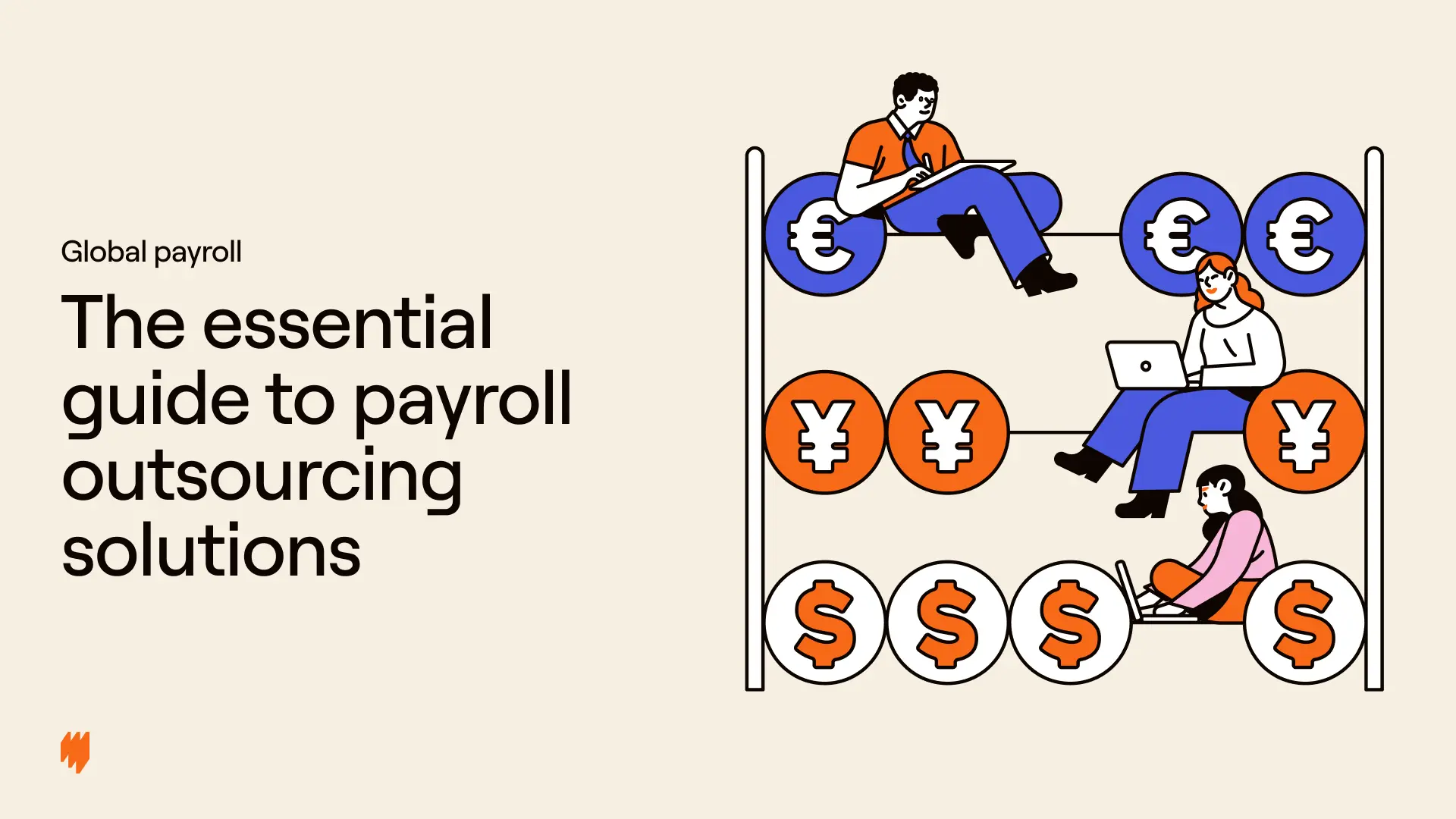
Payroll staff shortages and global expansion make managing taxes, compliance, and regulations increasingly complex. Payroll outsourcing offers a strategic solution — boosting efficiency, ensuring compliance, and allowing businesses to focus on core operations. This guide covers how it works, key benefits, limitations, and tips for choosing the right provider.
What is payroll outsourcing?
Payroll outsourcing involves a business delegating some or all of its payroll and related tax responsibilities to a third-party service provider. This includes tasks like calculating employee pay, managing tax withholdings, issuing paychecks, and reporting to tax authorities.
In the context of global payroll, outsourcing means partnering with providers who can handle payroll across multiple countries, each with its own tax laws, employment regulations, currencies, and compliance requirements. Companies can choose from different approaches based on their specific needs:
- In-house payroll software: Some companies use payroll software to manage everything internally and handle tax payments and filings themselves. This gives them full control but also requires deep expertise in multiple compliance and tax laws.
- Local payroll providers: As global teams become more common, this is where outsourcing to local payroll companies comes in. Businesses operating in multiple countries can work with individual in-country payroll providers that act as agents who manage payroll processing, tax payments, and filings for each specific region.
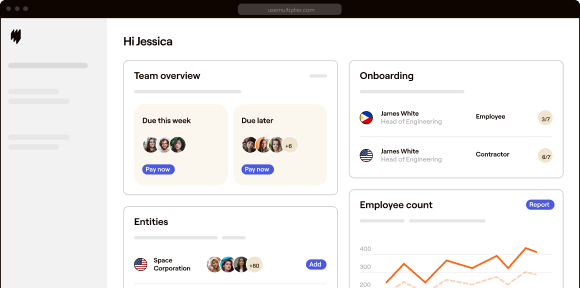
- All-in-one global payroll solutions: Platforms like Multiplier bring local payroll expertise from across regions and countries into a single system, streamlining payroll management for companies with international teams. By consolidating payroll into one platform, businesses can reduce complexity, improve efficiency, and ensure compliance across multiple countries.
Understanding these options helps businesses make informed decisions about which payroll outsourcing approach aligns best with their operational requirements and growth plans.
Pros and cons of outsourced payroll services
When considering payroll outsourcing, the decision requires careful evaluation of both advantages and potential drawbacks. While outsourcing payroll can save time, reduce errors, and ensure compliance globally, it may also introduce challenges like unexpected costs and communication inefficiencies if not properly managed.
Benefits of outsourcing payroll
The major benefits of outsourcing payroll center around reduced time, cost, and stress while improving operational efficiency and compliance.
Global compliance
Managing payroll for a distributed workforce across borders means handling varied tax laws, labor rules, and benefits. Outsourcing helps ensure compliance in every jurisdiction, reducing legal risks and easing the load on internal teams — 42% of companies outsource payroll primarily to meet these complex regulatory demands.
The reality is that navigating these rules internally is overwhelming for most businesses. In fact, as per Multiplier’s Global hiring gap report, only 8% of companies report being fully compliant with international tax and labor laws, leaving a staggering 92% exposed to severe legal and financial risk.
By outsourcing payroll, you can ensure compliance with local tax laws, reporting requirements, and employee benefits without overburdening in-house teams.
Access to localized payroll expertise
Outsourced providers offer deep local knowledge of tax and labor laws, helping businesses navigate unfamiliar markets. As Michael Nierstedt of Multiplier notes, global expansion demands compliance expertise that many companies lack — making global payroll partners essential for smooth operations.
Time for strategic initiatives
Outsourcing frees up HR and finance teams from routine payroll tasks. Instead of focusing on calculations and regulations, they can prioritize strategic goals like employee retention, performance management, and long-term planning.
Fewer payroll mistakes
Manual payroll processes are prone to payroll mistakes — especially across multiple countries. Payroll providers combine automation and localized expertise to ensure accurate, timely payments and filings, reducing costly mistakes and employee dissatisfaction.
Cost savings
Running payroll in-house often hides true costs — software, training, and hard-to-find talent. As Nierstedt notes, even if you find the right people, high salaries and compliance burdens typically outweigh any savings from internal management.
Nierstedt explains that opting for payroll software requires in-house expertise in processing, tax payments, and filings: “This expertise is becoming exceedingly difficult to find, and it’s likely that your organization wouldn’t have or be able to bring in the talent needed to perform in-house payroll. If you do find the right people, the cost of the talent will likely offset any potential licensing savings
Limitations of outsourced payroll management services
While payroll outsourcing offers significant benefits, businesses must be aware of potential limitations, especially when using multiple local vendors rather than a consolidated global solution.
Unexpected costs
Hidden fees in payroll outsourcing — like extra charges for tax filing or rigid package pricing — can inflate costs. Managing multiple local vendors also adds complexity and admin burden, requiring separate timelines, reporting formats, and compliance efforts across regions.
This fragmented approach is a widespread frustration. According to Multiplier’s Global hiring gap report, 51% of companies cite managing multiple vendors as a top source of friction in their global payroll operations.
Workflow and communication inefficiencies
Using multiple vendors creates fragmented workflows and miscommunication risks. With many account managers involved, missed deadlines, misapplied deductions, or delayed payments become common — leading to payroll inaccuracies and strained employee trust.
Distributed data across multiple systems
Local vendors often use separate systems, scattering payroll data. This fragmentation makes it hard to access unified reports and raises security concerns due to inconsistent data storage and compliance standards.
Damage to employee experience
Inconsistent payroll systems can cause delays, confusion, and limited support for employees in different regions. As Nierstedt says, decentralized payroll can make international workers feel overlooked compared to those at headquarters.
These limitations highlight the importance of carefully selecting the right payroll outsourcing approach and provider to maximize benefits while minimizing potential drawbacks.
How to find the right payroll outsourcing services
Here are some insights from Nierstedt to help you find the right payroll service for your business.
Create a list of questions to ask potential providers
Understand your global payroll needs — locations, workforce type, and challenges — before shortlisting providers. Ask if they offer a centralized solution for EOR, contractors, and payroll. A single point of contact simplifies operations and ensures consistency across global entities.
Look for a technology-first solution
Choose providers that showcase their platform clearly through demos or screenshots. As Nierstedt notes, a lack of visible tech often signals a manual-first approach, which may limit efficiency and scalability.
Consider integrations
Ensure the payroll platform integrates smoothly with your existing HR systems. Seamless integration supports consistent employee experiences across countries and streamlines workflows across HR, finance, and compliance functions.
Evaluate pricing
Don’t choose based solely on cost. A lower price may mean limited services or hidden fees. Prioritize providers that consolidate payroll operations efficiently and deliver long-term value over short-term savings.
Before making any commitments, ensure you have a detailed breakdown of pricing to avoid surprises and make an informed decision about the total cost of ownership.
Challenges of outsourcing payroll
Payroll outsourcing offers clear benefits, but also comes with challenges. Businesses must manage sensitive data securely, ensure smooth communication across time zones, and transition processes without disrupting payments. Vendor coordination, especially with multiple providers, adds complexity. Choosing the right outsourcing model and applying best practices helps reduce risks and maintain quality.
Best practices for outsourcing payroll
When businesses outsource payroll services, they can save time, reduce compliance risks, and improve efficiency — but only if done correctly. Implementing these best practices ensures you get the most out of your partnership.
Establish clear service-level agreements (SLAs)
Set expectations early with a detailed SLA outlining responsibilities, timelines, and deliverables. This ensures accountability, prevents misunderstandings, and provides a structured approach to resolving issues if they arise.
Verify the provider’s data security protocols
Confirm your provider safeguards payroll data with certifications like SOC 2 Type I/II and SOC 3, and uses token-based authentication to validate users and secure access across systems.
Communicate any changes with your employees
Inform employees of any payroll updates, including timelines or deduction changes. Clear communication reduces confusion, fosters trust, and ensures a smooth transition to an outsourced payroll solution.
Take control of global payroll with Multiplier
Simplify your international payroll operations without losing visibility or control. Multiplier’s unified platform combines advanced payroll automation with in-country expertise, helping you manage payroll across borders effortlessly.
Why Multiplier is the ideal global payroll partner:
- Local expertise, global reach: Our payroll specialists are located in key markets, offering region-specific guidance and multilingual support.
- Vendor consolidation: Eliminate the hassle of juggling multiple providers. Multiplier centralizes payroll management, reducing costs and saving time.
- Effortless compliance: Stay fully compliant with local tax laws, statutory benefits, and payroll regulations. Our platform integrates seamlessly with your HR and finance tools.
Discover a smarter way to run global payroll — book your demo today.
FAQs
What does payroll outsourcing include?
Payroll outsourcing typically includes calculating employee wages, managing tax withholdings, processing payments, handling tax filings, managing benefits deductions, and ensuring compliance with local labor laws and regulations.
How much does it cost to outsource payroll?
Payroll outsourcing costs vary based on company size, number of employees, services required, and geographical locations. Costs typically range from $50 to $200 per employee per month, with additional fees for specialized services.
Is payroll outsourcing secure?
Reputable payroll outsourcing providers implement robust security measures, including encryption, SOC 2 compliance, multi-factor authentication, and regular security audits to protect sensitive employee data.
Can small businesses benefit from payroll outsourcing?
Yes, small businesses often benefit significantly from payroll outsourcing as it provides access to professional expertise and compliance support without the need to hire dedicated payroll staff.
How long does it take to implement payroll outsourcing?
Implementation typically takes 2-6 weeks, depending on company complexity, number of employees, and specific requirements. The process includes data migration, system setup, and employee onboarding.
What happens if there are payroll errors?
Professional payroll providers typically offer error resolution services and may provide guarantees to cover penalties resulting from their mistakes. Clear SLAs should define error resolution procedures and responsibilities.