The freelance economy is thriving — 64 million Americans freelanced in 2023, according to Statista. Businesses are increasingly tapping into this flexible talent pool to scale quickly, access specialized skills, and expand globally. But with these opportunities come new challenges, especially when it comes to paying contractors across different regions and legal systems.
Even small errors in independent contractor payments can lead to misclassification fines, tax penalties, or legal trouble — plus lost trust with top talent.
Let’s explore the most common mistakes companies make when paying contractors and how you can avoid them with the right systems in place.
Mistake #1: Misclassifying contractors as employees
Independent contractor payments can get tricky when misclassification issues arise. If a contractor follows your schedule, uses your tools, and reports to a manager, regulators may consider them an employee. That’s why understanding the employee vs. independent contractor distinction and how the IRS applies its classification test is essential. The question “Are independent contractors considered employees?” becomes crucial when determining whether to treat someone as an employee or independent contractor.
In the US, the Department of Labor is cracking down, hiring thousands of new investigators and recovering over $24 million in back wages for 20,000 misclassified workers in 2023 alone. Other countries like Canada, Germany, India, and Mexico have their own classification tests, often based on control, exclusivity, or economic dependence.
Even if your contractor prefers their status, that doesn’t protect your company. The IRS, CRA, and global regulators look at behavior, not contracts.
How Multiplier can help
Our Contractor of Record (COR) – also known as Agent of Record (AOR) platform includes built-in classification checks for every engagement. We ensure local compliance from day one — and can act as the legal entity where needed, reducing risks around independent contractor payments across borders.
Mistake #2: Skipping a legally binding contract
Too many companies start contractor engagements with a casual email or Slack message. While quick, this informal approach creates major risks — especially around independent contractor payments.
Without a formal agreement, any dispute over scope, payment, or IP can leave you unprotected. Misunderstandings are common, and without a structured contract, they can derail your project or trigger legal trouble.
A solid contractor agreement should cover:
- Scope of work and deliverables
- Payment terms, timelines, and invoicing
- Contract duration, termination, and renewal
- Confidentiality and IP ownership
- Tax responsibilities for both parties
Think of it as relationship insurance: a clear agreement protects your business, builds trust, and ensures smooth, compliant payments from day one.
Mistake #3: Not collecting tax documentation
When making independent contractor payments, collecting the right tax forms is essential for compliance and audit protection. Missing documentation can delay filings and trigger penalties.
Here’s your must-have checklist:
Collect these before the first payment — not at year-end when it’s too late.
Mistake #4: Using informal or non-compliant payment methods
Using Venmo, PayPal, Wise, or even cash might feel fast, but these methods often lack legal and tax compliance. When considering the best way to pay a contractor, these informal options fall short because many don’t generate valid receipts, aren’t audit-friendly, and may not be accepted in the contractor’s home country.
The risks?
- No audit trail
- No protection in disputes
- No valid business expense claims
- No compliance with local tax laws
These shortcuts can cost you in penalties, tax rejections, and reputational damage.
Mistake #5: Failing to track payments and invoices
As your team of contractors grows, so do the challenges of managing independent contractor payments. Relying on spreadsheets, emails, and disconnected platforms increases the risk of:
- Missed or duplicate payments
- Incorrect amounts
- Incomplete records for audits or tax filings
These manual processes frustrate contractors and create serious compliance gaps.
How Multiplier can help
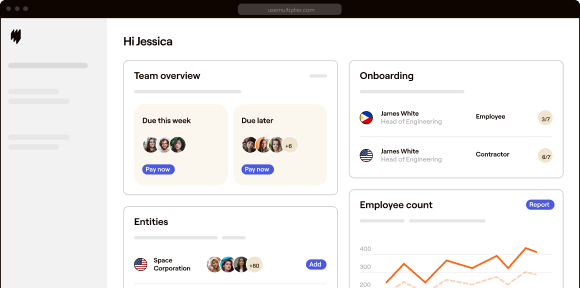
Multiplier eliminates the chaos. With Multiplier’s global payroll platform, contractors submit invoices directly. Understanding the difference between contractor vs independent contractor classification becomes automatic; you approve with one click, and every transaction is logged, ensuring accurate, compliant payments with full audit trails.
Mistake #6: Ignoring exchange rates and currency preferences
When managing independent contractor payments across borders, hidden costs like currency conversion fees and poor exchange rates can silently erode your contractor relationships.
For example, you agree to pay $2,000. But suppose your contractor receives it in their local currency. In that case, they might lose 3–5% to foreign exchange fees, intermediary bank charges, or delays — reducing their take-home pay and damaging trust in your payment reliability.
Smart businesses eliminate this friction by respecting preferred currencies and ensuring fair, timely delivery.
How Multiplier can help
With Multiplier’s global compliance solution, you fund payments in your billing currency, and we handle FX conversion and settlement at market rates, across 120+ currencies. Contractors receive the full amount in their preferred currency, with no hidden deductions and no delays.
Mistake #7: Delaying or missing payment deadlines
Delays in paying independent contractors can seriously damage business relationships. These issues often stem from missed approvals, unclear invoicing cycles, or internal backlogs. Over time, late payments erode trust — and in countries with strict payment laws, they can even trigger legal action.
Beyond contract breaches, they also hurt your reputation in global freelancer communities.
Freelancers share late payment warnings on Reddit
On Reddit’s r/freelance, contractors share real experiences about late or missing payments — often naming and warning others about unreliable clients. These public threads can quickly damage a company’s reputation and make it harder to attract quality talent.
Mistake #8: Failing to issue 1099s or other tax forms
If you’ve paid US-based independent contractors more than $600 in a year, you’re legally required to file a 1099-NEC with the IRS and send a copy to the contractor. The deadline is January 31. Missing it could lead to IRS penalties starting at $50 per form.
If you are working with international contractors, you’ll need forms like W-8BEN or W-8BEN-E to document their non-US tax status and avoid improper withholdings.
Failing to comply with these tax obligations can trigger costly fines and unwanted attention during audits.
Mistake #9: Managing global payments manually
Managing cross-border contractor payments isn’t just admin, it’s a high-stakes process involving compliance, currencies, and contracts. The question “Are independent contractors considered employees?” becomes complex across jurisdictions. Manual systems like spreadsheets and bank transfers can lead to:
- Missed or duplicate payments
- FX delays and hidden fees
- Compliance gaps across jurisdictions
- Growing inefficiencies as teams scale
Whether you manage 5 or 500 contractors, outdated tools increase your legal, tax, and reputational risks.
How Multiplier simplifies independent contractor payments
Managing global independent contractor payments doesn’t have to be overwhelming. Understanding the best way to pay a contractor involves choosing a platform that handles compliance automatically. With Multiplier, you can:
- Hire and pay contractors in 150+ countries through a single platform
- Send payments in 120+ currencies with competitive exchange rates
- Generate legally compliant contracts tailored to each country’s requirements
- Collect W-9, W-8BEN forms automatically and issue 1099s without manual work
- Automate recurring payments and invoice approvals to eliminate delays
- Stay compliant with local labor laws and classification rules across jurisdictions
Your next steps to error-free contractor payments
Paying independent contractors is more than just moving money — it’s about compliance, trust, and scalability. Avoiding common mistakes is key, but the real game-changer is using the right platform. With Multiplier, you can simplify global contractor payments, reduce risk, and stay compliant in 150+ countries.
Ready to streamline your contractor management?
Book a demo with Multiplier today.
FAQs
Do I need to withhold taxes?
No, but you must collect W-9 or W-8BEN forms to stay compliant. Skipping this step can cause reporting errors, tax complications, and costly penalties during audits.
Can I pay via PayPal or Wise?
Yes, but these platforms may lack proper audit trails and legal safeguards. Multiplier ensures every payment is fully documented, compliant, and traceable across jurisdictions.
Do I need to issue a 1099 for international contractors?
No, but W-8BEN forms are essential to document their non-US tax status. Without them, you risk incorrect withholdings and unnecessary tax liabilities.
What if I misclassify a contractor?
You risk heavy fines, back taxes, and legal disputes if misclassification occurs. A COR like Multiplier ensures correct classification from the start, reducing compliance risks.
How do I track payments and docs?
Multiplier stores contracts, invoices, and tax forms securely — accessible anytime in one centralized platform. This eliminates spreadsheet chaos and makes audit preparation effortless.