Ever imagined what it would be like to own a company that operates like a high-performing international consulting firm? These firms are known to attract exceptional professionals from diverse backgrounds, each bringing their unique expertise and perspectives.
To truly deliver impactful solutions for clients worldwide, they also need a well-defined global HR strategy. This acts as their roadmap to manage their international workforce, ensuring everyone contributes effectively to the firm’s success.
What’s a global HR strategy?
Think of it as the operations manual for your international team. It outlines methods for recruiting, training, motivating, and rewarding your global talent pool. And all of this while maintaining fairness and aligning with the company’s overarching vision.
Your global HR strategy is the framework that makes a group of top performers scattered across the globe work collaboratively towards the same ambitious goals.
Global HR strategy as a catalyst for growth
In today’s dynamic business landscape, all companies need to look at expanding their reach and influence. They have to adapt and deliver exceptional results across diverse markets.
That’s why a global HR strategy is the ultimate key to unlocking your company’s full global potential:
- Attract top talent: The most qualified individuals aren’t confined by borders. A global HR strategy allows you to tap into a wider pool of skilled professionals worldwide, giving you a significant edge when recruiting high performers. Imagine needing a specialist for a groundbreaking project. With a global HR strategy, you can search for talent across continents, increasing your chances of finding the perfect fit.
- Foster a culture of inclusion: Even with a diverse team, a global HR strategy can create a sense of unity and belonging. It establishes a common ground through clear communication channels, consistent company values, and robust recognition programs that celebrate everyone’s contributions.
- Navigate the regulatory landscape: International employment regulations can be complex. A global HR strategy acts like your trusted advisor, ensuring you’re adhering to labor laws in every country you operate in. No compliance issues here!
- Optimize processes, not budgets: By using the same core principles across different projects, you save time and resources. A global HR strategy can help create standardized templates and procedures and streamline onboarding for new hires across all locations. This reduces your administrative burden, allowing HR professionals to focus on strategic initiatives.
- Ensure seamless talent mobility: Multinational companies often need skilled employees to relocate for international assignments. A well-defined global HR strategy ensures a smooth transition for these employees, providing them with the necessary support and resources to excel in their new roles from day one.
Key components of a successful global HR strategy
Navigating the regulatory maze
To build a successful global team, you’ll need to navigate the complexities of international HR compliance. It’s not just about following the rules – it’s about being a responsible employer on the world stage. Imagine traveling across diverse countries — each with its unique customs and regulations. You wouldn’t want to miss a hidden gem or get caught in a traffic jam by ignoring local signs, would you?
Global HR compliance is similar. Every region has its own set of rules regarding working hours, minimum wage, leave policies, and even how to handle independent contractors. Failing to comply can lead to hefty fines, legal headaches, and a damaged reputation.
That’s why a well-developed HR strategy becomes crucial. By thoroughly understanding and adhering to local regulations, you can avoid these pitfalls and build a strong foundation for your international team.
A global employment platform like Multiplier makes building a global workforce a breeze. It ensures that your contracts are rock-solid and follow all the local regulations. Leave your benefits packages, leave policies, working hours, and even payroll and taxes to Multiplier, and focus on finding the best talent worldwide without getting bogged down with paperwork.
Cultivating global talent
Often a global team can burst with potential but lack the tools to truly shine. That’s where strategic skill-building programs come in. By investing in learning and development, you can build a stronger, more cohesive team. Think of it like cultivating a diverse garden – you provide the right resources for each plant to flourish.
Offer a variety of learning opportunities tailored to your unique global team. Workshops and skills development programs can hone technical expertise, while initiatives promoting cultural understanding foster a collaborative and inclusive environment. By investing in professional development initiatives, you create a true competitive advantage for your organization.
Building your A-team
A global talent pool is a gold mine for businesses seeking to expand their reach and expertise. But navigating the complexities of international hiring and retention can feel like getting lost in a labyrinth. Luckily, we can help you find the way out!
Identify the specific skills and experience gaps hindering your global ambitions. Imagine building a dream team – a diverse group of talented individuals who can collaborate seamlessly across different regions. By outlining these needs, you’ll be well-equipped to attract top talent from anywhere in the world.
Online platforms and recruitment agencies can connect you with a global network of qualified candidates. But Multiplier lets you hire them, no matter where they are. From generating legally compliant contracts to managing payroll and benefits, it ensures a smooth and stress-free onboarding experience for your new hires.
Motivating delivery
Building a successful global team isn’t just about finding talented individuals – it’s about creating an environment where they feel valued and appreciated. Competitive compensation and benefits packages are key to achieving this.
Think beyond just a salary. Design a fair compensation plan that reflects individual performance, keeps pace with market value, and aligns with your company’s goals. Competitive salaries, bonuses, and performance-based incentives not only motivate your team, they also signal your commitment to retaining top talent.
But compensation is just one piece of the puzzle. A comprehensive benefits package with health insurance, paid time off, and profit-sharing plans shows your employees that you care about their well-being. You can also consider offering remote work arrangements to support a healthy work-life balance. An attractive work environment fosters a happy and productive global workforce, propelling your company towards international success.
Leveraging technology for insights
Cloud-based HR systems offer a one-stop shop for talent management, streamlining everything from recruitment and onboarding to performance reviews and payroll. Employee self-service portals empower your team to take ownership of their information and requests, freeing you to focus on strategic initiatives.
But the magic truly happens with data analytics. Predictive insights help you anticipate skill gaps, identify high-potential talent, and plan for future needs. Cloud technology ensures everyone has secure access to this valuable information, regardless of location. By embracing technology, you can transform global HR from a burden to a strategic advantage.
Multiplier frees up your HR team to leverage the power of cloud-based HR systems and data analytics, while also ensuring compliance across 170+ countries. This powerful combination enables data-driven decision-making for your global workforce.
Global HR strategy: Challenges and solutions
Building a successful global workforce brings immense benefits, but crafting a global HR strategy is no easy feat. Here’s a breakdown of some key challenges and our proposed solutions:
Challenge 1: Diverse work practices and expectations
Different countries have established work practices, communication styles, and cultural norms. A one-size-fits-all HR approach won’t work.
Solution: Develop a standardized HR framework with customizable elements to address local needs and best practices. This allows flexibility while ensuring core policies are aligned.
Challenge 2: Complex legal and regulatory requirements
Compliance with local labor laws, regulations, and social security standards varies greatly across countries. Failing to comply can lead to legal trouble and reputational damage.
Solution: Partner with local HR specialists, legal counsel, and payroll providers to ensure compliance and navigate local nuances. Stay up to date on changing regulations to avoid any issues.
Challenge 3: Cultural gaps
Effective communication is crucial for onboarding, training, and performance management, but language barriers and cultural differences can create misunderstandings.
Solution: Implement programs that foster cultural understanding and build trust. Offer language training programs or utilize translation services to bridge communication gaps. Promote a company culture that values diversity and embraces a global perspective.
Challenge 4: Communication across distances
Global teams face time zone differences, geographical separation, and potential limitations with technology infrastructure. These can hinder collaboration and the sense of team unity.
Solution: Utilize technology platforms built for global communication and collaboration. Schedule regular cross-team meetings that accommodate time zone differences. Invest in technology and infrastructure that can support a geographically dispersed workforce.
Challenge 5: Hiring and retention of best global talent
Competition for skilled talent is fierce on a global scale. So developing a competitive compensation and benefits package and a positive work environment becomes even more critical.
Solution: Conduct thorough research on local market conditions to ensure compensation and benefits packages are attractive. Offer flexible work arrangements, invest in remote work capabilities, and prioritize a healthy work-life balance. Develop and invest in talent development programs to nurture and retain top performers.
Additional considerations
Beyond the core challenges mentioned above, here are some other important aspects to consider when crafting a global HR strategy:
- Cost: Implementing a global HR strategy can be expensive, especially for small and medium-sized organizations. Careful budgeting and cost-benefit analysis are crucial.
- Coordination and communication: Establishing clear communication channels across different countries and teams is essential for consistent HR policy implementation.
- Technology and infrastructure: Technology can significantly impact HR operations. Investing in solutions that support a global workforce is vital.
By understanding these challenges and implementing effective solutions, companies can build a robust global HR strategy that attracts top talent, fosters a positive work environment, and propels them toward international success.
Multiplier for worldwide workforce management
Changing work patterns and technological innovation has necessitated a re-evaluation of global HR management practices. To effectively steer through these shifts and align employees with organizational objectives, a streamlined approach is imperative. As the scope of HR widens, the reliance on advanced tools like Multiplier becomes indispensable.
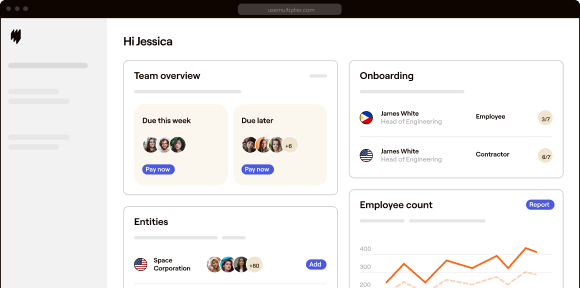
Multiplier’s EOR platform offers a holistic solution, automating global hiring, ensuring compliance, managing employee activities, and overseeing global payroll. By consolidating these critical functions, it empowers HR professionals to concentrate on strategic endeavors, rather than administrative burdens.
In addition to simplifying global onboarding, Multiplier’s PEO tools ensure compliance with local labor laws, streamline contract management, and facilitate global payroll processing.
Leverage Multiplier’s comprehensive suite of tools to streamline your HR processes and optimize efficiency.
Get in touch to discover how Multiplier can revolutionize your global HR operations.