00.00
Trip Hawkins He's as crazy as everybody thinks. He had a really serious dark side. You know, he just thinks that everyone should do what he wants you to do. Kind of like it's a religious cult.
00.11
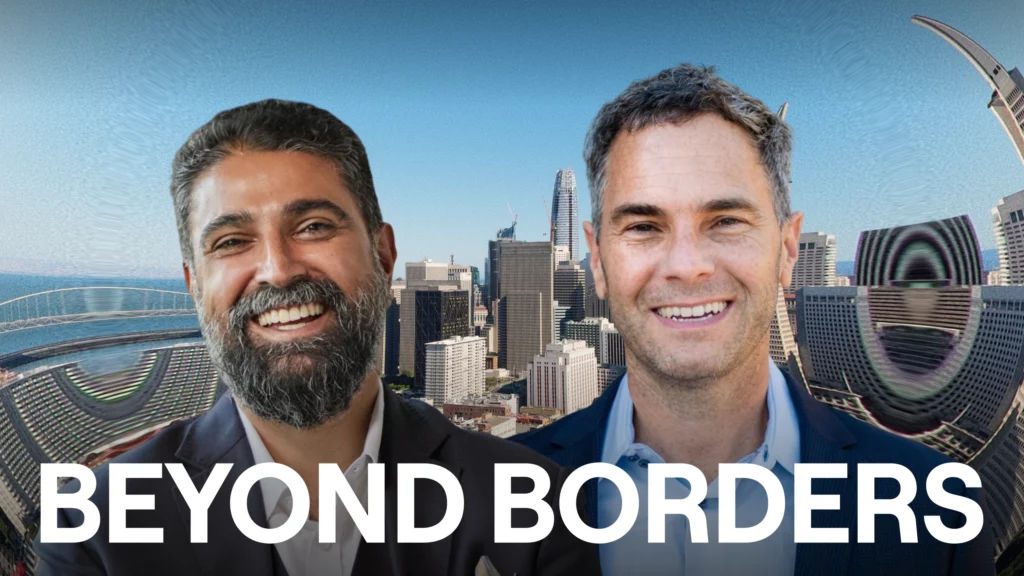
Intro Welcome to Beyond Borders San Francisco, a multiplier series bringing together global leaders to discuss the bold, defining decisions that shaped how the world works. Today we sit down with Trip Hawkins, founder and first CEO of EA Games, and Sagar Khatri, co founder and CEO of Multiplier. In this episode, we cover when it takes to build a company, a market and a culture from scratch.
00.41
Sagar Khatri You were always very passionate about games, but you realized that the proliferation of computers were not that high. So that you are. Even if you launch to a game, the adoption may not be high. So you went and fixed that problem first with Apple. Tell us more about that.
00.56
Trip Hawkins Well, just before I went to Apple, I was still in college and I realized I needed to study computer science because I was going to be making games on computers. And I got a job with a big computer think tank. And one day one of my co workers came in after lunch and said, hey, Trip, there's a store that just opened where you can rent computer terminals that allow you to use a modem at home and connect with our mainframe. And I'm thinking, oh my God, it's starting to happen. It turned out that store was called the Computer Store, and it was in Santa Monica, California. This guy named Dick Heiser literally opened the world's first computer store. Pretty soon he became a dealer for Apple once the Apple II came out. So I just happened to be showing up, and I love the right place at the right time. There's just happenstance and complete total luck involved in some of these things. But he, he went off to go back to work in that afternoon, and I was still just eating my little bag lunch, you know, in my office, and I started thinking about go, wow, this is it. If retail stores are happening and the it's going to get to devices. And my colleague had said, yeah, well, it's not just terminals. Intel has invented this CPU and there's hobbykits now. And, you know, it's really happening. And I'm going, wow, this is really exciting. And I'm penciling out, okay, how long is it going to be before there's enough computers in homes that I can make software games that will be commercially successful? And that afternoon in 1975, I decided that it would be 1982, and that's exactly when I founded Electronic Arts. But I had a path to get there, the path was go back to school, get a special major that basically turned out to be the world's first degree in video games at Harvard. And of course they just made, they punished me by making me do twice as much work, but I was able to do what I wanted. And then I got an MBA, which arguably maybe I didn't even need. And then I got the gig that allowed me to write the first national study of personal computers, which is what got me in the door in places like Apple. Because I'm not really an engineer. I mean, I understand computer science, I barely understand how electricity works. One of the things at Stanford Business school was don't go into Silicon Valley unless you're an electrical engineer. Yeah, way. Not that. So I go down there anyway and it turns out that what the engineers really needed from me was expertise about the market and the customers. And Apple was very excited that I was the, I was the guy who created the first professional published study about personal computers.
03.54
Sagar Khatri So you took a series of decisions which led to the founding of your EA, ultimately which became a really large business. But before I, you know, go and try to learn more about EA, I would love to understand, because Steve Jobs is such an inspirational figure, how was it to work with him?
04.12
Trip Hawkins Well, I had a lot of fun working with him and you know, he and I were very like minded and he always treated me with great respect. He was very upset when I left. You know, he's kind of like that with people that he believes in. You know, he just thinks that everyone should do what he, he wants you to do. Kind of like it's a religious cult. But he's as crazy as everybody thinks. And he has, he, he had a really serious dark side, but you know, he didn't, he wasn't real mean to me, but unfortunately I was often his wingman. And we'd be walking around and I, I'd watch him just step into somebody's cubicle and blow them up, you know, and like, you know, what's, what is he doing this for? You know, the other thing about Steve is that I was one of the few people at Apple in the late 70s that wore a suit and a tie. I'm a young man, I'm 24, Steve's 23. But it got me taken more seriously, which is kind of ridiculous. Anybody could pull that trick. If.
05.17
Sagar Khatri You wear a suit and a tie in Silicon Valley today, they will not let you in their office.
05.21
Trip Hawkins Yeah, so anyway, I found that I was kind of the rational one when Steve was being the crazy one. And, you know, we were often doing things in parallel, and a lot of people, both in, you know, insiders and contractors and new candidates and people who were trying to do business, a lot of them realized that they didn't know how to deal with Steve. And so they would come to me, and a lot of them would just literally say, what is the deal with that guy? And I knew the answer. And I told him, I said, this guy was given up for adoption at birth, and he's still mad as hell about it. And he's going to make such a big deal. His goal is to make such a big deal, he's going to stand above all of humanity and have the entire world know about him, including his biological parents, who will finally feel their shame. And that actually is what played out,.
06.18
Sagar Khatri If I may digress a little bit. And if I ask you, what is that one or two memories of working with Steve Jobs that still remains with you today and you would like to share with our audience?
06.29
Trip Hawkins Well, one thing that strikes me when I think back to both Apple and early years at Electronic Arts is how we would all pile into a room for a meeting, and there would be a lot of yelling and screaming. And yet it all worked out. We didn't leave the room until we all agreed on what we were going to do. And then everybody knew what their assignment and their execution task was, and that actually worked. And we. We actually cared for each other because we. These companies had really strong cultures with alignment around values and beliefs. And, you know, we. We would fight like hell because we cared about getting to the truth. It wasn't just competition or ego. It was about everyone being heard and figuring out the best answers and then execution. So I kind of learned how to make it work that way at Apple, and it worked just as well at Electronic Arts. I think when you reach a certain size, everybody needs to calm down a bit. But that's a fond memory I have of that kind of constructive chaos, the specific Steve Jobs anecdote. Of course, he was often in the room creating chaos. But one time, I'm just peacefully sitting at my desk in a cubicle, and Steve comes by, and he looks at me and says, hey, Trip, have you ever taken LSD? And I looked at him, I go, no, I thought so. And then he walks away. And I'm thinking to myself, okay, Steve had just in a meeting, somebody's arguing with him about something. They're claiming their right because of things that they learned from me and arguments that I've made and Data that I had and it's defeating whatever argument Steve is trying to make and it's pissing him off. And this is where he decided, you know, Trip, you know, I really need to get that guy to take some LSD. I didn't, by the way. I still haven't taken LSD.
08.41
Sagar Khatri Yeah, no, thank you for sharing that, Trip. I think, I mean, you know, it's been six years since we founded Multiplier and we are obviously nowhere as close to legendary companies that Steve and yourself have built. But today we also live in an era where there are extremely young founders building really valuable businesses. When I started my company, I was 26, 27, I was an angry young man. Some people might say I'm still today a little crazy, a little cuckoo. But I think you need to be a little crazy.
09.18
Trip Hawkins You have to be a little crazy sometimes. You have to be more than a little crazy.
09.22
Sagar Khatri And the advice that you get from your, so you're a young founder CEO and suddenly you go and raise hundreds of million dollars of venture capital. Then you have all these board members. The advice that you get from your board members, hey, you need a very solid executive team. Get somebody who has done payroll for 25 years. In your case, get somebody who might have been in, call it Silicon Semiconductors, whatnot. And all these executives, they come, they're very mature executives. And at some point I feel that there has to be the right level of craziness and maturity. And you've done this exercise a few times. What is your opinion? And the follow up question to that, how was, you know, back in the day, how was your board dynamics like and who was on your board?
10.07
Trip Hawkins Well, first of all, I started Electronic Arts and I'm still in my 20s, but four years at Apple, that was a heck of a base of experience to be building off of because when I had started there, we had a couple dozen office workers. It was a hobby business. Less than a million dollars in revenue the prior year. And within four years it's a billion a year revenue run rate with 4,000 employees.
10.29
Sagar Khatri That is insane.
10.30
Trip Hawkins So you're learning as you're going through all these growth stages and the roller coaster ride. I used to tell people it was like an early airplane trying to go Mach 2 and the Canvas is peeling off the wings. It's just how we're going so fast. This is ridiculous. But you still managed to pull it off. So, you know, Apple getting to be part of something that grew that fast and survived and grew out of adolescence into adulthood, the way they did that was a profoundly valuable experience to acquire. But I'm still a founder CEO at Electronic Arts and I'm still in my 20s and man, I've got a lot of unfinished business. And you know I, I did get some help with some good mentors and I, and I wanted to have strong people on the board because I thought, yeah, I probably need some pushback. I need some people that you know, are not afraid to criticize me and challenge me, you know, et cetera. And one of my colleagues while I was still at Apple, he was, while I was at Apple, I'm trying to figure out what are the fundamental, what's the big idea going to be for Electronic Arts and what are the fundamental pillars of strategy that are going to make it a unique company. I'm puzzling that for years and a colleague, while I'm still at Apple, I'm already on my way out. This colleague comes by and he just went on an airplane ride and found an article in the airline magazine he thought I should look at. But I found this other article because the cover boy of that issue was Don Valentine. And I thought, I read this story, this little one page story about him, it talked about how he's so tough that a guy had come into his office to pitch him and Don had intimidated that guy so badly that he passed out in his office. So what's my takeaway? I want him on my board.
12.27
Sagar Khatri Oh, very interesting.
12.28
Trip Hawkins And sure enough, he was the lead investor when I raised capital.
12.35
Sagar Khatri For our audience. Don Valentine is the legendary founder of legendary venture capital.
12.39
Trip Hawkins Yeah, Don Valentine was really the original Alpha OG gangster of Sequoia Capital. And a very unique style, very unforgiving, super critical. But when he made the investment he took me to lunch and he said look, I'm going to try to tell you what to do and if you always do what I say, I'm not making this investment. If you don't know what to do, why should I invest in you? And I'm going, this is great. This guy's empowering me to do what I want to do. Not really true, because he's going to fight me tooth and nail in every meeting.
13.19
Sagar Khatri Trip, thank you for sharing that. At Multiplier we have erstwhile Sequoia Capital India. Now it's called B15 on our board too. And I have heard, you know, it's been six years I've them on my board and few things. One is that's the only board seat that I've ever given out and I and the DNA of that firm is so strong, and I have seen that play out every single day, that they will tell you exactly what to do, but if you do exactly what they do, they won't back you again. So, so, so they need, they have this constitution at the back. They need a little crazy people and, you know, people who, people who do not believe in, like, they are a little crazy, they are a little alpha. They are, you know, they, they are little outsiders. They are immigrants and whatnot. How was it working with Don? Like, you've, you've, you've worked with him over four or five years. How was it working with him?
14.14
Trip Hawkins It was fantastic to have talent like Don on the board, and I had other very capable board members also. And I think this idea about entrepreneurs needing to be crazy, it kind of breaks down into key component parts. One of them is you've got to be really risk tolerant. You've got to be willing to believe that you're going to literally create magic, that you're going to innovate things that people yesterday said were impossible. And this is what's so amazing about the human imagination, is that every day we create that kind of magic. We innovate and invent new things, and a lot of them turn out to be a really big deal. So this is one of the things about a startup, is that you've got to get people that have the same passion for what the founder wants to do, and that's going to end up becoming the kernel that you build the culture around. And if everybody kind of believes in that passion in that direction, and that's great. And of course, a founder that's really charismatic can help woo people, but you better have a plan and you better be able to explain it to your staff and they better understand it and they better believe that it is a winning plan. Once you have that, and you're good at only hiring those people that fit your culture, that have the same values, now you're on your way. And this is where trying to hire people that have a huge amount of experience, anybody that spent time in big companies, they end up being run by the politicians and the bureaucrats.
15.51
Sagar Khatri Absolutely. Yeah.
15.52
Trip Hawkins And, you know, it's just much more difficult to get innovation out of organizations like that. You know, when Clayton Christensen invented disruptive products and all the big companies freaked out from that his bestselling book, and they all went to him and they said, you got to help us disrupt ourselves. And he tried for a decade, and then he wrote a second book that hardly anybody other than me seems to have read. But in the book he basically said, yeah, they're screwed. So yeah, these startups, this is where you have a chance with 20 something entrepreneurs that have the right passion and aptitude. If you got the aptitude and the passion, you don't need experience because you're inventing something new anyway. Who the heck's got experience with that? Nobody can play the experience card and say, oh, I've done that for 20 years. No,.
16.42
Sagar Khatri You know, I have a saying at multiplier around experience. If you ever come to a meeting and says, hey, in my last 20 years I have seen this happening only this way, so we'll proceed this way. That's the worst argument that you can use, that last 20. So my answer to them is that last 20 years of experience have gotten you a seat on the table to work with us. So then you cannot quote that 20 years into every single. You have to earn the respect. You have to start from scratch. But going back to the point About Sequoia and Peak 15, now, there are two important lessons that I learned from them and I still apply that today. I face a lot of pushback. I'm still a young founder, I face a lot of pushback from my leadership, but I still stick to those two principles. One is self awareness. To their credits, they are not averse to hearing bad news. In fact, they love bad news. They love good news more than bad news. But the idea is as long as they feel that my founder and CEO is aware, self aware, he knows what is wrong, she knows what is wrong, they are okay with it. If as long as they don't need to point out, they feel that the founder is not living in some la la land where he's not aware of what's wrong with the company. So that's one which is self awareness. I follow that today with my company, I will tell my CMO CRO all CXOs that, hey, hey, this is wrong. I'm telling you this, we have to act on it. I'm not going to cover it up with some beautiful English. The second is getting to the truth, which you've talked about. Get to the truth faster. It might sometime seem like a conflict, but I would day in and day out and thanks to them, they day in and day out go on a call and people call it seeking conflict. But I'm not seeking conflict, I'm seeking truth.
18.27
Sagar Khatri I am saying, hey, your partnership function is not working and here are the numbers. I'm good at looking at the numbers. You might be an experienced CRO. But I'm telling you, or you might be an expert. I have Trip. I have never sold before I started my company. And I'm in no position to teach sales to anybody. But I can tell you numbers are not lying. I'm good at Excel. I can show you that the function is not working. My job is to come and seek truth. Now. It's our collective job to solve for that. So we've talked about how did you start your company? We talked about the detour that you took to make sure there was enough computer adoption, we talked about your board. But EA has been a phenomenal success. It's a really large business.
19.09
Trip Hawkins Thank you.
19.11
Sagar Khatri How did you hold onto your nerve? What. Essentially, we have to summarise what worked out so that it became such a large and enduring business, as we like to call it.
19.23
Trip Hawkins Again. I think this is a quality that many entrepreneurs have, is they're. They're great hustlers with a lot of determination and, you know, self confidence. So they just don't give up that easily. I mean, that's really important. I mean, in the long run, you have to hang in there and make the effort, you know, and of course, if you have the wrong ideas or you're in the wrong place at the wrong time, you know it's not going to work out. But I always had that kind of confidence about whatever it was that I believed that could happen, and that just helps you hang in there. But case in point, first couple of years at EA, we were in a crisis around one of the key strategies that we had, and we were not operationally efficient and we were running out of money. And I sent a monthly package to the board members, and one day in the mail, one of my packages comes back to me and it's open to page, like, 27. And there's the famous bicycle. Were you.
20.31
Sagar Khatri Sending MIS via email back in the day?
20.34
Trip Hawkins Yeah. This is physical mail back in the day. And this is Don Valentine's copy. And he had clipped. All he did was clip his business card to page 27, fold it over, and then circle a couple of numbers. And he's on the cash flow report.
20.51
Sagar Khatri Yeah.
20.52
Trip Hawkins And all he wrote, three words, two months left. So he's basically saying, dude, you're going to be frigging out of money in two months. What are you doing? The funny thing is, I saw that and I just laughed because by that time I'd had a few years of experience dealing with Don and. And I had already fixed the problem so that. Okay, he doesn't know it yet, but it's gonna be fine. Again, that's one of those things where you gotta have that kind of confidence in yourself, in transforming change in your organization and identifying the problems and being honest and not ignoring them. Don't act like Hamlet, for God's sake. Everybody dies in that play. Right? It's his fault.
21.38
Sagar Khatri And Trip, you know, you've talked about how you looked at companies from a totally different perspective. You've thought about companies as Bollywood. Sorry, Bollywood. Hollywood. I'm from India, Trip. Sorry.
21.52
Trip Hawkins Right.
21.53
Sagar Khatri You've talked about companies as Hollywood movies or movie studios. Tell us more about that. That's a very interesting anecdote.
22.00
Trip Hawkins Well, I was at Apple still. I knew I wanted to make games. I knew that games were going to be a new consumer entertainment medium. And I did actually have the belief that it would be as big a deal someday as television. Of course, it's far bigger than that now. So I'm thinking about this and realizing, wow, this is kind of related to what Hollywood does. But it's different. It's digital, it's technology. And it's going to emerge in these new forms, like games that are interactive. You know, most media is passive. If you just sit there and you watch or you read or whatever. You know, at least when you're reading, your brain has to convert everything into, you know, you have to imagine it and parse Arabic letters into words and sentences and scenes. Right. But I was hunting while I was at Apple. I want a big idea that's going to really set the company apart. And I was working with these really talented software engineers, and I realized these people act like opera divas. They are true artists. And nobody's really thought about engineering as an art form. So I'm going to do that and I'm going to call them software artists. And I'm going to make sure that the company is perceived by the outside world as this is the company that knows how to nurture and commercialize software artists. And great. Okay, now I've got the big idea. And now I can kind of build the rest of the plan around that. And again, it comes back to needing to have a good plan. I've advised hundreds of startup founder types, and one thing they all have in common is they're all a little crazy and they're all charismatic. And we have plenty of famous examples of charismatic founders that didn't have much of anything else, like Elizabeth Holmes. That led to some problems, right? Well, it turns out in my experience, about half of founding CEOs aren't really good at planning.
24.09
Sagar Khatri Yeah.
24.09
Trip Hawkins And planning is a discipline that just came naturally to me. And then I got it. I got a chance to refine it and improve it while I was at Apple. And Apple had a lot of people that had been at intel and National Semiconductor and Fairchild and HP and they had picked up, you know, planning tools and so on from them. So I got really disciplined about it. And again, it always astonishes me if I meet an entrepreneur and they can't really describe their plan, I'm thinking, boy, that's going to be a problem.
24.42
Sagar Khatri Very interesting. I have a very similar anecdote. So when I was starting Multiplier I was still in my last company leading finance. So I would say I was numbers wise I was okay, but socially I was really awkward. Charisma is like 100 levels above. I couldn't even hold a normal conversation. So when I was, when I was starting the business, you know, I was in Singapore, people knew he was, you know, he's relatively okay, he's a good, he can take care of the money. He's not that bad. He's smart. So Sequoia agreed to give me $4 million of seed money even before I started the company. And I've been very thankful to them about that. But they said you need co founders. I'm like what the hell is co founders? So I said I have to go and get a co founder. That's where I really learned the power of storytelling. I have two co founders. One of my co founder is a batchmate of mine from IIT Bombay which is your MIT and Harvard types in India which is where you're Google CEO of Microsoft.
25.39
Trip Hawkins I've actually given a couple of speeches on that campus.
25.42
Sagar Khatri So you're familiar with it. And we are in a, at Multiplier. We are building the global exchange for work. And you know we are in payroll HR. Not the fanciest of the industry to be in.
25.54
Trip Hawkins And yet so important.
25.55
Sagar Khatri Exactly. Honestly if you think about all the big businesses, a lot of boring businesses make a lot of cash flow, right? Yes. So I, I went to my co founder, his name is Vamsi and I said hey, we are going to build. And I knew if I tell him we are going to do payroll he'll be like dude, I'm one of the smartest engineers on the planet. I am not dedicating my life to payroll. I want to do games and crypto and whatnot. And I said to him I packaged this so well. I said we are changing the way how the world works. We are proliferating, remote work. So the power of storytelling, if you can, convincing really smart folks to work on the most boring problems, because that's where the value gets created. So we've talked about this, looking at companies as Hollywood movies and studios. But eventually you have to run a company for a long term to create value. You've been running it for six years. EA has gone on for decades. Culture becomes really, really important. And most companies will say, hey, we have this culture. We have people centric culture. In the beginning years of my building the company, I couldn't understand what that meant. How have you navigated that? How did you build that people centric culture? How did you proliferate that culture into every single action that gets taken daily inside the company?
27.23
Trip Hawkins Well, I think for a long time in human history, there wasn't a viewpoint where the organizational model for a business would be anything other than a dictatorship, also known as an autocracy or a bureaucracy. That's pretty much what happens to all big companies. And the idea of culture as a model of how to organize a business. And another example would be a marketplace, like in Morocco. That's an organized business proposition, but it's complete chaos and nobody really owns it. There's a bunch of participants. And of course, marketplaces are quite common now. You have all kinds of digital marketplaces, prediction markets, et cetera. So that's kind of trying to cram its way into the business, the organizational space, but it's not going to get very far. You need something else. And it turns out what you need is culture. And culture, it's basically a group of people that pass the same values and beliefs on from one generation to the next. So you got to figure out at the baseline, what are those values. And when I was still in school, both at Harvard and then getting my MBA at Stanford, some of the first academic researchers to really study this question about whether or not there's another organizational model available to businesses, like Bill Uchi at Stanford. He came up with a theory based on what the Japanese had done since the end of World War II. And he realized there was a way to possibly take some of those lessons and do them outside of Japan. And then there were also some of the world's biggest thinkers about organizational decision making, like Graham Allison, who published the Essence of Decision. Tom Schelling, who's my personal hero at Harvard because of his game theory course. But he also ran the Kennedy School of Government. And he was someone who was the very first human to win a Nobel Prize for game theory. And these are all people that were leading thinkers about other organizational models. So then I show up at Apple, and the end of my very first week, there's a huge party at a restaurant, and Scotty, our CEO, gets up and is telling jokes and everybody's getting drunk. And I'm realizing this is an example of a good culture. And, you know, we had a small enough team at that point. Again, nobody would have joined us unless they were exactly crazy like us in the same ways and ready to commit fully. And, you know, that's where you realize the power of culture. And then the question is, how do you maintain it? Because Apple didn't. Apple grew really fast, and after a year or two, I could see the culture falling apart. And I went to the founders and say, and I said to them, you guys really need to formalize this and create some business practices around it. Otherwise it's going to fade out. You're going to have this building that's on a National Semiconductor culture and this building over here on HP culture. Let's not do that. And they said, Trip, that's a great idea. We're too busy. So you do it. So everybody still talks about Apple culture. I've.
30.53
Sagar Khatri Done that a few times in my company. Somebody say, oh, we have this thing broken. Great. Fix it.
30.58
Trip Hawkins Yeah. Well, anyway, they asked me to do that. I put a committee together, we formalized it, we published the, quote, official values, and then I helped Apple execute a whole bunch of business practices. But I wasn't the founder, I wasn't the top executive. So, you know, that person really has to be the place it starts, and everybody has to bring it back to that person and their values. And, you know, that's as far as I could get with it at Apple. But obviously it still turned out well for them, you know, to have a meaningful culture. But I just took it way further with Electronic Arts, and I was just constantly thinking about little business practices that would make it more profoundly meaningful to everybody and have everybody more committed to doing it in that way. And that included the fact that if you're trying to hire somebody, you have to figure out if they fit our values. And I'm going to interview every single person that gets hired before they're hired, and I'm going to ask them about their values. And if they don't have the right values, I'm going to wonder, why did you put this person in front of me? Waste my time? Right?
32.07
Sagar Khatri Yeah.
32.07
Trip Hawkins So I wanted there to be pressure on anybody that's hiring anybody to know that Trip's going to need to approve this. And yeah, I better check that box around culture, because that's what Trip is going to be looking for.
32.19
Sagar Khatri At Multiplier, we have the culture of three T's. Trust, transparency, and thoroughness. And I created that culture, or I created that three T's thing at Multiplier because those are my personal values in life. And I wanted to run the company that I built with my own values. Trust essentially means trust is the currency to do business. And it's not how the word trust gets thrown, as in English. No, none of that. Trust. You know, it's defined like, we trust you. You come here as an executive. We trust you to do your job with minimal intervention. I cannot teach a 20 year 20. A guy who's been in or a person or an executive that has been in sales for 20 years. I, in no shape or form can teach them how to do sales. So trust is, we've trusted you to build that organization, and you come and do it in the shortest possible time. Then there's transparency, where everybody knows what is right with the company, what is wrong with the company. And Trip, I share my cash balance, my revenue, everything. in a town hall with the entire organization. And then there is thoroughness, which is do not pass the ball at 99%. See to it. Like, don't do that politics that you're talking about. Like, if you raised your hand to do something, see to it. But again, comes as it. You know, you talk about culture, right? Culture. Essentially, you obviously, you know better than me, but in my opinion, culture has to, you know, go so deep that every single action that you take in the company has to be culturally approved or for, you know, English is not my first language, so I struggle with that. What I mean is every single action needs to be following that culture that you said. But it comes at odds with when you hire some of these executives. Because I have a co founder who is relatively more mature than me. And he'll say, bro, you are not giving psychological safety to your executive. And that doesn't resonate with me which is like, I am. I am not here to give people psychological safety. If you're looking for psychological safety, you are inherently at a wrong place. Let me show you the math that how you're going to make tens, hundreds of million dollars with me. How you will wake up every morning and you'll be like, I'm going to do the best job of my life.
34.34
Trip Hawkins Yeah,.
34.35
Sagar Khatri But psychological safety, like, dude. And he will say, no, no, you are young, all of that. So true. Trust, transparency and thoroughness, to be honest, quite often comes at odds with that psychological safety. What do you think about that?
34.51
Trip Hawkins I agree with you. Look, if you're an innovative company, you are by definition out on a bleeding edge.
35.00
Sagar Khatri Yes.
35.01
Trip Hawkins It's called a bleeding edge because there's bloodshed.
35.04
Sagar Khatri Yes,.
35.05
Trip Hawkins Yes. That's part of the job. And everyone is going to end up having to bleed and getting over it and not being too freaked out by it. You know, it's like I used to play football. It's like if you could have the most horrendous, you could have an injury with a bone sticking out and everybody on the sideline and the coach would just say, shave it and tape it. You know, get back out there. Shave.
35.25
Sagar Khatri It and tape it. Exactly. You.
35.26
Trip Hawkins Know, there's a sensibility like the game's going on, you know, we're not going to worry about you, your injury. We want to worry about winning the game.
35.33
Sagar Khatri Yes.
35.34
Trip Hawkins Those are all good, good aspects of culture. And you know, again, it's, it's, you want to harvest that from, from the other people that, you know, have the closest mindset with you. And you know, I, I, I've just felt like I want everyone to think like I think if possible because I'm, I'm not, I'm not always going to be in the room. But I want them to think, think what would Trip do? And I want, and I want them to remember the values that I, you know, okay, these are my values. They're your values, you know, so I want the decision making based on the values. Right.
36.07
Sagar Khatri Thank you for validating that. I have exactly same thing, but it's more about how would Sagar spend this dollar if Sagar was spending dollars? You know, we've raised obviously chunky amount of money. Not as much as Silicon Valley companies are raising these days. But we are being very financially frugal.
36.26
Trip Hawkins That's great.
36.27
Sagar Khatri And, and I always tell people, spend that dollar, like don't ask me the budget. I can't give you the budget if you're a CMO. If you promise me I'm going to deliver 60 million of net new ARR if I spend $30 million. If I spend $100 million, I'm going to give you $200 million. Go spend half a billion dollars. Give me a billion dollar in ARR. But spend money as if I was spending. So, so, so, you know, and of course we need all kinds of people in life. It was only you and me. We will not have people who are working with me. We also need people like my co founders, your board members who can tone it down a bit because we need to attract all kinds of talent and not everybody wants to be at the edge all the time. And you know, and the business became big and you've run businesses in all these countries. You've run businesses in 30 plus countries. Let's change the gear a little bit. Let's talk about global. We've talked about Silicon Valley, we've talked about American entrepreneurs, we've talked about America. And I realize that Americans love to talk about America. I come from Asia, so I would love to understand your global perspective. What did going global teach you that Silicon Valley couldn't?
37.35
Trip Hawkins Well, when I got to Silicon Valley, it was really the only place on the planet where you could do what I needed to do. Among other things, Atari was here, you know, Apple was here, you know, the, the Internet ended up getting developed here. I mean there's just so many fund fundamental things and there, there was, there wasn't any other city in the world where you had had a talented, a talent base already lined up to do it. And, and that was true for several years. And then next thing you know, Seattle, you know, made an emergence and you know, a few other places. And I'm particularly fond of what happened in India because they made a government decision to change curriculum and universities to really target IT. And next thing you know, they've got all these really talented IT people, you know, like in Eastern Europe places even like Spain that were under Franco until fairly recently. You know, they were, they were maybe set back by the, the political climate in their countries. Like if you, if you didn't have a political climate that the US agreed with, you're not going to get the same degree of support.
38.47
Sagar Khatri Right.
38.48
Trip Hawkins Anyway, many of these same places never stopped caring about education. So where did Tetris come from? Tetris was invented by a Russian. He was a mathematician, you know, so he's a brilliant mathematician. You know, he's really well trained in the educational system in Russia and that, that related to his ability to invent Tetris. And I, I just realized at a certain point that, okay, now there's talent everywhere, there's education everywhere. And what I cared about because I'm really terrible at remembering languages. So I thought I, I want to be in, I want to be global, but I want to be in places where there's English fluency and, and you know, we had a business in Spain and they weren't that fluent. So we just took every, you know, every Friday, there was a half day of English instruction in addition to what they were already needing to do just to cope. And, you know, it's okay, you know. And so we've gotten to a point now where in the last few decades, English has become the lingua franca globally, which allows me to be very lazy about what languages I need to learn how to speak because I'm just not good at that.
39.57
Sagar Khatri Well, Trip, thank you. It was a pleasure having you today. It was. I've been doing this for some time, but this was one of the most engaging conversations I had. I really enjoyed your anecdotes. I really enjoyed how you took a detour to Apple first to get the proliferation of computers going, then you built Electronic Arts, then you had this amazing culture, and then you went global. So thank you so much for talking with us today. My pleasure. Thank you so much for showing up and. Yeah, thank you.