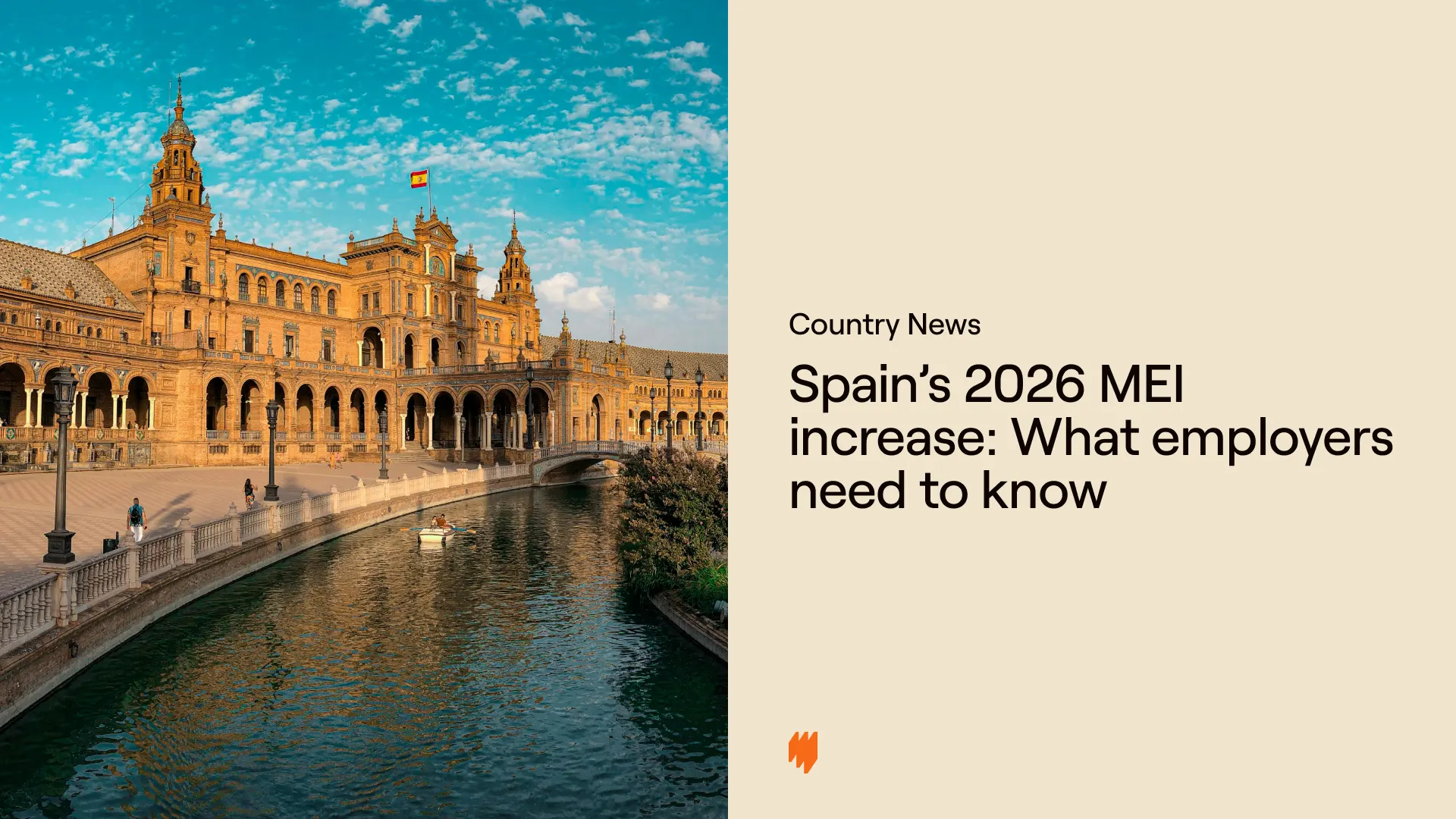
As the Spanish government advances its structural reform of the national pension system, the year 2026 brings a new development in payslips. Beginning January 1, 2026, the Intergenerational Equity Mechanism (known locally as Mecanismo de Equidad Intergeneracional or MEI) will see its third consecutive annual increase.
Created to replenish the Social Security Reserve Fund – commonly called the “pension piggy bank” – the MEI is a mandatory contribution affecting nearly all workers and employers in Spain. While authorities present it as a shared responsibility to secure long-term pension sustainability, for many individuals it translates into a lower net salary and a heavier financial load on businesses.
Understanding the 2026 MEI increase
The MEI was introduced by Royal Decree-Law 2/2023 as a replacement for the previous “Sustainability Factor”. Its primary goal is to address the demographic challenge of an aging population by building a financial cushion to pay for the retirement of the “baby boomer” generation.
However, the 2026 update has reignited debate over the “hidden” nature of this tax. Critics argue that the reform places an unfair burden on the current workforce, particularly younger employees who are seeing their purchasing power eroded by “bracket creep” – where inflation pushes wages up, but higher taxes and social charges keep real earnings stagnant.
Furthermore, the reform is not happening in a vacuum. In 2026, the maximum contribution base is also expected to rise to approximately €5,101.20 per month. For companies, this means the cost of payroll in Spain for senior-level talent is increasing on multiple fronts simultaneously: a higher base, a higher MEI rate, and the new progressive solidarity tranches for top-tier earners.
What this means for skilled workers
For the average professional in Spain, the MEI increase translates to a smaller paycheck. While the individual percentage change (0.15% for the employee portion) might seem marginal, the cumulative effect of various social security hikes is becoming significant.
- Reduced Purchasing Power: Depending on the salary level, the 2026 MEI deduction could reduce annual take-home pay by up to €95 for those on the maximum base.
- Higher-Earning Impact: Professionals earning above the maximum contribution base (approx. €61,214 per year) will face an even steeper drop in net income due to the simultaneous rise in the “solidarity contribution,” which can add another 1.15% to 1.46% in taxes for those in the highest brackets.
- Tax Transparency: Workers are encouraged to review their January 2026 payslips to ensure these new deductions are accurately reflected under the “MEI” or “contingencias comunes” sections.
What it means for employers
For businesses, the 2026 MEI hike is an unavoidable increase in labor costs. The employer’s share of the MEI rises to 0.75%, meaning that for every employee on staff, the company must pay more into the social security system regardless of performance or revenue.
The complexity of these changes makes it harder than ever to expand your global workforce in Spain without local expertise. Companies must now navigate:
- Updating payroll software to handle the new 0.90% MEI rate.
- Calculating the new “solidarity contribution” for high-earning staff.
- Budgeting for a social security cost that is now structural and guaranteed to rise every year until 2029.
If your company is looking for how to hire in Spain without getting bogged down in these administrative and compliance hurdles, an Employer of Record (EOR) is the ideal solution.
A partner like Multiplier handles all social security registrations, calculates the correct MEI tranches, and ensures your team is paid on time and in full compliance with the 2026 labor laws. By using an EOR, you can focus on scaling your business while we manage the intricate details of the Spanish tax blockade and pension reforms.
Navigating Spain’s 2026 MEI increase
The 2026 rise in Spain’s Intergenerational Equity Mechanism (MEI) increases immediate financial pressure on both local employees and international businesses, while supporting long-term pension sustainability. With rates set to climb toward the 2029 target, staying ahead of these changes is key to financial and legal compliance.
Partnering with a global human platform like Multiplier simplifies this process. Whether managing full-time staff through its Employer of Record (EOR) Services, independent talent via a Contractor of Record (COR), or streamlining global payroll, Multiplier ensures operations in Spain remain compliant, transparent, and efficient, letting you focus on growing your business.
FAQs
What exactly is the Intergenerational Equity Mechanism (MEI)?
The MEI is a mandatory Social Security contribution in Spain designed to strengthen the public pension system's Reserve Fund. Unlike other contributions, the money collected through the MEI does not count toward increasing an individual worker's future pension rights; instead, it serves as a collective fund to ensure the system remains solvent as the "baby boomer" generation reaches retirement age.
How much will the MEI increase in 2026 compared to 2025?
On January 1, 2026, the total MEI rate will rise from 0.80% to 0.90%. The employer's portion will increase from 0.67% to 0.75%, while the employee's portion will rise from 0.13% to 0.15% of the applicable contribution base.
Does the MEI tax apply to self-employed workers (autónomos) in 2026?
While the Spanish government has frozen the general social security contribution tables for self-employed workers for 2026 to provide stability, the MEI is a structural mechanism that generally applies to all contributors to the social security system. However, the exact impact on an autónomo's monthly quota depends on their specific income bracket under the 2023 income-based system.
What is the "solidarity contribution" and how does it relate to the MEI?
The solidarity contribution is a separate tax that also increases on January 1, 2026. While the MEI applies to the standard contribution base, the solidarity contribution targets the portion of a salary that exceeds the maximum base (approx. €5,101.20/month). In 2026, these rates are set at 1.15%, 1.25%, and 1.46% depending on how much the salary exceeds the base, adding an extra layer of cost for high-earners alongside the MEI.
Will the MEI continue to rise after 2026?
According to the legally approved schedule, the MEI will continue to increase by 0.10 percentage points each year until 2029, when it will reach a total of 1.2% (1% for the employer and 0.2% for the employee). After 2029, the rate is expected to remain fixed at 1.2% until at least 2050.