For UK companies scaling tech teams, India is no longer just a cost-saving option; it’s a strategic talent hub. With the UK facing major developer shortages and rising salaries in London, Manchester, and Edinburgh, competition for talent is intense.
India, meanwhile, graduates 1.5 million engineers annually and hosts the world’s second-largest English-speaking workforce. As remote work becomes the norm, global hiring has shifted from optional to essential. India offers clear advantages: substantial cost efficiency, abundant specialized skills, and rapid scalability.
So, why are UK companies increasingly exploring global markets, such as India? Much of it begins with the severe tech-talent crunch at home.
The UK tech talent shortage: Why companies are looking abroad
If you’re hiring web developers in the UK, you’re likely feeling intense pressure. Demand for full-stack, frontend, and backend talent has surged, yet the domestic supply remains tight. Brexit has further reduced access to EU developers, eliminating a once-dependable pipeline of skilled candidates. As a result, you’re competing with countless tech companies for the same people, pushing salaries to unsustainable levels.
Mid-level developers in London now earn $70,000–$90,000, while senior engineers command $100,000–$130,000 or more. Time-to-hire has stretched to 8–12 weeks, slowing product timelines. With remote work fully normalized, global hiring has become a strategic advantage, a shift identified as a top priority in the Global hiring gap report. This makes markets like India increasingly appealing, offering strong technical talent without UK-level salary inflation or hiring delays.
Why India has become the go-to destination for UK companies
India’s advantages go far beyond simple cost arbitrage. Here’s what you’re getting access to:
- Massive talent pool: India has 5+ million developers and 1.5 million new engineering graduates yearly, ensuring abundant talent across all specializations.
- English proficiency: Strong English skills enable smooth collaboration with UK teams and eliminate communication barriers.
- Technical education: IITs, NITs, and modern bootcamps produce top-tier engineers skilled in the latest technologies.
- Time zone compatibility: A 4.5–5.5 hour difference provides solid overlap for real-time collaboration and supports near 24/7 development cycles.
- Global project experience: Many developers have worked with US and European companies, bringing familiarity with modern stacks, agile practices, and international expectations.
- Cultural compatibility: Alignment with UK business norms and communication styles ensures smooth integration and teamwork.
- Government support: Programs like Digital India and Start-up India boost infrastructure, innovation, and tech-sector growth, strengthening the long-term talent pipeline.
Cost comparison: UK vs India web developer salaries
The cost savings are substantial, but they don’t mean compromised quality. India’s tier-1 developers command competitive rates and deliver enterprise-grade work. Here’s what you can expect to pay:
Developer level | UK salary (Annual) | India salary (Annual) | Cost savings |
Junior Web Developer | $45,000 – $60,000 | $12,000 – $20,000 | 60-70% |
Mid-Level Developer | $70,000 – $90,000 | $20,000 – $35,000 | 60-70% |
Senior Developer | $100,000 – $130,000 | $35,000 – $55,000 | 55-65% |
Additional considerations: Beyond base salary, you’re saving on employer National Insurance contributions (13.8% in the UK), pension contributions, office space, and equipment. In India, statutory contributions like EPF (12% employer share) and ESI (3.25%) are significantly lower.
Your total cost savings typically range from 50-70%, but remember: quality should drive your decisions, not just cost. You’ll want to invest in top-tier Indian talent that delivers results, not just the cheapest option available.
Technical skills and expertise available in India
Indian developers cover the full spectrum of web development technologies. Here’s what you can access:
- Frontend: React, Vue.js, Angular, Next.js, TypeScript, Svelte, and modern CSS frameworks like Tailwind. Indian developers stay up to date with the latest frontend trends.
- Backend: Node.js, Python/Django, Ruby on Rails, PHP/Laravel, Java/Spring, and Go. You’ll find deep expertise in building scalable, secure backend systems.
- Full-stack: MERN stack (MongoDB, Express, React, Node.js), MEAN stack, and JAMstack expertise. Many Indian developers are comfortable working across the entire stack.
- Emerging tech: AI/ML integration, blockchain development, Web3, and cloud-native architectures. India is producing specialists in cutting-edge technologies.
- DevOps: AWS, Azure, Google Cloud, Docker, Kubernetes, CI/CD pipelines, and infrastructure as code. DevOps culture is strong in Indian tech companies.
- Mobile: React Native, Flutter, and native iOS/Android development for cross-platform applications that complement your web products.
India has a strong presence in global developer communities. Indian developers rank among the top contributors on GitHub and Stack Overflow, demonstrating both technical expertise and collaborative spirit.
Key challenges UK companies face when hiring from India
While the benefits are clear, you’ll encounter some obstacles. Here’s what to prepare for:
- Time zone coordination: A 4.5–5.5 hour gap requires planned overlap hours and async communication.
- Cultural differences: Hierarchical norms and indirect feedback styles require fostering open, safe communication.
- Vetting and quality control: Large talent pool demands strong technical assessments, not just resume screening.
- Legal and compliance: Indian employment laws, taxes, and classifications require specialized guidance.
- Payment and currency: INR fluctuations and transfer delays can impact budgets and developer satisfaction.
- Onboarding and integration: Remote developers need intentional onboarding to avoid isolation and disengagement.
- IP and security: Strong contracts and security measures are essential for code and data protection.
- High attrition: 15–20% turnover and rising salaries can affect stability and productivity.
Contractor vs employee: Understanding your hiring options in India
Before you choose a hiring route in India, it’s important to understand how contractors and full-time employees differ in terms of compliance, costs, and long-term fit.
Hiring contractors
Contractors give you fast onboarding, flexibility, and no need for an Indian entity. You can scale quickly with lower compliance requirements, making them ideal for short-term projects or specialized skills. But you’ll have less control over their schedules and risk misclassification if you treat them like employees. Penalties apply if contractors follow employee-like rules. Contractors are best for temporary needs, pilot initiatives, or market testing through staff augmentation or dedicated project teams.
Hiring employees
Full-time employees give you long-term stability, stronger IP protection, and deeper cultural integration. But hiring them requires an Indian entity or an Employer of Record service, along with statutory obligations like EPF, ESI, and gratuity. Indian labor laws also make termination more complex than in the UK. The BOT model offers a middle ground — start with a managed team and transition later. Full-time hires are best when you need dedicated, long-term contributors who deeply understand your business.
Want a deeper breakdown of compliance, risks, and use cases for each hiring model?
Read our full guide here: Hiring contractors vs employees in India.
How to hire web developers from India: Step-by-step process
Hiring in India follows a series of processes, as highlighted below:
Step 1: Define your requirements
- Specify tech stack, experience level, project scope, and communication needs.
- Clarify whether you need frontend, backend, or full-stack talent.
- Define required soft skills like proactive communication and problem-solving.
Step 2: Choose your hiring model
- Select contractors, full-time employees, or an EOR/PEO.
- Use staff augmentation for temporary needs or BOT for long-term expansion.
Step 3: Source candidates
- Search via LinkedIn, Naukri, AngelList India, and Instahyre.
- Use specialized recruiters, referrals, or vetted outsourcing partners.
Step 4: Conduct technical assessments
- Use HackerRank/Codility, live coding, and portfolio reviews.
- Verify previous work through employer or client references.
Step 5: Navigate compliance and contracts
- Align contracts with Indian labor laws and include strong IP clauses.
- Address TDS obligations and Indian notice periods (30–90 days).
- Add confidentiality and non-compete terms as needed.
Step 6: Set up payroll and benefits
- Pay salaries in INR via wire or payroll platforms.
- Provide EPF, ESI (if applicable), gratuity, and optional health insurance.
Step 7: Onboard and integrate
- Provide equipment or stipends and access to tools and codebases.
- Schedule regular check-ins and assign a mentor.
- Share clear documentation on processes and coding standards.
Best practices for managing remote Indian developers
How do you manage Indian developers if you are hiring from another country? UK companies stress these:
- Establish clear communication: Use daily standups, dedicated Slack channels, and documented handoff processes.
- Create overlap hours: Maintain 2–3 hours of real-time collaboration during your morning.
- Use async-friendly tools: Share Loom updates, keep documentation in Notion/Confluence, and write detailed GitHub PRs.
- Set measurable outcomes: Focus on deliverables, code quality, clear sprint goals, and acceptance criteria.
- Build relationships: Host virtual events, celebrate wins, and offer growth opportunities.
- Provide context: Explain project goals, user needs, and business impact to improve decision-making.
- Maintain feedback loops: Hold weekly 1:1s, quarterly reviews, and foster open feedback.
- Use hybrid delivery: Add UK-based PMs and invest in upskilling to reduce attrition.
Legal and compliance considerations for UK-India hiring
You must bear in mind the following legal and compliance factors when you hire from India:
- Employment law differences: Indian labor laws have stronger protections, longer notice periods, and stricter termination rules.
- Tax obligations: Employees face TDS; use the UK–India DTAA and expert guidance to avoid double taxation.
- Permanent Establishment risk: Significant Indian operations may trigger PE and tax exposure—seek international tax advice.
- Data protection: Maintain GDPR compliance and meet India’s DPDPA 2023 requirements with proper agreements and security.
- Contractor misclassification: India’s IR35-like tests impose penalties and back taxes if contractors act like employees.
- Statutory benefits: EPF, ESI, gratuity, and bonuses are mandatory employer obligations.
- Immigration: India–UK travel requires business or Skilled Worker visas; plan 3–8 weeks.
Future trends in UK-India tech hiring (2025 and beyond)
The UK–India tech hiring dynamic is shifting toward high-value work such as AI, ML, and advanced web development, as automation reduces demand for routine coding.
UK companies are expanding beyond Bangalore into Hyderabad, Pune, and Chennai, where strong tech ecosystems offer niche skills and lower competition.
With over 5 million skilled tech professionals and talent costs nearly 50% lower than onshore teams, India offers deep scaling advantages. Its IT outsourcing sector is set to reach $12B by 2025 at a 10% CAGR, with companies increasingly adopting BOT models — starting with managed teams and transitioning to owned entities for long-term control.
Remote-first work is now standard. Indian developers want flexibility, competitive pay, modern tech stacks, and clear growth paths, so cost savings alone won’t attract top talent.
How Multiplier simplifies hiring web developers from India for UK companies
Multiplier helps companies in the United Kingdom hire web developers in India by ensuring proper compliance while also making it a win-win situation for both employers and employees. Here are the critical aspects of how Multiplier can be an asset:
- No entity required: You can hire full-time employees in India without the expense and complexity of setting up a subsidiary. Multiplier acts as the Employer of Record, handling all legal entity requirements.
- Full compliance management: Multiplier automates payroll processing, tax deductions (TDS), EPF contributions, ESI enrollment, and statutory benefits. You stay compliant without thoroughly knowing Indian employment law.
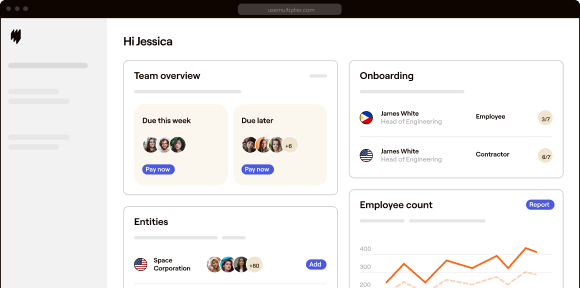
- Unified platform: Manage your UK and Indian teams from one dashboard. View payroll, time off, documents, and compliance status across all countries without switching between systems.
- INR salary processing: Multiplier ensures accurate, on-time salary payments in INR with foreign exchange management. Your developers receive their pay reliably, building trust and satisfaction.
- Contractor and employee options: Whether you need the flexibility of contractors or the commitment of employees, Multiplier supports both engagement models with proper classification to avoid legal risks.
- IP protection: All employment contracts include robust confidentiality and IP assignment clauses that protect your proprietary code and business information under Indian law.
- Local HR support: Access Indian HR experts who handle onboarding, answer employee questions, manage employee relations issues, and ensure local best practices are followed.
“Workforce agility sounds fancy, but it boils down to this:
Getting the right people in place fast, and removing inefficiencies with minimal friction.”
Build your offshore development team in India with zero compliance risk. See how Multiplier helps UK companies hire globally — book a demo today.
FAQs
Why are UK companies hiring web developers from India?
UK companies hire developers from India to address domestic talent shortages, reduce hiring costs, and tap into a large pool of skilled engineers with strong English proficiency.
Is it cheaper for UK companies to hire developers from India?
Yes. Indian web developers typically cost 50–70% less than UK developers, and employers also save on taxes, office space, and pension contributions.
Are Indian developers skilled enough for UK tech projects?
Indian developers are known for strong technical education, extensive project experience, and expertise across modern stacks such as React, Node.js, Python, and cloud technologies.
How do UK companies hire developers in India without opening an office?
UK employers can use an Employer of Record (EOR) platform to hire full-time developers compliantly without setting up an Indian entity. Multiplier helps by managing contracts, payroll, taxes, and statutory benefits on your behalf.
What challenges do UK companies face when hiring from India?
Common challenges include time-zone coordination, cultural differences, compliance with Indian labor laws, and ensuring strong vetting processes for technical quality.
How can UK companies pay Indian developers securely and on time?
You can use compliant payroll platforms that process INR salaries, manage taxes, and handle foreign exchange. Multiplier ensures timely INR payouts with automated compliance and payroll accuracy.
What is the easiest way to stay compliant when hiring Indian web developers?
Compliance requires correct worker classification, EPF/ESI contributions, IP protection clauses, and adherence to Indian labor rules. Multiplier simplifies this by acting as your legal employer and managing all your statutory obligations.