In a direct appeal to skilled Indian professionals, Germany is positioning itself as a welcoming and stable alternative to the United States following a significant increase in U.S. H-1B visa fees.
German Ambassador to India, Dr. Philipp Ackermann, extended an open invitation on X, highlighting Germany’s “stable migration policies” and numerous career opportunities. The U.S. H-1B visa fee was raised to $100,000 per application, a move that has caused uncertainty and concern for many Indian tech workers and firms.
Dr. Ackermann’s message emphasized that Indians are already among the top earners in Germany, with the average Indian worker earning more than the average German. He stated that this “high salary means that Indians are contributing big time to our society and our welfare”.
Germany’s strategic pitch for indian talent
Germany’s outreach to skilled Indians is a calculated move to address its own demographic challenges and labor shortages. The German government has estimated a need for almost 288,000 immigrants annually until 2040 to offset the effects of its aging population. To meet this demand, Germany is making it easier for foreign professionals to work in the country through a modernized Skilled Immigration Act.
The German ambassador likened the country’s migration policy to a “German car,” describing it as “reliable, modern, and predictable” with no “zig-zags” or sudden, fundamental changes to the rules. This is in stark contrast to the recent U.S. policy changes that have caused disruption for Indian professionals.
What this means for skilled workers
For Indian professionals, particularly those in the IT, science, and tech sectors, Germany offers a promising alternative to the U.S.. The country provides a clear and predictable path for immigration and employment.
With a high average salary and a stable political and economic environment, Germany presents a viable option for those seeking international career growth without the uncertainty of the U.S. H-1B program. The new Skilled Immigration Act also makes it easier for IT specialists without a university degree to get an EU Blue Card if they have at least three years of professional experience.
The government has also made a push for family reunification, allowing spouses, registered partners, and children of skilled workers to join them in Germany.
What it means for employers
For German companies and international employers looking to expand their operations, this is a significant opportunity to access a vast pool of skilled and motivated Indian talent. As the U.S. becomes a less attractive option, Germany stands to gain a competitive advantage in the global race for talent.
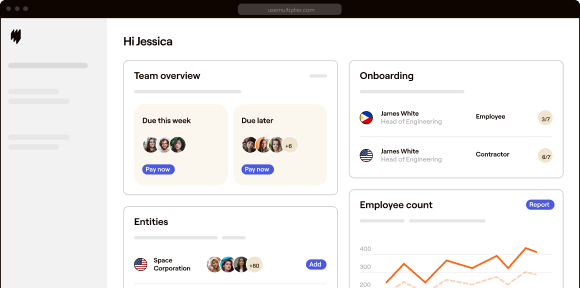
However, hiring international workers still comes with complexities, including navigating visa applications, ensuring compliance with local labor laws, and managing international payroll. This is where an Employer of Record (EOR) like Multiplier can be an invaluable partner. Multiplier simplifies the process of hiring, managing, and paying international talent in over 150 countries, including Germany and India. For a German company, an EOR can help onboard and manage a new team in India without setting up a local entity, ensuring compliance with all local regulations. Similarly, for a company looking to bring Indian talent to Germany, Multiplier can handle the payroll and compliance aspects, allowing the employer to focus on the day-to-day management of their new team members.
Conclusion
Germany’s open invitation to skilled Indian workers is a strategic move that benefits both the country and the professionals it seeks to attract. By offering a stable and rewarding alternative to the U.S., Germany is poised to become a top destination for global talent.
For companies looking to take advantage of this new talent pool, platforms like Multiplier provide the necessary tools and expertise to make global hiring seamless, compliant, and efficient.
Book a demo today.
FAQs
What is the U.S. H-1B visa, and why is it a concern for Indian professionals?
The H-1B visa is a non-immigrant visa that allows U.S. employers to temporarily employ foreign workers in specialty occupations. The H-1B program is a primary pathway for Indian tech professionals to work in the U.S.. The recent imposition of a $100,000 fee per application by the U.S. administration has created significant uncertainty and financial hurdles, leading many to consider alternatives.
Why is Germany actively courting Indian skilled workers?
Germany is facing a demographic crunch and a shortage of skilled labor to support its economy. By inviting skilled Indian professionals, particularly in high-demand sectors like IT and technology, Germany aims to attract the talent needed to fill these gaps and maintain its economic strength.
What career opportunities are available for skilled Indians in Germany?
According to German Ambassador Dr. Philipp Ackermann, there are great job opportunities for Indians in IT, management, science, and technology. He also noted that Indians working in Germany earn more on average than their German counterparts, indicating high demand and competitive salaries for skilled professionals.
How does Germany’s migration policy compare to the U.S. H-1B program?
Dr. Ackermann described Germany's migration policy as "stable," "modern," and "predictable," unlike the recent "zig-zags" in U.S. visa policies. Germany's new Skilled Immigration Act lowers salary thresholds for the EU Blue Card and expands eligibility, creating more transparent and reliable pathways for skilled workers.
How can a company in Germany hire skilled workers from Indi
A company in Germany can hire skilled workers from India by navigating the country's visa and work permit application processes. To simplify this, a company can partner with an Employer of Record (EOR) like Multiplier, which can handle all the legal, payroll, and compliance aspects of hiring and managing international employees. This allows the employer to focus on the work itself while the EOR ensures all regulations are met.