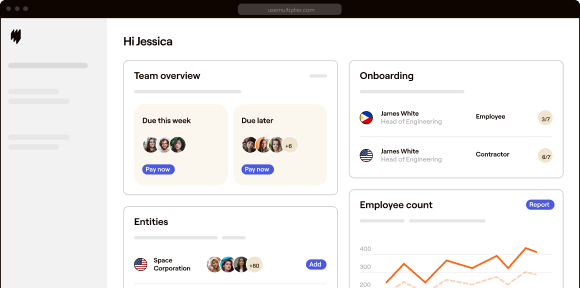
Papaya Global has evolved from an Israeli startup into a New York-headquartered fintech powerhouse. As of January 2026, it operates as an enterprise-grade Workforce Operating System, bridging the gap between global HR management and complex cross-border payments. By consolidating payroll, EOR, and contractor workflows across 160+ countries, Papaya enables organizations to manage their entire international workforce through a single, AI-driven data stream.
This review examines Papaya Global’s EOR capabilities, onboarding workflows, compliance infrastructure, payroll operations, integrations, and practical considerations for mid-market to enterprise organizations scaling international workforces at high volume.
What is Papaya Global?
Papaya Global is a sophisticated, enterprise-grade workforce management solution that transforms global payroll into a centralized, technology-led strategic capability. Rather than functioning like traditional Employer of Record (EOR) providers that focus narrowly on contracts and baseline compliance, Papaya Global operates as a full “Workforce Operating System.” It brings together multi-country payroll orchestration, automated international payments, cross-border benefits management, contractor administration, and real-time workforce intelligence within a single, unified platform. Supporting employment across more than 160 countries, the system enables organizations to expand internationally at scale without the operational burden of setting up local entities or coordinating multiple regional payroll vendors.
An Employer of Record (EOR) service legally employs your international workforce in local jurisdictions, handling compliance, statutory filings, payroll, and employment risk. With Papaya Global’s EOR model, companies retain control over hiring, performance, and pay, while Papaya manages all legal and regulatory complexities of global employment.
How Papaya Global’s EOR works
Below is a step-by-step overview of how Papaya Global operationalizes its Employer of Record model, guiding employers from initial feasibility assessment through compliant onboarding, payroll execution, and ongoing workforce management across jurisdictions.
Step 1: Country feasibility check (before you hire)
Before hiring internationally, Papaya Global performs a country-specific feasibility assessment to evaluate the most suitable employment structure and identify potential compliance risks. This early evaluation helps companies understand hiring timelines, regulatory requirements, and benefits expectations in the target country, reducing the likelihood of misclassification or legal issues later in the hiring process.
Key pre-hiring considerations:
- Employment structure evaluation
Papaya Global assesses whether the role should be structured as an Employer of Record (EOR) hire, contractor engagement, or direct payroll through an existing entity. - Country-specific hiring timelines
Realistic onboarding timelines are estimated based on the regulatory complexity and administrative requirements in the target jurisdiction. - Compliance risk assessment
The platform reviews potential exposure related to worker classification, labor law compliance, and statutory obligations. - Benefits and employment norms
Local market expectations for statutory benefits, employer contributions, and compensation structures are analyzed before hiring begins. - Intellectual property considerations
IP ownership requirements and contract protections are evaluated to ensure sensitive company assets remain protected.
By conducting this upfront feasibility analysis, Papaya Global helps organizations select the most appropriate employment model while minimizing compliance risk when hiring across multiple jurisdictions.
Step 2: Offer and localized contract
Once a hiring decision is finalized, Papaya Global generates employment contracts tailored to the labor laws of the employee’s country. These localized agreements ensure that all statutory employment requirements are addressed before the offer is issued, helping companies remain compliant from the first day of employment.
Key elements included in localized employment contracts:
- Country-specific legal clauses
Contracts are structured to comply with local labor regulations, incorporating mandatory statutory provisions required in the employee’s jurisdiction. - Probation and notice periods
Employment terms reflect legally required probation timelines, notice requirements, and termination conditions specific to the country. - Intellectual property protections
Agreements include IP assignment and confidentiality clauses to safeguard proprietary company assets. - Internal approval workflows
Most organizations require Legal, HR, and Finance approvals before extending an employment offer, ensuring contract terms align with company policies. - Compliance maintained by local experts
Papaya Global maintains contract templates through in-country compliance specialists who update documentation as labor laws and regulatory requirements evolve.
By maintaining localized templates and compliance oversight, Papaya Global helps ensure employment agreements remain aligned with changing regulations while reducing legal and operational risk.
Step 3: Onboarding and document collection
Once the employment contract is signed, the onboarding process begins with the collection and validation of the employee’s required documentation. Proper onboarding ensures that employees are fully registered for payroll, tax reporting, and statutory compliance before their first pay cycle. Platforms like Papaya Global help streamline this process through automated workflows and centralized data management.
Key onboarding steps typically include:
- Identity verification
Employees submit official identification, such as a passport or national ID, to confirm their legal identity and eligibility for employment. - Tax registration and documentation
Required tax identification numbers and local tax forms are collected to ensure accurate payroll reporting and statutory filings. - Banking details for payroll
Employees provide bank account information so salaries can be deposited correctly and on schedule. - Residential address confirmation
Address details are verified to comply with local employment and tax registration requirements. - Policy acknowledgments
Employees review and acknowledge company policies, employment terms, and compliance requirements during onboarding.
Papaya Global uses automated workflows, validations, and reminders to streamline document collection. Its unified data model then synchronizes employee information across payroll systems, statutory filings, and benefits administration, helping reduce manual work and data inconsistencies.
Step 4: Payroll run, payments, and statutory filings
Once employees are onboarded, payroll operates on a structured monthly cycle to ensure accurate salary payments and compliance with local tax regulations. Each stage—from compensation approval to statutory reporting—is coordinated through the platform, helping companies manage multi-country payroll efficiently while maintaining regulatory alignment.
Key steps in the monthly payroll process:
- Timesheet and compensation approvals
Employers review and approve employee compensation, bonuses, and timesheets before the payroll cutoff date. - Gross-to-net payroll calculations
Papaya Global calculates gross pay, statutory taxes, social contributions, and required deductions according to local regulations. - Multi-currency payroll processing
Salaries are processed and paid in local currencies, with support for 100+ global currencies. - Statutory reporting and filings
Payroll taxes, employer contributions, and required compliance filings are submitted to the appropriate local tax and labor authorities. - Digital payslip delivery
Employees receive automatically generated payslips delivered digitally and localized in their preferred language.
This structured payroll cycle helps organizations maintain consistent payroll while meeting local compliance requirements across multiple countries.
Step 5: Ongoing changes (salary updates, leave, terminations)
As employees progress through their roles, changes to compensation, benefits, or employment status must be reflected in payroll and compliance records. These updates often trigger payroll recalculations and may also require contract modifications to remain aligned with local labor laws. Platforms like Papaya Global manage these lifecycle changes through automated workflows and synchronized systems.
Common employment lifecycle updates:
- Compensation adjustments
Salary increases, bonuses, or other compensation changes automatically trigger payroll recalculations to ensure accurate pay and reporting. - Promotions and role changes
Promotions or job changes may require updates to employment terms, compensation structures, or contractual agreements. - Leave and benefits updates
Adjustments to leave balances, benefits eligibility, or employer contributions are reflected automatically across payroll and benefits systems. - Synchronized payroll and compliance updates
Papaya Global synchronizes changes across payroll processing, tax reporting, and benefits administration to maintain accuracy and compliance. - Structured termination workflows
During offboarding, the platform manages notice periods, severance calculations, final payments, and required statutory filings.
These structured workflows help ensure employment changes are handled consistently while reducing regulatory and payroll risks across different jurisdictions.
What you actually get with Papaya Global EOR (feature deep dive)
The sections below break down how Papaya Global delivers Employer of Record services in practice, covering geographic reach, compliance ownership, payroll and benefits execution, integrations, and enterprise-grade security, so you can understand what’s operationally included beyond marketing claims.
Country coverage and hiring speed
Papaya Global enables companies to hire employees internationally through its Employer of Record services across more than 160 countries. However, onboarding timelines vary depending on the regulatory environment, the role being hired, and local administrative requirements. Hiring speed is typically influenced by the jurisdiction and the complexity of compliance checks required.
Key factors influencing international hiring timelines:
- Global EOR coverage
Papaya Global provides Employer of Record services in 160+ countries through a combination of owned entities, trusted local partners, and in-country compliance experts. - Jurisdiction-specific regulations
Labor laws, tax registrations, and employment compliance requirements vary widely by country and affect onboarding timelines. - Faster onboarding in mature markets
In developed markets such as Canada, the UK, and much of Western Europe, standard employee hires can often be completed within about one week. - Extended timelines in regulated regions
Countries that require immigration approvals, work permits, or additional compliance reviews may take two to four weeks to complete onboarding. - Realistic compliance-driven timelines
Instead of promising universal instant hiring, Papaya Global emphasizes timelines based on local regulatory requirements and risk considerations.
Compliance, ownership, and risk controls
Employer of Record (EOR) services allow companies to hire employees internationally without setting up a legal entity in each country. Under this model, Papaya Global becomes the legal employer in the employee’s jurisdiction while your company retains control over the employee’s work and strategic decisions. This structure helps ensure local compliance while reducing administrative and legal risk.
How the EOR structure works:
- Legal employer of record
Papaya Global acts as the official legal employer in the country of hire and maintains the formal employment relationship under local labor laws. - Employment contract management
Papaya signs employment contracts using your organization’s agreed terms, ensuring they align with statutory requirements. - Local employment liability
Responsibility for employment compliance and regulatory obligations in that jurisdiction is assumed by Papaya Global. - Tax and statutory filings
Papaya manages payroll taxes, social contributions, and required filings with local tax and labor authorities. - Benefits administration
Statutory benefits and employer contributions are administered according to local employment regulations.
Your organization remains the primary employer, retaining control over hiring decisions, compensation, performance management, and termination strategy while Papaya manages the legal and compliance framework that reduces exposure to misclassification, labor disputes, and tax risks.
Payroll and benefits administration
Managing employee benefits across countries requires aligning local legal requirements with company benefit policies. Papaya Global coordinates both statutory and optional benefits to ensure employees receive legally mandated coverage while helping companies offer competitive packages across regions. Benefits administration is integrated with payroll to maintain compliance and payment accuracy.
How global benefits administration works:
- Statutory benefits management
Papaya Global administers legally required benefits such as employer social contributions, unemployment insurance, pensions, and mandatory health coverage. - Optional supplemental benefits
Employers can offer additional benefits such as extended health coverage, retirement plans, or other voluntary programs beyond statutory requirements. - Country-specific enrollment processes
Some countries automatically enroll employees in benefits programs, while others require employees to actively select benefits during onboarding. - Localized benefits alignment
While perfect parity with home-country benefits is rarely possible, Papaya helps identify equivalent local retirement or savings programs where available. - Payroll-integrated benefits administration
Benefits data integrates directly with payroll systems, ensuring accurate deductions, employer contributions, and timely remittance to local authorities without manual intervention.
Integrations and APIs
Papaya Global integrates with a wide range of HR, payroll, and financial systems to help companies manage global workforce data without duplicating processes. These integrations allow employee records, payroll calculations, and financial data to move automatically between systems, helping organizations maintain consistent information across their HR and finance infrastructure.
How integrations support global workforce operations:
- HRIS platform integrations
Papaya Global connects with widely used HR systems such as BambooHR, Namely, and Workday to synchronize employee data and workforce records. - Accounting and finance connectivity
Integrations with tools like NetSuite and expense management platforms allow payroll data and financial entries to flow directly into accounting systems. - Automated data synchronization
These integrations automate the transfer of employee, payroll, and financial information, reducing manual data entry and improving accuracy. - Simplified month-end financial processes
Automated payroll journal entries help support month-end close, financial consolidation, and reporting across global operations. - Custom integration flexibility
Papaya Global also provides APIs for organizations with more advanced integration needs, though most enterprise use cases are supported through prebuilt connectors.
Security and compliance claims (SOC 2, GDPR, etc.)
Protecting employee data across multiple jurisdictions requires strong security, privacy, and compliance controls. Papaya Global reports adherence to widely recognized security frameworks and implements platform-level safeguards to protect sensitive workforce information. However, organizations should verify these claims through formal documentation as part of their vendor due diligence process.
Key security and compliance considerations:
- Security certifications
Papaya Global reports SOC 1 Type II and SOC 2 Type II certifications, demonstrating audited controls around financial reporting, security, availability, and confidentiality. - Information security standards
The platform aligns with ISO 27001 and ISO 27701 standards, which define best practices for information security management and data privacy governance. - Data privacy compliance
Papaya Global supports GDPR compliance to ensure that employee data from European jurisdictions is processed and protected according to strict privacy regulations. - Platform security architecture
The platform operates on AWS infrastructure and includes role-based access controls, data encryption, and audit logs to monitor system activity. - Verification through documentation
Organizations should request SOC reports, Data Processing Agreements (DPAs), and subprocessor disclosures to confirm how security controls and third-party data processing are managed.
Papaya Global routinely provides these artifacts during enterprise security reviews, helping companies validate compliance controls before onboarding.
Papaya Global pricing: What it publishes vs what buyers should confirm
Papaya Global uses custom, quote-based EOR pricing with no public list rates. Costs depend on countries, employee volume, service scope (EOR vs. payroll-only), and add-ons like immigration or compliance support. Industry benchmarks (2025–2026) commonly cite starting prices around $599 per employee per month, with discounts at scale. Additional setup, year-end, and multi-currency fees may apply. For multi-country teams (e.g., 50 employees), a tailored quote is required, as pricing scales with complexity rather than a flat rate.
Pricing questions to ask sales:
- What’s included in the base EOR fee per employee? (contracts, payroll processing, statutory filings, benefits administration, platform access, support)
- Are implementation, onboarding, or data migration fees charged separately, or included in base pricing?
- What foreign exchange markups apply, and how is funding handled for multi-currency payroll?
- Are off-cycle payroll runs charged as add-ons, or included in standard pricing?
- Are immigration support, work permit assistance, or legal consultations billed separately?
- How does pricing scale as you add countries, increase employee volume, or expand benefits offerings?
Pros, cons, and who it’s best for
The points below summarize where Papaya Global excels, where limitations may arise, and the types of organizations that gain the most value from its enterprise-grade EOR and payroll model.
Papaya Global pros
- Enterprise-grade platform that consolidates global payroll, EOR, workforce payments, and analytics into a single system, significantly reducing operational fragmentation
- In-house payroll and payments infrastructure across 160+ countries with support for 100+ currencies, minimizing reliance on multiple local banks and intermediaries
- Real-time workforce analytics and advanced reporting provide Finance teams with visibility into global spend, headcount, and compliance across jurisdictions
- In-country compliance specialists deliver localized guidance on labor laws, benefits structures, and statutory filings, reducing regulatory and legal exposure
- Automated payroll calculations improve accuracy, reduce manual errors, and support consistent on-time payments across regions and time zones
- Modular service design allows companies to mix EOR, payroll-only, and contractor management based on country-specific needs
Papaya Global cons
- Premium, enterprise-oriented pricing can be challenging for cost-sensitive teams or smaller international hiring programs
- A feature-rich interface creates a learning curve; experienced operators benefit most, while less technical HR teams may require additional enablement
- Onboarding can involve multiple steps and approvals, occasionally resulting in longer setup timelines compared to lighter-weight providers
- Limited upfront pricing transparency because final costs vary by country, scale, and service mix, and are confirmed only after sales engagement
- Custom report configuration may take time to align with specific finance or leadership requirements
- Support responsiveness can vary by region, especially for non-critical issues in less mature markets
Best for
- Mid-market and enterprise organizations managing large, multi-country workforces
- Finance-led teams prioritizing audit trails, analytics, and consolidated global reporting
- Companies running complex mixes of employees, contractors, and contingent workers across jurisdictions
Not ideal for
- Early-stage startups with small international teams
- Organizations seeking simple, flat-rate pricing without customization
- Teams needing lightweight, contractor-only, or payroll-only solutions without advanced analytics
Papaya Global vs alternatives
The comparison below highlights how Papaya Global stacks up against leading alternatives across pricing transparency, geographic coverage, and compliance sophistication, helping organizations make more informed global hiring decisions
|
Dimension |
Papaya Global |
Multiplier |
Deel |
Remote |
Rippling |
|
EOR countries |
160+ countries |
150+ countries |
180+ countries |
180+ countries |
80 countries |
|
Pricing (per employee per month) |
Quote-based |
$400 |
$599 |
$699 |
Quote-based |
|
G2 ratings |
4.5/5 |
4.7/5 |
4.7/5 |
4.5/5 |
4.8/5 |
|
Platform scope |
Payroll + EOR + Payments + Analytics |
HR + Payroll + Compliance |
HR + Payroll + Finance |
Payroll + Contractor management |
HR + Payroll + IT + Finance |
|
Payroll processing |
In-house; 100+ currencies |
Compliance-first workflows |
Integrated; 120+ currencies |
API-first; 150+ countries |
In-house; 50+ currencies |
|
Analytics and reporting |
Real-time; custom dashboards |
Operational dashboards |
Basic reporting |
Developer-focused API |
Cross-functional reporting |
|
Integration depth |
50+ apps; payroll-centric |
150+ apps; compliance-focused |
50+ apps; self-serve HRIS |
API-first; unlimited custom |
600+ apps; unified data |
|
Onboarding speed |
Variable; 48 hours–4 weeks |
Guided playbooks; faster average |
Variable; often slower for complex |
Quick for contractors |
Minutes to days by country |
|
Support model |
Dedicated account managers; regional |
Dedicated support; operational clarity |
Ticketed; Deel AI assistant |
Developer support; API-first |
Account managers; ticketed |
|
Best for |
Enterprise payroll + analytics |
Compliance certainty + scale |
Global contractor + employee mix |
Dev-friendly global hiring |
All-in-one ops consolidation |
Buyer’s decision framework
Use this framework to align your hiring scale, compliance requirements, and operational priorities with the EOR or payroll platform best suited to your organization’s structure and growth plans.
- If you need enterprise payroll analytics and real-time compliance reporting: Papaya Global for unified analytics or Rippling for HR integration
- If you need cost predictability and compliance certainty: Multiplier for transparent EOR or Deel for ease of use
- If you’re hiring 100+ contractors globally: Deel for contractor-first workflows or Remote for API-driven systems
- If you need EOR coverage in 160+ countries: Multiplier, Papaya Global, Deel, or Pebl;
- If you’re Finance-first, prioritizing audit trails and custom reporting: Papaya Global for analytics depth or Rippling for IT integration
RFP-ready evaluation checklist for any EOR provider:
- Employment entity model: Does the provider act as the legal employer in each target country?
- Termination mechanics: Are terminations without cause permitted, and what notice or severance applies by jurisdiction?
- Statutory responsibility: Who files taxes, social contributions, and labor reports, and with which authorities?
- Payroll timelines: What are the approval cutoffs for timesheets and compensation changes? Are off-cycle payroll runs supported?
- Auditability: Can historical payroll data, tax filings, and compliance records be exported on demand?
- Data protection: Are up-to-date SOC 2 reports, GDPR compliance, and Data Processing Agreements available?
- Support SLAs: What response times are contractually guaranteed for payroll or payment-critical issues?
- Contract adaptability: Can headcount, benefits, or country coverage be adjusted as business needs change?
- Immigration coverage: Is visa and work permit guidance or processing included or available as an add-on?
- Payment execution: Does the provider handle actual salary payments or only payroll calculations?
- Currency handling: How many currencies are supported, and how are foreign exchange markups applied?
- Reporting depth: Are reports customizable for Finance, Compliance, and executive stakeholders?
Choosing a compliance-first EOR? How Multiplier supports global hiring at scale
Organizations evaluating alternatives to Papaya Global often look for a platform that combines global employment infrastructure with greater operational simplicity and cost transparency. Multiplier is designed specifically for hiring, managing, and paying international teams, supported by a global network spanning 150+ countries and in-house legal, payroll, HR, and benefits expertise.
Built as a unified global employment system
While Papaya Global is widely recognized for payroll aggregation and global payment orchestration, Multiplier was built from the ground up as a single global employment platform. Contracts, payroll processing, compliance management, and employee lifecycle events operate within one unified system. This architecture reduces operational complexity, improves visibility, and enables consistent execution across countries.
Direct global entity infrastructure
Multiplier operates through a network of more than 150 global entities supported by in-country specialists. This infrastructure reduces dependence on multiple third-party intermediaries and provides clearer accountability for payroll execution, employment compliance, and benefits administration across jurisdictions.
Transparent pricing for predictable workforce costs
Cost predictability is essential when building distributed teams. Multiplier provides clear, flat pricing that separates statutory employment costs from platform fees, helping finance teams forecast global hiring budgets more accurately and avoid unexpected cost escalations as teams expand internationally.
Dedicated support designed for global payroll operations
International payroll and compliance require responsive operational support. Multiplier assigns dedicated Client Success Managers and in-country payroll specialists who work directly with your team to resolve payroll issues, regulatory questions, and operational requests quickly. This approach ensures faster resolution when it matters most and helps maintain continuity across global payroll cycles.
Companies comparing Papaya Global and Multiplier often find that Multiplier offers a more streamlined platform for global hiring, clearer cost structures, and stronger operational accountability for international workforce management.
Book a demo to see how Multiplier can simplify compliant global hiring and payroll as your team scales.
FAQs
What does Papaya Global's Employer of Record service include?
Papaya Global’s EOR covers localized contracts, payroll in 100+ currencies, statutory filings, benefits administration, and compliance support, including legal employment, calculations, payments to employees, and ongoing obligations across 160+ countries.
How many countries does Papaya Global support for EOR services?
Papaya Global operates EOR services in 160+ countries through owned entities and partners, covering the Americas, EMEA, and APAC; confirm country availability during sales to align coverage with hiring timelines.
What makes Papaya Global different from Multiplier for global payroll operations?
Papaya Global prioritizes enterprise analytics, real-time reporting, and in-house payroll for large workforces, while Multiplier emphasizes compliance-first execution, transparent pricing, and dedicated support for growing teams seeking operational clarity globally.
How much does Papaya Global EOR cost per employee per month?
Papaya Global uses custom, quote-based EOR pricing that varies by country, workforce size, and service scope. Costs scale with onboarding complexity, regulatory requirements, and ongoing compliance, so multi-country teams should request a tailored quote reflecting their specific hiring needs.
Does Papaya Global process actual payroll payments or only calculations?
Papaya Global runs end-to-end payroll payments in-house, moving funds directly to employee bank accounts in 100+ currencies, covering calculations, FX, and disbursements without external banks or local payment agents worldwide.
Why should I choose Multiplier instead of Papaya Global for international hiring?
Choose Multiplier when you want predictable pricing, compliance-led workflows, and responsive account management, without enterprise analytics overhead, making it suitable for teams prioritizing clarity, speed, and regulatory confidence globally scaling.
How does Multiplier's compliance-first approach reduce global hiring complexity?
Multiplier reduces global hiring complexity through compliance-first workflows, transparent processes, and dedicated account managers who guide payroll, onboarding, and statutory requirements across 150+ countries without enterprise analytics overhead.