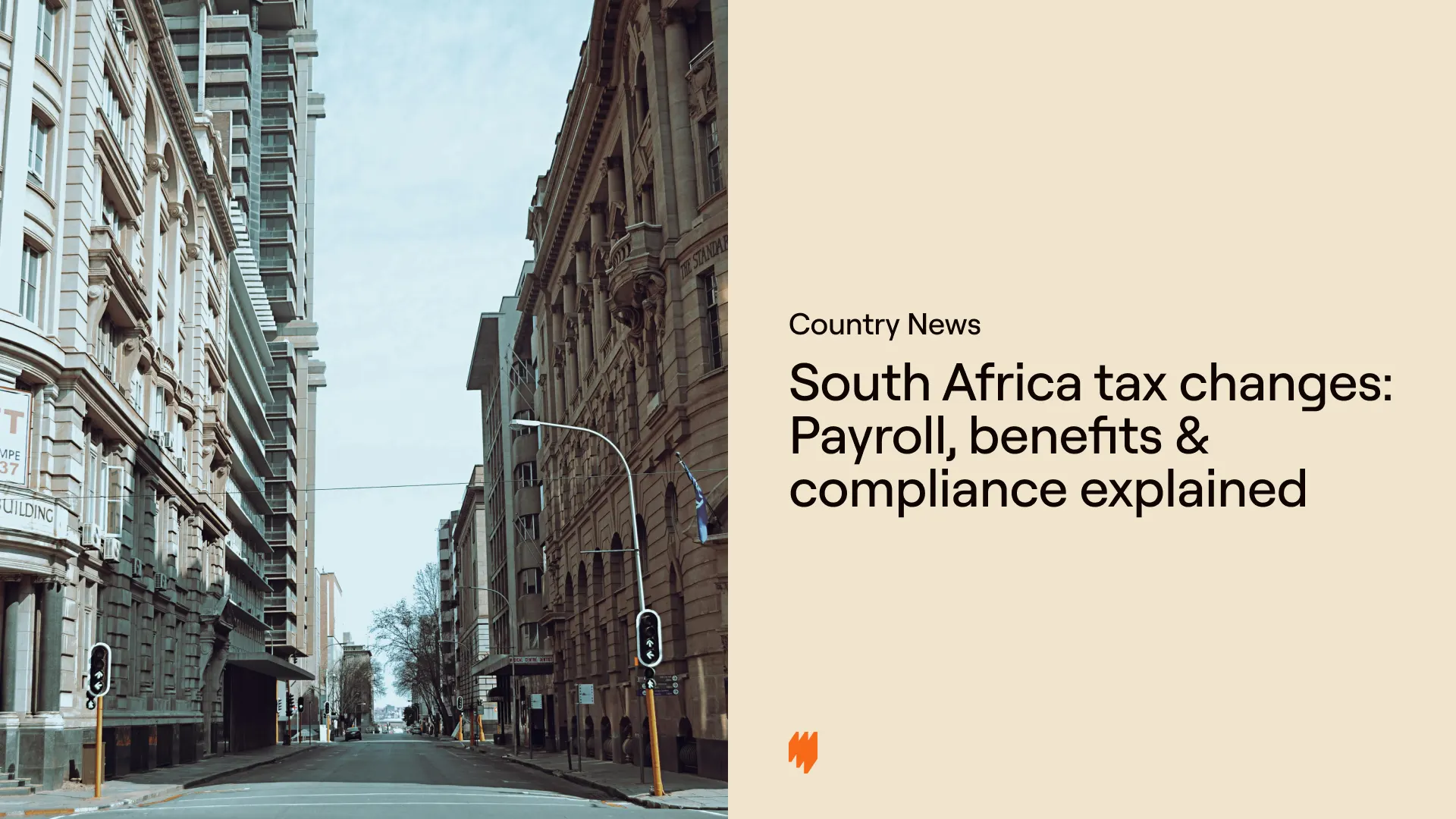
As part of the 2026 tax policy proposals, the South African government has announced a scheduled increase to the maximum benefit for its primary tax subsidy. Currently set at ZAR 2,320 per month, the benefit is slated to rise to ZAR 2,400 effective April 1, 2026.
This move reflects an ongoing effort by South African authorities to adjust fiscal measures in line with inflation and living costs. For companies with a presence in the region, staying ahead of these incremental changes is vital for maintaining a compliant and satisfied workforce.
Breaking down the 2026 tax policy adjustment
The proposed increase to ZAR 2,400 represents the government’s commitment to providing targeted tax relief through established subsidy frameworks. While the increase may seem incremental, it plays a significant role in the net take-home pay for eligible individuals across the country. The South African government also announced increases across all major social grants (except the SRD grant), effective from April 2026 as part of the National Treasury Budget.
Grant Type | Previous Amount | New Amount (April 2026) |
Old Age Grant | ZAR 2,315 | ZAR 2,400 |
Disability Grant | ZAR 2,315 | ZAR 2,400 |
War Veterans Grant | ZAR 2,335 | ZAR 2,420 |
Care Dependency Grant | ZAR 2,315 | ZAR 2,400 |
Foster Care Grant | ZAR 1,250 | ZAR 1,295 |
Child Support Grant | ZAR 560 | ZAR 580 |
Grant-in-Aid | ZAR 560 | ZAR 580 |
Social Relief of Distress (SRD) | ZAR 370 | ZAR 370 (no change) |
Managing these updates requires a deep understanding of employment laws in South Africa. For international businesses, these local updates are often buried within broader legal updates, making it easy to overlook the specific implementation dates that trigger payroll liabilities.
What this means for skilled workers
For the South African workforce, the rise in the tax subsidy means a slight increase in monthly disposable income. As the maximum benefit moves to ZAR 2,400, eligible employees will see the impact directly in their payslips starting in April 2026.
This adjustment helps workers better manage the rising cost of living. Because the change is statutory, employees do not need to take individual action, but they should expect their employers to update their payroll in South Africa to reflect the new subsidy limit accurately and on time.
What it means for employers
For employers, the primary challenge lies in the administrative update of local payroll systems. Ensuring that tax withholdings are calculated using the ZAR 2,400 limit rather than the old ZAR 2,320 limit is essential to avoid over-taxing employees or falling out of compliance with the South African Revenue Service (SARS).
If you are looking for how to hire in South Africa without the burden of tracking every minor tax law change, Multiplier’s Employer of Record (EOR) Service is the most efficient solution. Partnering with an EOR like Multiplier allows you to expand your global workforce in South Africa while offloading the complexities of local compliance.
Multiplier’s platform automates these statutory updates, ensuring that:
- Payroll is accurate: We automatically adjust for new tax subsidies and local benefit caps.
- Risk is mitigated: We handle the legal responsibility of being the employer on paper, protecting you from compliance errors.
- Onboarding is fast: You can hire top talent in South Africa in days, not months, without setting up a local legal entity.
Future-proof your South African operations
Staying compliant with shifting tax thresholds is a full-time job. By the time the ZAR 2,400 subsidy takes effect in April 2026, other labor or tax regulations may have also shifted.
Multiplier provides a “compliant-by-design” approach that takes the guesswork out of global expansion. Whether you are managing full-time employees through our EOR Service or or using our Contractor of Record (COR), we ensure your team is paid correctly, on time, and in full accordance with the latest South African laws.
FAQs
What is the new maximum monthly tax subsidy in South Africa for 2026?
The maximum monthly tax subsidy is increasing from the current ZAR 2,320 to ZAR 2,400. This change is part of the 2026 tax policy proposals intended to provide adjusted relief to the workforce.
When does the South African tax subsidy increase take effect?
The increase to ZAR 2,400 per month will become effective starting April 1, 2026. Employers must ensure their payroll systems are updated by this date to remain compliant with the new regulations.
Do employers need to register a new legal entity to apply these South African tax changes?
No, employers do not need a new entity to apply tax changes, but they must have a valid legal presence or use an Employer of Record (EOR) to process payroll locally. An EOR like Multiplier allows you to hire and pay workers in South Africa compliantly without the need for your own local entity.
How does the South African tax subsidy increase affect employee take-home pay?
The increase in the subsidy maximum to ZAR 2,400 reduces the overall tax burden for eligible employees, effectively increasing their monthly net take-home pay. This is a statutory benefit that is applied during the payroll calculation process.
What are the risks of not updating South African payroll for the April 2026 subsidy change?
Failing to update payroll systems to the new ZAR 2,400 limit can lead to inaccurate tax reporting, incorrect employee withholdings, and potential penalties from local tax authorities. Using an integrated global payroll solution can help automate these updates and mitigate the risk of manual entry errors.
Can Multiplier help manage both employees and contractors in South Africa?
Yes, Multiplier offers Employer of Record (EOR) Service for hiring full-time employees and Contractor of Record (COR) for managing independent freelancers and consultants in South Africa. Both services ensure that payments, contracts, and local tax compliance are handled according to the latest regional laws.