A developer joins your Berlin office this quarter at a rate that reflects what the market looks like right now. Three rows up in the same spreadsheet, there’s someone who’s been with you for four years, got their 3% last January, and is now earning less than the person who just finished their first week.
Nobody flagged it. There was no policy change, no bad intent. Just time passing and market rates moving faster than your merit cycle.
That’s pay compression. Pay transparency legislation is turning that internal problem into an auditable liability. And from June 2026, it stops being something you can manage quietly.
Pay compression: What it is, why it happens, and how to fix it
Pay compression happens when employees with different levels of experience, skill, and qualifications end up earning very similar or identical salaries. Usually, it’s a long-tenured employee earning the same as, or marginally more than, someone hired recently into an equivalent role. Pay inversion is the more extreme version, where the newer hire earns more outright. Both come from the same place: internal pay structures that didn’t keep up.
Market rates move. Internal pay structures mostly don’t, not at the same pace. New hires come in at what the market looks like today. Long-tenured employees stay anchored to what it looked like when they joined. Minimum wage increases push junior pay up without a corresponding adjustment at senior levels.
And when companies are competing hard for specialized talent internationally, they pay to win. Multiplier’s Global Hiring Gap Report found that 46% of businesses are now expanding internationally specifically to secure hard-to-find skills, often at premium starting rates. Those rates don’t come with a memo telling you to revisit your existing team’s comp.
No documented pay architecture makes all of this worse. When every offer is negotiated individually, there’s no baseline. Just a pile of decisions that starts looking inconsistent the moment someone compares notes.
“It’s a scenario that creates what I call ‘zombie employees,'” says Jason Greer, Employee and Labor Relations Expert. “They show up, they clock in, and they do the minimum.” That’s the moral story. The retention story is sharper: research from Eclipse Software found that 80% of candidates who accept a counter-offer leave within six months anyway. Your loyal people are quietly calculating whether to stay.
Under EU Pay Transparency, this stops being something you can manage internally. Compression becomes visible to employees, requestable on demand, and legally actionable where it tracks gender.
How the EU Pay Transparency Directive exposes pay compression
The EUPTD requires all EU companies to share salary information by June 2026 across all 27 member states. Most companies are watching the reporting thresholds. That’s not where the real exposure is. “A lot of employers are saying, ‘We’re under X threshold, therefore we’re not gonna have to report till 2031,'” says Amanda Frayne, Chief Legal and Compliance Officer at Multiplier, EU pay compliance expert. “That’s not gonna work.”
Under Article 7, any employee can formally request their pay level and the average pay of colleagues doing comparable work, broken down by gender. The employer has two months to respond. Where a gap of more than 5% exists and can’t be objectively justified, it has to be fixed, typically within six months.
What that means in practice: for any pay decision, you need to show the criteria were objective and gender-neutral, applied consistently across comparable roles, and documented well enough to reconstruct later. Not just assert it. Reconstruct it. “If you can’t reproduce the logic, it’s not defensible,” Frayne says.
There’s also a proactive obligation most companies haven’t clocked: employers must remind employees annually of their right to request this data. Not once at go-live. Every year.
How to identify pay compression
So how can you tell if you have a wage compression problem in your organization? When it comes to spotting the tell-tale signs of wage compression, it’s equally important to both analyze your internal data and look at what’s happening in the external market.
Examining your company’s payroll data
If your organization has a wage compression problem, the answer is likely to lie in your payroll metrics.
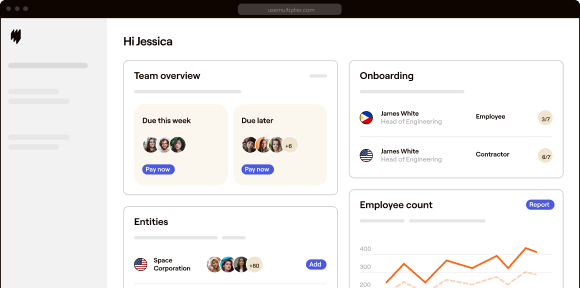
The centralized reporting and analytics in global payroll platforms like Multiplier can be invaluable, providing data-driven insight about compensation trends across regions.
For workforce futurist Terri Gallagher, the power of this data can’t be overstated. “Leveraging global market rate intelligence and real-time compensation benchmarking helps companies make informed wage decisions and prevent salary inflation.”
When looking at your company’s raw salary data, there are two key methods for shedding light on a potential wage compression problem:
Compare new salary offers to the pay of existing employees. If new hires are being offered the same or higher pay than current employees with similar titles and responsibilities, wage compression may be at play.
Look at the distribution of employees within specific salary ranges. If employees are clustering at the top or above the range, this could be a sign of wage compression.
Undertaking wage analysis and benchmarking
Greer recommends the additional step of conducting a wage analysis survey. This allows employers to get a feel for current market rates and assess how their approach to compensation stacks up. “Do it within 100 miles of wherever your company is based because you have to know what your competitors are paying,” he advises.
When it comes to compensation, it’s crucial to remember that employees think locally, even when they work for multinational companies. As Greer points out, “You might be global, but to your employees, you’re local”. For companies designing compensation strategies for a global workforce, Greer therefore recommends a hyper-local focus. “I really press upon employers to make sure that they look within the radius of where their employees are coming from,” he says.
To understand local expectations, companies should benchmark against their competitors. Echoing Greer’s advice, Bajada says: “It’s really critical for employers to look at how competitors pay.”
She also recommends that companies evaluate their total compensation packages, rather than focusing solely on salaries. “Companies need to ensure that the packages they offer are of real value to the people who are joining,” she points out. This is where Multiplier’s localized benefits can come into play, allowing companies to offer country-specific and global benefits, tailored to the needs of an international team.
How to fix pay compression
If you identify a wage compression problem in your company, it’s vital to address it. Greer’s advice? “Talk to your employees to figure out where they are, and then ask the big fundamental question, ‘What can we afford?’.”
Depending on your organization’s answer to that question, here are some of the solutions you might want to consider to address wage compression.
Update salary ranges to reflect market rates
If your wage analysis and benchmarking exercise revealed that your salary ranges are below the market rate, a straightforward solution – if your budget allows for it – is to update all the salary ranges within your company to reflect the current market rate. To do this sustainably, reference a structured salary banding guide to create clear, defensible tiers that give tenured employees a logical path for upward mobility.
Bajada also recommends reviewing the salaries of longer-tenured employees in senior positions, as their compensation tends to be the most affected by wage compression. “Adjusting senior salaries is really important to making sure that loyalty does pay in any way that it can, particularly in industries with talent shortages,” Bajada explains.
Reward performance and proactivity
Bonuses or other incentives tied to strong performance, particularly in revenue-generating roles, could help to increase productivity and restore morale for high-performing team members. “As a financial strategy for addressing wage compression, linking compensation to individual and team performance can be an effective option,” says Bajada.
For Greer, rewarding proactive employee behavior is a compelling long-term solution. “Incentivize your employees. Tell them: ‘Get your certifications, and I will pay you more for your certifications. Get your education. I will pay you more for your education.”
These behavior-based incentives can help create meaningful change in the employer-employee dynamic when it comes to salary increases. “Now you have an employee who is actively bought in, ” Greer explains.
Introduce non-financial incentives
If budget constraints make it challenging to address wage compression with financial strategies, consider what other incentives could boost employee morale and loyalty. Get creative and explore different options the organization could offer instead of or in addition to base pay increases.
As Bajada explains, there’s a vast range of options available. “There are professional development opportunities, wellness initiatives, flexible work arrangements,” she says. “And then there are fringe benefits like on-site child care, subsidies for transport – anything that can boost employee loyalty and without necessarily increasing payroll expenses.”
Revisit your workforce strategy
A longer-term, strategic way to address wage compression is by reviewing the organization’s approach to managing work.
For Gallagher, this is fundamental to addressing the salary compression issue in organizations. “I don’t think wage compression is a pay issue,” she says. “I think it’s a workforce strategy issue.”
Gallagher believes that a big part of the solution is redesigning work itself. “If wage compression is a problem, you should look at the work itself, as well as the workforce mix. How are you getting work done? And is the workforce being distributed in the best way?”
One way companies can free up time to focus on these strategic workforce decisions is by implementing an automated global payroll solution like Multiplier. These platforms reduce the administrative burden for payroll and HR teams by automating payments, ensuring compliance with local tax and labor laws, and centralizing workforce data.
That efficiency matters- Multiplier’s Global Hiring Gap report highlights international tax compliance (53%) and managing multiple vendors (51%) as the top sources of friction in global payroll operations.
As a result, leaders can shift their attention from payroll processing to the bigger-picture workforce planning that Gallagher recommends.
Building the infrastructure for defensible compensation
Most companies hit the same wall: compensation data is fragmented across systems, currencies, and contract types, with no way to run a cross-market comparison without a manual export project.
That’s an infrastructure problem. And it’s the thing that makes everything else harder than it needs to be.
Compliance with the EUPTD requires centralizing compensation data, running cross-market comparisons, benchmarking against local rates, and producing audit-ready documentation when someone asks for it. None of that is possible when payroll is siloed by country.
Multiplier is built as global employment infrastructure: a compliance foundation architected from day one for global teams. Owned legal entities across 160+ markets, native payroll engines running locally, in-house legal and tax experts available around the clock without third-party delays, centralized reporting across jurisdictions in one dashboard, and payments in 100+ currencies. This is the Global Exchange for Work: infrastructure that gives companies the reach to hire anywhere and the compliance depth to do it defensibly.
Want to find out more? Speak to a compliance expert.
FAQs
What is pay compression?
Pay compression, or salary compression, occurs when there is a negligible difference in pay between employees regardless of their experience, skills, or seniority level. This often happens when new hires are brought in at higher market rates than existing staff. It can lead to decreased morale and retention issues if not addressed through regular salary benchmarking.
Is pay compression illegal?
While pay compression itself is not strictly illegal, it can lead to legal risks if the resulting salary imbalances disproportionately affect protected groups. If pay disparities align with gender, race, or age, a company may face discrimination claims under fair labor laws. Multiplier helps you maintain compliance by ensuring your global payroll strategy is equitable and transparent.
How to resolve pay compression?
Resolving pay compression requires a proactive audit of your current internal salary structures against updated market data. Organizations should consider implementing off-cycle pay increases for tenured employees or adjusting salary bands to reflect current hiring costs. Utilizing an EOR solution like Multiplier allows you to offer localized, competitive benefits that help balance total compensation packages.
What is another word for pay compression?
Pay compression is most commonly referred to as salary compression or wage compression. In some corporate contexts, it may also be described as income narrowing or pay inequity. Regardless of the terminology, it signifies a breakdown in the traditional pay scale where experience no longer dictates a higher salary.
Why does pay compression happen during rapid hiring?
During periods of high inflation or talent shortages, market rates for new talent rise faster than internal merit increases. This forces companies to offer higher starting salaries to attract new employees, often matching or exceeding the pay of loyal, long-term staff. Monitoring these trends is essential for maintaining a healthy global hiring strategy.
How does pay compression affect employee retention?
When senior employees realize that new, less-experienced hires are earning similar or higher wages, it significantly damages morale and trust. This equity gap is a leading cause of turnover, as tenured staff may leave to seek market-rate salaries elsewhere. Ensuring fair pay is a cornerstone of effective global payroll management.
Can pay compression be prevented?
Prevention involves setting up a robust compensation philosophy that includes regular market-rate reviews and automatic adjustments for existing staff. By using Multiplier’s payroll and compliance tools, businesses can more easily track global salary trends and ensure they remain competitive without neglecting internal equity.
Is pay compression the same as a pay gap?
Not exactly; while both involve inequity, a pay gap typically refers to broader systemic differences based on demographics like gender. Pay compression specifically refers to the narrowing of the gap between the lowest and highest-paid employees regardless of their roles. Identifying these differences is the first step toward a more transparent and fair global payroll strategy.
Does the EU Pay Transparency Directive make pay compression a legal risk?
Yes. Employees in EU member states will have the legal right to request information about pay levels and the criteria used to set them. If compression means a newer, less-experienced employee is paid the same as a tenured colleague, that imbalance becomes visible. Where it correlates with gender or other protected characteristics, it's direct legal liability. Audit your salary bands before June 2026, not after.
How does global payroll software help identify pay compression?
Centralizing compensation data across countries, currencies, and contract types is what makes cross-market comparison possible. Compression is often invisible when payroll is managed in separate country-level systems. Multiplier's payroll analytics give HR and finance teams the visibility to run regular benchmarking and catch compression before it becomes a compliance problem.