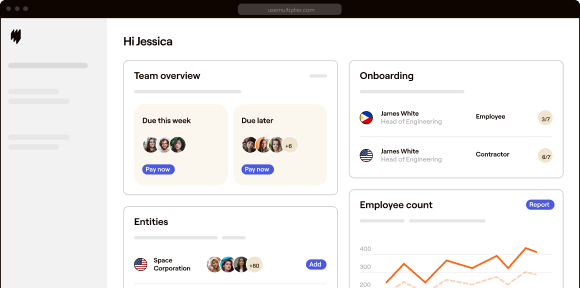
Pebl is the rebrand of Velocity Global, announced in September 2025, representing the company’s evolution toward AI-first global employment solutions. This comprehensive review covers Pebl’s EOR capabilities, onboarding workflows, compliance infrastructure, payroll operations, support model, integrations, and practical considerations for HR, People Operations, and Finance teams evaluating global hiring solutions at scale.
What is Pebl (formerly Velocity Global)?
Pebl is an AI-first global hiring, payroll, and compliance platform that enables companies to employ and manage international teams without setting up local legal entities. Rebranded from Velocity Global in September 2025, Pebl retains its full Employer of Record services while introducing AI-driven tools (for instance, Alfie) that accelerate onboarding, streamline compliance workflows, and support faster, self-serve decision-making for global workforce teams.
An Employer of Record (EOR) is a third-party provider that becomes the legal employer of your international hires, handling local compliance, payroll, benefits administration, and statutory obligations. This eliminates the need to open subsidiary companies in multiple countries, reducing legal complexity and operational overhead. With an EOR, your company controls hiring decisions, compensation, and strategic direction while the provider manages regulatory risk.
How does Pebl’s EOR work?
Now that you understand how Pebl works at a platform level, let’s walk through the practical steps companies follow to hire and onboard talent using Pebl.
Step 1: Country feasibility check (before you hire)
Before moving forward with an international hire, it’s important to validate the employment structure, timeline, and compliance considerations for the role. This ensures the position is set up correctly from the start and helps avoid classification risks or regulatory issues later. Platforms like Pebl help streamline this process by providing structured guidance and clear timelines for global hiring.
Key factors to confirm before hiring
- Employment classification
Determine whether the role should be structured as a full-time employee or an independent contractor based on local labor regulations. - Expected hiring timeline
Confirm realistic onboarding timelines in the target country to align hiring plans with regulatory requirements. - Role-specific compliance risks
Identify potential classification or labor law risks that may apply to the role in that jurisdiction. - Intellectual property considerations
Check whether the role involves IP-sensitive work that requires specific contract clauses or legal protections. - Benefits and statutory obligations
Understand required benefits, employer contributions, and statutory obligations in the country of hire.
Pebl’s platform typically provides a recommended employment structure and estimated hiring timeline within 24–48 hours, helping teams move forward with greater clarity and confidence.
Step 2: Offer and localized contract
Once a hiring decision is confirmed, the next step is generating a compliant employment contract aligned with the country’s labor laws. This stage ensures the offer reflects local regulatory requirements and internal company policies before it is issued to the candidate. Platforms like Pebl streamline this process by producing localized contracts designed to meet statutory obligations from day one.
Key elements typically addressed at this stage
- Country-specific contract structure
Contracts are tailored to local labor laws, incorporating mandatory clauses required in the employee’s jurisdiction. - Probation and notice periods
Employment terms reflect statutory probation timelines, termination notice requirements, and other regulatory expectations. - Intellectual property protection
Contracts include appropriate IP assignment clauses for roles involving proprietary work or sensitive company assets. - Internal approval workflows
Most organizations require sign-off from Legal, HR, and Finance before extending a formal employment offer. - Compliance and dispute mitigation
Localized contracts help reduce future disputes by clearly outlining severance rules, benefits eligibility, and enforceable employment obligations.
Step 3: Onboarding and document collection
Once the contract is signed, the onboarding process begins with collecting the required employee documentation and verifying identity details. Proper onboarding ensures the employee is fully compliant with local regulations before payroll begins. Platforms like Pebl streamline this process by guiding employees through documentation requirements and helping companies avoid administrative delays.
Key onboarding steps typically include
- Identity verification
Employees provide official identification such as a passport or national ID to confirm their legal identity. - Tax documentation
Required tax forms or local tax identification numbers are submitted to ensure correct payroll reporting and statutory filings. - Banking details for payroll
Employees share bank account information so salary payments can be processed accurately and on schedule. - Residential address confirmation
Proof of address may be required to comply with local employment or tax regulations. - Policy acknowledgments
Employees review and acknowledge company policies, employment terms, and compliance requirements.
Pebl assigns a dedicated onboarding specialist to guide employees through the documentation process, helping reduce back-and-forth delays and ensuring onboarding is completed smoothly.
Step 4: Payroll run, payments, and statutory filings
Once employees are onboarded, payroll follows a structured monthly cycle designed to ensure accurate payments and compliance with local regulations. Each stage—from compensation approval to statutory filings—is coordinated to keep payroll operations consistent across countries. Platforms like Pebl manage these processes centrally, helping companies handle multi-country payroll without manual coordination.
Key steps in the monthly payroll cycle
- Timesheet and compensation approval
Your team reviews and approves employee timesheets, bonuses, and variable compensation before the payroll cutoff date. - Tax and statutory calculations
The platform calculates local income taxes, social contributions, and other statutory deductions required in the employee’s country. - Payroll funding
Your organization funds the payroll run, allowing salaries and employer obligations to be processed on schedule. - Employee salary payments
Payroll payments are sent to employees’ bank accounts through the platform’s global payment infrastructure. - Statutory reporting and filings
Required payroll reports and tax filings are submitted to the appropriate local tax and labor authorities. - Foreign exchange and payslips
Currency conversion is handled within the payroll process, and employees receive localized payslips automatically in their preferred language.
Step 5: Ongoing changes (salary updates, leave, terminations)
As employment conditions evolve, payroll and compliance processes must be updated to reflect changes in compensation, benefits, or role structure. Adjustments such as promotions, salary revisions, or terminations often trigger payroll recalculations and may require contract updates to remain compliant with local labor laws.
Common lifecycle changes that require updates
- Compensation adjustments
Salary increases, bonuses, or other compensation changes must be reflected in payroll calculations and reporting. - Leave and benefits updates
Leave accrual balances, benefits eligibility, and employer contributions may change as employees progress through their roles. - Role or promotion changes
Promotions or role modifications may require contract amendments to reflect updated responsibilities or compensation structures. - Termination compliance requirements
Offboarding requires careful handling of local notice periods, severance calculations, and statutory obligations. - Final settlements and documentation
Final payments, benefits termination, and required documentation must be processed according to local regulations.
Pebl provides structured offboarding guidance, including termination checklists that help ensure notice delivery, final payroll settlements, benefits exit procedures, and documentation requirements are handled in a compliant and organized manner.
What you actually get with Pebl EOR (feature deep dive)
This section breaks down Pebl’s EOR offering beyond marketing claims, focusing on how its coverage, speed, and compliance structure work in real-world hiring scenarios.
Country coverage and hiring speed
Pebl enables companies to hire employees across 185+ countries, giving organizations access to a truly global talent pool. However, hiring timelines vary depending on local regulations, role complexity, and compliance requirements. While early estimates may appear quickly, the actual onboarding process can take longer depending on the country.
Factors that influence global hiring timelines
- Country-specific regulations
Employment laws, tax registrations, and labor compliance requirements vary widely and can affect onboarding speed. - Role complexity
Senior roles, regulated positions, or jobs involving sensitive intellectual property may require additional compliance checks. - Initial timeline estimates
Platforms often provide preliminary hiring timelines within minutes based on country and role details. - Fast onboarding in low-risk jurisdictions
In developed or low-risk markets, onboarding may be completed within roughly 48 hours once documentation is finalized. - Longer timelines in regulated regions
Countries requiring immigration approvals or stricter compliance checks may take two to four weeks to complete the hiring process.
Rather than assuming universal “minutes-to-hire” timelines, companies should expect faster onboarding in established markets and longer processes in jurisdictions with stricter regulatory oversight.
Compliance, ownership, and risk controls
Employer of Record (EOR) compliance allows companies to hire internationally without establishing a legal entity in each country. Under this model, Pebl becomes the legal employer of record while your company manages the employee’s day-to-day work and strategic decisions. This structure helps ensure compliance with local labor laws while reducing regulatory and operational risk.
How the EOR structure works
- Legal employer of record
Pebl acts as the legal employer in the country of hire and maintains the official employment relationship under local law. - Employment contract management
Pebl signs and issues the employment contract, incorporating your company’s terms and compensation structure. - Local employment liability
Responsibility for employment compliance and labor obligations in that jurisdiction is carried by Pebl. - Tax and statutory filings
Payroll taxes, social contributions, and statutory benefits filings are submitted by Pebl to the appropriate authorities. - Regulatory compliance enforcement
Pebl ensures that employment practices align with local labor laws and statutory obligations.
This structure helps protect companies from worker misclassification risks, tax penalties, and potential labor disputes while enabling compliant global hiring.
Payroll and benefits administration
Employee benefits in global hiring include both statutory benefits required by local law and supplemental benefits offered by the employer. These benefits vary widely across countries, so managing them correctly is essential for compliance and employee satisfaction. Platforms like Pebl coordinate benefits administration to ensure employees receive the legally required coverage while supporting optional benefits where possible.
How global benefits administration typically works
- Statutory benefits compliance
Pebl administers legally required benefits such as employer social contributions, unemployment insurance, pension schemes, and health coverage according to local labor laws. - Supplemental employer benefits
Companies can offer additional benefits such as expanded health coverage, retirement contributions, or wellness programs beyond statutory requirements. - Country-specific enrollment processes
In some countries, employees are automatically enrolled in benefits programs, while others require employees to actively select their benefits during onboarding. - Localized benefits structures
Benefits packages differ significantly across jurisdictions due to local regulations and market standards. - Global benefits alignment
While full parity with a company’s home-country benefits is rarely possible, Pebl helps identify equivalent options—such as local retirement savings programs similar to U.S. 401(k) plans—and facilitates employee enrollment.
Integrations and APIs
Pebl integrates with many commonly used HR, payroll, and finance systems to help companies manage global workforce data without duplicating processes. These integrations allow employee records, payroll data, and financial reporting to move automatically between systems, helping teams maintain consistent information across their HR and finance infrastructure.
How integrations support global workforce operations
- HRIS integrations
Pebl connects with widely used HR platforms such as ADP, Workday, BambooHR, and Rippling to synchronize employee records and workforce data. - Payroll data synchronization
Employee details and compensation data can flow from your HR system into Pebl’s payroll environment to support accurate global payroll processing. - Accounting system connectivity
Payroll journals and expense data can be transferred directly into accounting tools, simplifying financial reconciliation and reporting. - Reduced manual data entry
Automated integrations minimize the need for manual updates across multiple systems, reducing administrative workload and data inconsistencies. - Open API for custom integrations
Pebl also provides an open API, allowing technical teams to build custom integrations where pre-built connections are not available.
Security and compliance claims (SOC 2, GDPR, etc.)
Handling employee data across multiple countries requires strong security and privacy controls. Platforms like Pebl report compliance with widely recognized security frameworks, but organizations should verify these claims through proper documentation before relying on them for sensitive workforce data management.
Key security and compliance considerations
- Security certifications
Pebl reports SOC 2 Type II certification covering security, availability, and confidentiality of data handled within the platform. - Information security standards
The platform also follows ISO 27001 standards, which define best practices for managing and protecting sensitive organizational information. - Data privacy regulations
Compliance with GDPR helps ensure that employee data from European jurisdictions is handled according to strict privacy requirements. - Verification through documentation
Companies should request the SOC 2 report, Data Processing Agreement (DPA), and subprocessor list to understand exactly how employee data is processed and protected. - Transparency in data handling
Reputable providers typically share these documents upon request so organizations can evaluate security controls and third-party involvement before onboarding.
Pebl pricing: What it publishes vs what buyers should confirm
Pebl’s EOR pricing starts at $399 per employee per month, though this represents a promotional entry price. The company emphasizes “burden pricing” transparency, meaning you see the total employment cost, including base salary, taxes, and statutory benefits, not just Pebl’s service fee. EOR pricing varies by country complexity, benefits scope, entity model, add-ons (immigration support, contractor conversion), and whether you’re using payroll-only or full EOR.
Pricing questions to ask sales:
- What’s included in the base fee? (contracts, payroll processing, statutory filings, benefits administration, platform access)
- Are implementation or onboarding fees charged separately?
- What foreign exchange markups apply, and how is funding handled?
- Are off-cycle payroll runs charged as add-ons?
- Are termination support fees or legal consultations billed separately?
Pros, cons, and who it’s best for
To evaluate Pebl objectively, it’s important to weigh its strengths, limitations, and the types of teams it best supports in practice.
Pebl pros
- Comprehensive global coverage across 185+ countries with deep local compliance expertise
- AI-powered platform (“Alfie”) delivers instant, vetted compliance answers in 50+ languages, reducing email delays
- Transparent burden pricing shows total employment cost upfront without hidden add-ons
- Smooth onboarding with dedicated specialists, typically completing hires in 48 hours to 2 weeks, depending on jurisdiction
- Payroll stability and on-time payment reliability, reducing employee dissatisfaction
Pebl cons
- Base pricing ($399+ per employee per month) is higher than some DIY or contractor-first alternatives
- Benefits parity with home-country offerings is often limited, requiring trade-offs in certain markets
- Integration depth limited outside major HRIS/payroll platforms; custom API work may require development resources
- Communication gaps around region-specific benefits and statutory requirements reported by some users
- Platform interface, while improving post-rebrand, still requires navigation learning for new users
- Entity model locked as EOR, with limited flexibility for companies later wanting to establish local subsidiaries
Best for
- Mid-market to enterprise organizations scaling internationally with 10+ hires across multiple countries
- Companies prioritizing compliance certainty and regulatory risk mitigation over the lowest cost
- Teams with complex payroll needs (multiple currencies, varying tax regimes, statutory benefits)
- HR and Finance teams lacking in-house international employment expertise
Not ideal for
- Early-stage startups hiring 1–2 people per country (contractor relationships are more cost-effective)
- Companies with significant established operations in one or two countries (local entities are more economical)
- Organizations with highly specialized integration requirements outside standard HRIS/payroll ecosystems
- Teams strictly optimizing for the lowest per-employee cost regardless of service depth
Pebl vs alternatives
The comparison below highlights how Pebl stacks up against leading alternatives across pricing transparency, country coverage, and compliance depth to support informed decision-making.
Dimension | Pebl | Multiplier | Deel | Remote | Papaya Global |
Pricing (per employee per month) | $399 | $400 | $599 | $699 | Custom |
Country coverage | 185+ countries | 160+ countries | 180+ countries | 190+ countries | 160+ countries |
G2 ratings | 4.6/5 | 4.7/5 | 4.7/5 | 4.5/5 | 4.5/5 |
Compliance depth | Extensive licenses | Compliance-first workflows; regulatory focus | Automated compliance checks with Deel AI | Fast onboarding; compliance guardrails | Payroll-first compliance; strong APAC |
Payroll reliability | Stable; on-time processing | Known for accuracy; strong ops | Reliable; integration-heavy | Reliable; developer-friendly | Strong in high-volume scenarios |
Onboarding speed | 48 hours–4 weeks depending on country | Guided migration playbooks; faster average | Variable; often slower for complex roles | Quick for standard hires | Variable; depends on jurisdiction |
Support model | Dedicated account managers; AI assistant (Alfie) | Dedicated support; operational clarity | Ticketed support + Deel AI | Developer-oriented; chat-based | Account-based support available |
Buyer’s decision framework
Use this framework to match your operational priorities, governance needs, and expansion strategy with the EOR or payroll model that fits best.
- If you need enterprise governance and complex multi-country payroll: Payroll-first platforms such as Papaya or Rippling (for owned entities), or Pebl for EOR services.
- If you need cost predictability and fast onboarding: Multiplier or Pebl, offering flat-fee and transparent pricing models.
- If you need strong APAC execution and scalability: Pebl or Papaya, known for regional compliance depth and execution.
- If you’re a developer-first organization with custom integration needs: Deel or Remote, which provide strong API capabilities and integrations.
RFP-ready checklist for evaluating any EOR:
- Entity model: Is the provider the legal employer in each country?
- Local termination process: Can you terminate without cause? What severance applies?
- Statutory filing ownership: Who submits taxes, benefits, labor filings?
- Payroll cutoffs: What’s the latest you can approve timesheets before payment?
- Audit trails: Can you export historical payroll data and compliance records?
- Data privacy and security: Are SOC 2, GDPR, and DPA documentation available?
- Support SLAs: What’s the guaranteed response time for critical payroll issues?
- Contract flexibility: Can you scale employees up/down, change benefits, or adjust coverage by country?
- Immigration support: Is visa and work permit assistance included or add-on?
- Technology roadmap: What AI or automation improvements are planned?
Choosing a compliance-first EOR? How Multiplier supports global hiring at scale
When evaluating alternatives to Pebl, many companies choose Multiplier because it combines deep global employment infrastructure with a platform designed specifically for efficient cross-border hiring. Multiplier enables businesses to hire, manage, and pay teams across 160+ countries while maintaining strong cost transparency, operational control, and consistent service delivery.
Built as a unified global employment system
While Pebl combines platform tools with service-led processes, Multiplier was designed as a unified global employment platform from the ground up. Contracts, payroll, compliance, onboarding, and employee lifecycle management operate within a single system. This reduces operational friction, simplifies workflows across countries, and helps teams maintain consistent execution as global hiring scales.
Direct global employment infrastructure
Multiplier operates through a network of global entities and in-country specialists that support compliant hiring without requiring companies to establish local subsidiaries. This infrastructure provides clearer accountability for payroll, benefits administration, and regulatory compliance while helping companies expand internationally with confidence.
Transparent and predictable pricing
Cost predictability is a major factor for companies building international teams. Multiplier offers transparent pricing structures that clearly separate platform fees, statutory employment costs, and payroll elements. This makes it easier for finance teams to forecast international hiring budgets and avoid unexpected costs as teams expand across multiple countries.
Faster onboarding and operational efficiency
Global hiring often requires balancing compliance with speed. Multiplier’s platform is designed to streamline onboarding workflows, helping companies move from offer to employment faster while maintaining regulatory alignment. This is particularly valuable for organizations entering new markets or scaling distributed teams rapidly.
Dedicated support for global workforce management
International payroll and compliance issues require responsive support. Multiplier provides dedicated customer success managers and regional specialists who assist with payroll cycles, onboarding questions, and regulatory updates. This hands-on support helps ensure operational continuity and reduces risk when managing distributed global teams.
Companies comparing Pebl and Multiplier often find that Multiplier offers stronger pricing clarity, faster operational workflows, and a more streamlined global employment infrastructure.
Book a demo to see how Multiplier can simplify compliant global hiring, payroll, and workforce management as your international team grows.
FAQs
What does Pebl's Employer of Record service include?
Pebl's EOR includes legal employment contracts, payroll processing in local currency, statutory tax filings, benefits administration, payroll accuracy guarantees, and dedicated onboarding support. Services span compliance, payments, HR administration, and ongoing employee support across 185+ countries without requiring you to establish local entities.
How many countries does Pebl support for EOR?
Pebl supports hiring and employment in 185+ countries. Coverage depth varies by region; some countries offer faster onboarding and full benefits administration, while others require additional compliance steps or longer processing timelines due to regulatory requirements or immigration requirements.
What is the difference between Pebl and Multiplier for global EOR?
Pebl offers broad country coverage and AI-powered compliance guidance, while Multiplier emphasizes predictable pricing, compliance-first workflows, and dedicated operational support. Multiplier suits teams prioritizing cost clarity and hands-on account management; Pebl suits those wanting an AI-first platform, flexibility, and self-serve tools alongside compliance expertise.
How much does Pebl (Velocity Global) EOR cost per employee?
Pebl's EOR pricing starts at $399 per employee per month, though this represents a promotional entry price. Final costs vary by country complexity, benefits scope, immigration needs, and add-ons. Always confirm per-country rates and all-inclusive fees during your sales conversation to avoid surprises.
Does Pebl run payroll and handle statutory filings?
Yes, Pebl manages end-to-end payroll processing, including gross-to-net calculations, tax withholding, statutory benefit deductions, bank transfers, and submission of required filings to local tax authorities. Payslips are generated automatically and delivered to employees, typically on your specified monthly schedule.
Why should I choose Multiplier over Pebl for international hiring?
Choose Multiplier if you value transparent, predictable pricing, compliance-first workflows, and dedicated support. Multiplier's operational approach prioritizes clarity over self-serve complexity, making it ideal for Finance and HR teams managing multiple hires across 160+ countries.
How can Pebl's AI assistant help accelerate my compliance process?
Pebl's AI assistant, Alfie, delivers real-time compliance answers in 50+ languages, eliminating email delays and providing instant guidance on country-specific labor laws, benefits, tax rules, and hiring processes. This reduces the need to contact support for routine questions and speeds up decision-making.